The EU’s China dilemma: how to counter Beijing without alienating friends
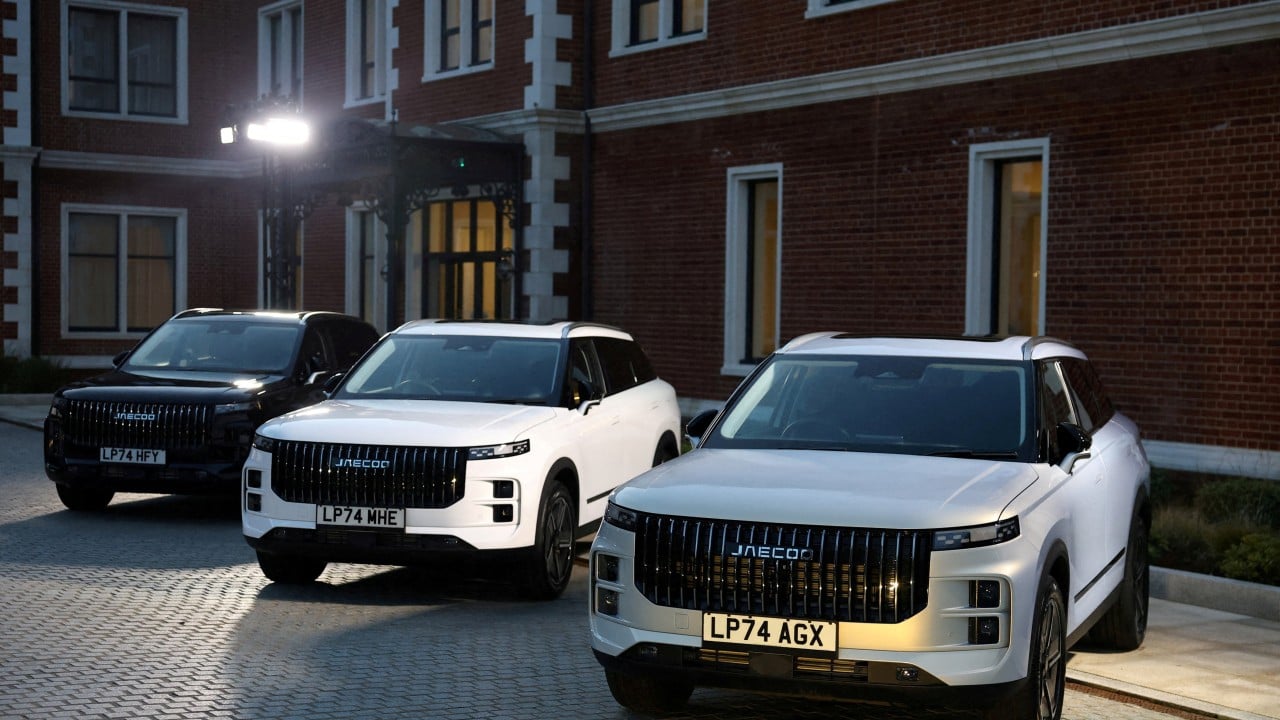
In September, the Jaecoo 7 – a budget SUV from China’s Chery Automobile – made headlines when it shifted more than 10,000 units to become Britain’s bestselling car.
Christened the “Temu Range Rover” online, a nod to the cheap goods available on the Chinese online marketplace and the luxury 4X4 made by Jaguar Land Rover that it resembles, its success showed British drivers’ new-found taste for cut-price Chinese cars.
Overall, 23 per cent of new cars bought in Britain last month were Chinese models, according to the Society of Motor Manufacturers and Traders, with several electric and hybrid models ranking highly.
But days later, the booming Chinese car market was caught up in a wider European trade dispute.
Britain was considering matching EU tariffs of up to 45 per cent on Chinese-made electric vehicles to gain access to European manufacturing subsidies, The Times reported.
02:41
EU leaders debate new China trade policy over ‘systemic threat’
Brussels is also weighing import restrictions on Chinese-made hybrids, a category that includes the plug-in version of the Jaecoo 7. If adopted, London could be under pressure to follow suit.
The EU had long wanted Britain to align on EV tariffs, fearing that the country, which left the EU in 2020, would become an entrepot for cheap Chinese cars, which it says are flooding the European market.
Now, with its proposed Industrial Accelerator Act (IAA), the bloc potentially has a tool with which it can strong-arm London to follow suit.
“The UK example shows that you can have a negotiation position with the IAA,” said Nils Redeker, acting co-director of the Jacques Delors Centre, a think tank.
Redeker argued that the law could give Brussels leverage to pressure Britain into taking a tougher stance on Chinese car imports.
The act is the EU’s major foray into industrial policy after a decades-long love affair with neoliberal governance, during which the very term “industrial policy” became dirty words.
Yet, it has also raised questions among political groups in Europe and among its allies whether, in its frenzied efforts to protect its industry from China, the EU is mirroring the US policies it previously railed against.
SCMP Plus is a new premium news platform that gives you an
all-inclusive edge to stay ahead on China news.
To access our exclusive content you’ll need to subscribe.
Already a subscriber?
LOG IN
“The IAA should not – even inadvertently – penalise the companies of close partners, which have invested deeply in Europe and become part of its industrial networks simply because their headquarters happen to be elsewhere,” wrote Kazutoshi Aikawa, Japan’s ambassador to the EU, in the Financial Times last month.
“Trusted international partners are part of Europe’s industrial strength,” he added.
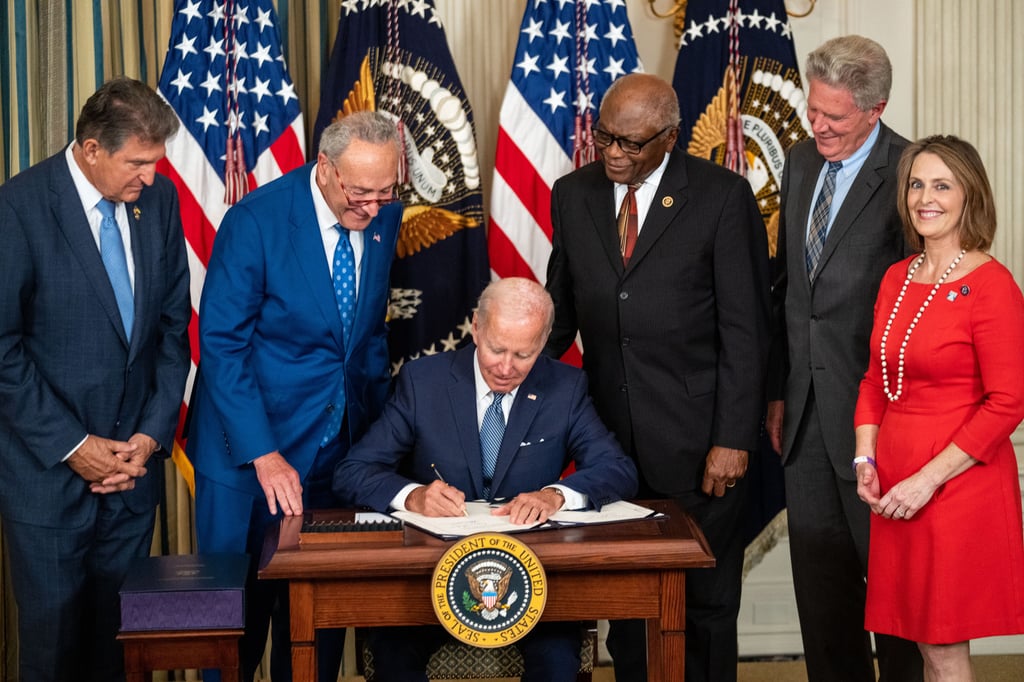
Aikawa compared the law with former US president Joe Biden’s Inflation Reduction Act, a green-oriented stab at industrial policy that alienated Tokyo and Brussels alike.
The bloc’s recent steel restrictions, aimed at curbing the impact of Chinese overcapacity, led other partners including South Korea and Turkey to complain they were caught in the crossfire.
When adopted, the IAA would create rules through which EU funds, public contracts and other incentives are funnelled to EU-made products in sectors like EVs, steel, cement and clean technology, while speeding up permits for new industrial projects.
The aim is to bolster European manufacturing and reduce the bloc’s dependence on foreign suppliers, particularly China.
It would also impose strict conditions on large investments from countries dominating global production in strategic sectors, again primarily targeting Beijing.
“European workers and the firms must benefit … China has applied this logic for 30 years,” said Anna Cavazzini, a Green member of the European Parliament, involved in drafting the chamber’s own version of the law.
“The only shocking fact for me is that it took us so long to even consider investment conditionalities.”
But it is not without controversy.
A European preference would also disadvantage companies from partners such as Britain, Japan and South Korea, their governments argue, unless they secure exemptions, leading to negotiating scrambles such as the UK-EU talks.
This has sparked a vigorous debate as to just how much the EU, in its efforts to counter China’s industrial prowess, can and should cut itself off from the rest of the world.
Ignacio Garcia Bercero, formerly a top EU trade negotiator, said the bloc needed to be “extremely careful” that it does not throw the baby out with the bathwater as it heads in new policy directions.
10:31
The Europe-China trade relationship: deficits, disputes and de-risking
“We must not have a situation where because of legitimate concerns relating to China … we are going to be fundamentally undermining the value of [free-trade] agreements,” Garcia Bercero said.
“It would be a huge mistake to … disrupt our relationship with those countries that normally [are] close allies of the EU because of these concerns.”
At the EU level, some members led by Germany want to allow countries with which the EU has made a free-trade agreement to be given access to the benefits of IAA.
“If you say this is all about China, then why is the Japanese ambassador writing concerned letters to the Financial Times? Why is the South Korean government telling us last week in Seoul there will be countermeasures to these proposals because this is simply an attack on us?” asked Dirk Gotink, a Dutch member of the centre-right European People’s Party (EPP), at a recent debate.
This week, the EPP took it further: a small group of influential lawmakers from the group proposed scrapping the IAA altogether.
On the other side of the ledger sits a coterie of nations led by France who want the plan to be narrow geographically and broad in scope.
“This [allowing FTA partners in] would open up provisions to over 80 countries, 27 from the EU,” said Christophe Grudler, a centrist French lawmaker involved in drafting the parliament’s counterproposal.
“That’s about 110 countries out of 190 in the UN. So, it’s no longer made in the EU. It’s no longer made with the EU. It’s made everywhere.”
Research commissioned by the parliament suggested, however, that the debate showed Europe obsessing over details that barely move the needle economically.
An EU-only “Made in Europe” scenario would increase GDP by 0.13 per cent and employment by 0.11 per cent, according to the study’s modelling. And a “Made with Europe” scenario, including selected trading partners, would lift GDP by 0.19 per cent and employment by 0.16 per cent.
KioskNews shows a cleaned-up reading view extracted from the publisher’s page — the original always lives on their site, not ours.