Column | Paradox of drug choice: Why India prefers branded illusion over cheap generics
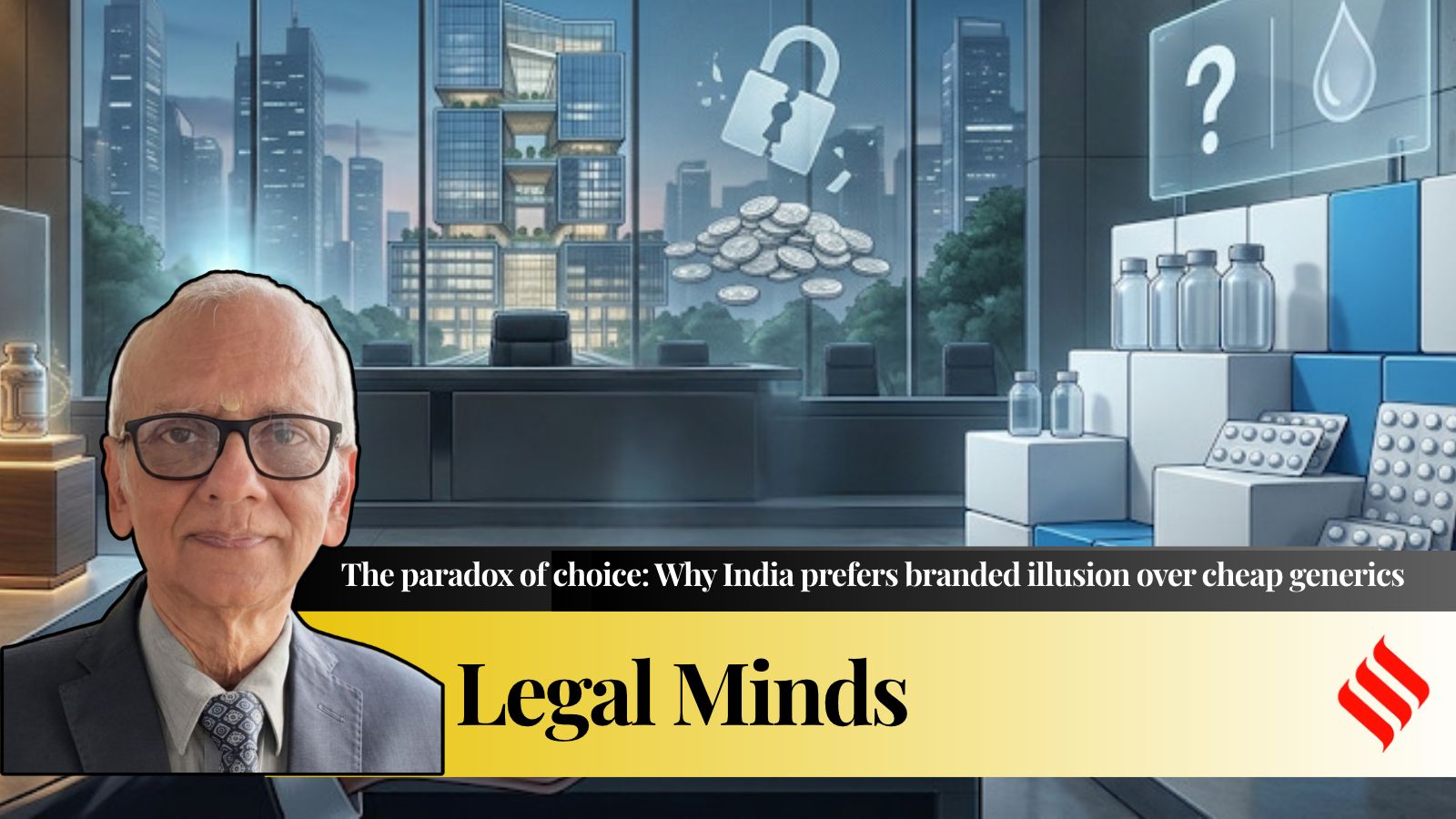
When a Supreme Court bench recently slammed a 1,000 per cent markup on life-saving cancer drugs — where a chemotherapy injection supplied to retailers for Rs 2,700 was stamped with an MRP of Rs 27,000 — it pulled no punches. Calling the practice “broad daylight dacoity” and asking the Centre, “Can you justify this loot?” the apex court voiced the helpless fury felt across millions of Indian households.
Following the judicial heat, trade margins on several anti-cancer formulations were capped at 30 per cent. The court went on to ask why this cap cannot be imposed on all other life-saving drugs as well and posted the case, for the central government’s response, to a short date.
Yet, as the nation turns its spotlight on price-gouging in oncology, a far more troubling structural question arises: Leave alone life-saving cancer therapies, why are even ordinary, everyday branded medicines—which have identical, vastly cheaper unbranded generic equivalents — persistently rejected by Indian consumers?
India runs one of the largest affordable medicine networks in the world, the Pradhan Mantri Bharatiya Janaushadhi Pariyojana (PMBJP), where high-quality generic drugs are available at a fraction of branded market costs. Yet, generic outlets often sit quiet while commercial private pharmacies next door thrive. The reason is not a lack of supply, but a deeply entrenched tri-party dynamic involving doctors, hospital pharmacies, and the psychological resistance of patients themselves.
Prescribing hand: Doctors and the brand habit
The primary friction point sits right at the doctor’s desk. In India, clinical practice is built on brand-name prescribing. Despite repeated mandates from the National Medical Commission (NMC) directing medical practitioners to prescribe active chemical names (international non-proprietary names) rather than commercial brand labels, compliance remains abysmal.
For many doctors, prescribing a known brand offers a sense of perceived safety and clinical control.
Story continues below this ad
Years of intense marketing by pharmaceutical representatives create a quick-recall habit in busy OPDs. Moreover, genuine (or lingering) skepticism regarding batch-to-batch quality control and bioequivalence standards among smaller generic manufacturers makes clinicians hesitant to risk patient outcomes on unbranded alternatives. When a doctor writes a specific brand on the prescription slip, the decision is effectively sealed for the patient.
The gatekeepers: Hospital pharmacies and structural traps
The second barrier is institutional. In private healthcare settings, hospital-run pharmacies operate as high-margin profit centres. Under current commercial models, hospitals frequently refuse to allow admitted patients or their families to purchase medicines from outside vendors or generic government stores. The rigour is far greater in cancer hospitals, where the hospital pricing is a package and the patient shall be forced to buy only at the hospital-attached pharmacies.
The government’s own statement in Parliament on February 6, 2026 confirms that the pricing follows a market-based system; the government does not maintain the cost data of pharmaceutical companies; the ceiling price is calculated by adding 16% retail margin to the average price to retailer (PTR) of quality brands, and margins at different levels in the supply chain are not regulated. Because non-scheduled generic and branded drugs permit wide initial price fixation under the Drugs (Prices Control) Order or DPCO, pharma companies offer lucrative trade margins to institutional buyers. A hospital pharmacy has no commercial incentive to stock or hand a patient a Rs 15 generic tablet when it can bill a branded generic with a printed MRP of Rs 150. The consumer, caught in a moment of medical crisis, is a captive buyer with zero bargaining power.
Consumer mindset: The cheap means diluted trap
Perhaps the most complex hurdle lies within patient psychology itself. In healthcare, price is routinely confused with efficacy. When a patient sees a strip of diabetes or hypertension medicine priced at Rs 100 in a private pharmacy versus Rs 15 at a Jan Aushadhi outlet, the immediate cognitive reaction is not relief—it is suspicion. The fact that the Pharmaceutical & Medical Devices Bureau of India (PMBI), under the Department of Pharmaceuticals administers the scheme for quality control, as it does to branded drugs, does not seem to make a difference.
Story continues below this ad
Decades of exposure to aggressive drug branding have conditioned the Indian public to believe that lower cost equals compromised quality or diluted ingredients. Furthermore, patients view their physician’s prescription as a binding instruction. Fearful of compromising their health or displeasing their doctor, most consumers actively refuse generic substitution at retail counters, insisting on the exact, expensive brand printed on the paper.
A problem beyond price caps
The Supreme Court’s intervention has rightfully pushed the state to clamp down on predatory trade margins. But fixing the retail price of cancer drugs or capping trade margins targets only the symptom.
Can legislative mandates truly force a doctor to alter their clinical handwriting, or force a patient to trust an unbranded pill? Will strict quality audits by the Central Drugs Standard Control Organisation (CDSCO) finally build public faith in low-cost generics? Or will the market, driven by commercial incentives and consumer anxiety, always find a way to keep the branded illusion alive? Until these deeper behavioural and systemic trust deficits are solved, affordable healthcare will remain written on paper, but out of reach in practice. The public policy lesson is: Quality assurance need not depend upon high prices, and affordability need not mean compromising quality.
Justice K Kannan is a retired judge of the Punjab & Haryana High Court and the author of ‘Medicine and Law: Exploring Areas of Intersection’ (Thomson Reuters, 2025).
Story continues below this ad
Written by eminent law professionals, the Legal Minds Column aims to break down complex statutory frameworks into insights, both for members of the fraternity and the general public.
For feedback and pitches, write to us at expresslegal@indianexpress.com
KioskNews shows a cleaned-up reading view extracted from the publisher’s page — the original always lives on their site, not ours.