India has world's most vibrant capital market after US, says Jefferies report
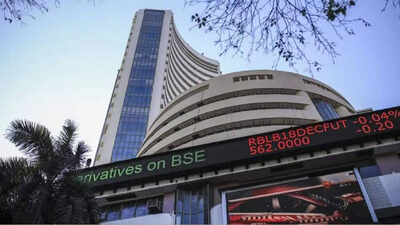
Representative image
India has emerged as the world's most vibrant capital market after the United States, with its relatively closed capital account helping protect domestic exchanges from foreign outflows and supporting the growth of local investors, according to a report by Jefferies' GREED & fear.The report highlighted how India's market structure differs from those in other parts of the world, where retail investors are increasingly directing money towards US equities through trading applications.This trend has contributed to declining trading volumes in Southeast Asian markets as funds move towards American stocks, particularly those linked to Big Tech."India’s capital markets have been protected, by contrast, because of a closed capital account which has allowed a vibrant capital market to develop internally," the report said."Indeed GREED & fear would argue that India is now the most vibrant capital market globally after America’s," it added.
What makes India's equity market different?
The report also described India's equity market as healthier than its US counterpart, citing greater portfolio diversification, an active mid-cap segment and limited dependence on passive investing."GREED & fear would also argue that it is much healthier than America’s. Equity portfolios are much more diversified.
There is a vibrant mid-cap sector while there is a marked lack of passive investing," it said.The report contrasted this with the scale of passive investing in the US, arguing that it had encouraged investment without sufficient consideration of individual stocks."By contrast, passive investing in the US has led, in GREED & fear’s view, to literally mindless investing on a gargantuan scale," it noted.It also pointed to differences in regulations governing investment applications.
Indian platforms do not permit payment for order flow, another feature distinguishing the domestic market from the US.
Jefferies flags risks from heavy exposure to US stocks
The report raised concerns about the growing concentration of global investment in American equities, driven by institutional holdings and retail interest in artificial intelligence-related stocks.The US accounted for 67.2% of global stock market capitalisation under the MSCI AC World Index as of December 24, 2024.Jefferies suggested that this share was likely to represent a peak."For related reasons, the foreign exposure to US equities is likely to prove to be a massive misallocation of capital if GREED & fear is right," the report said.It also highlighted a divergence between foreign investment in US government debt and equities. Overseas central banks have reduced their holdings of US Treasury securities, while international investors have continued to buy American stocks.
Foreign official ownership of US Treasuries fell from 36.4% at the end of 2011 to 11.5% in September 2026, according to the report. However, foreign investors made net purchases of $945 billion in US equities in the 12 months ending September 2026.Jefferies warned that a potential fall in US equity valuations could create deflationary risks for American retail investors, with implications for the country's monetary policy.
KioskNews shows a cleaned-up reading view extracted from the publisher’s page — the original always lives on their site, not ours.