As brain-computer interface boom enters next phase, China pushes to shape global standards
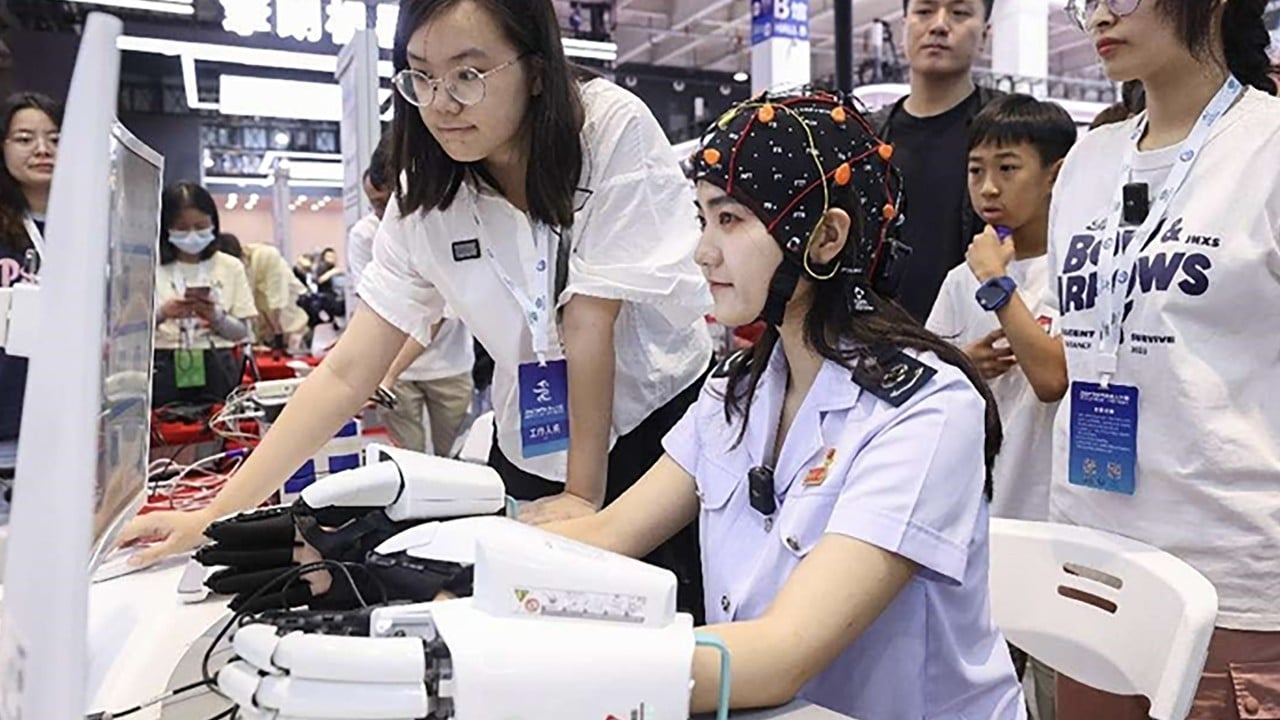
China will set up a new standard-setting task force for brain-computer interface (BCI) technologies, while a state-backed think tank has urged investors to remain patient as the nascent but increasingly crowded sector develops.
The Ministry of Industry and Information Technology (MIIT) said it would create the new working group under its BCI standardisation technical committee at an industry conference this week, state-backed news outlet Securities Times reported.
The MIIT would host a BCI “Standards Week” event in Wuhan on Wednesday and Thursday, where industry participants and government agencies could “work closely” to advance the practical application of BCI standards, the committee said earlier this month.
The move comes as China ramps up efforts to shape standards for the emerging sector, which Beijing identified as one of six “industries of the future” in its 15th five-year plan.
Last month, the country became chair of a BCI subcommittee jointly overseen by the International Organization for Standardization and the International Electrotechnical Commission, two of the world’s leading standards bodies.
BCI devices translate neural signals into commands for external devices and are designed to help restore speech or mobility. The technology has drawn growing interest as an increasing number of Chinese firms seek to challenge Neuralink, the world’s leading BCI firm, co-founded by SpaceX and Tesla CEO Elon Musk.
China was now home to more than 250 BCI firms, with more than 77 per cent concentrated in three major urban clusters: Beijing-Tianjin-Hebei, the Yangtze River Delta, and the Greater Bay Area, according to state-backed news outlet Beijing Daily in a report on Sunday.
The report cited new research by the China Academy of Information and Communications Technology (CAICT), a think tank under the MIIT, that had yet to be released publicly.
According to the CAICT, the global BCI industry was expanding rapidly, with the number of companies worldwide increasing to 1,175 this year from more than 800 last year.
The think tank reportedly said China’s BCI sector would likely enter a phase of consolidation and tighter regulation, with companies developing similar products moving into specific markets.
It also warned that the sector’s payment models and talent pools remained underdeveloped, and said investors would need to “remain patient” as the industry matured.
Continued policy support for BCI firms would also be necessary, it added.
KioskNews shows a cleaned-up reading view extracted from the publisher’s page — the original always lives on their site, not ours.