Candid Coaches: Should 2026 seniors be grandfathered into the NCAA's five-in-five eligibility rule?
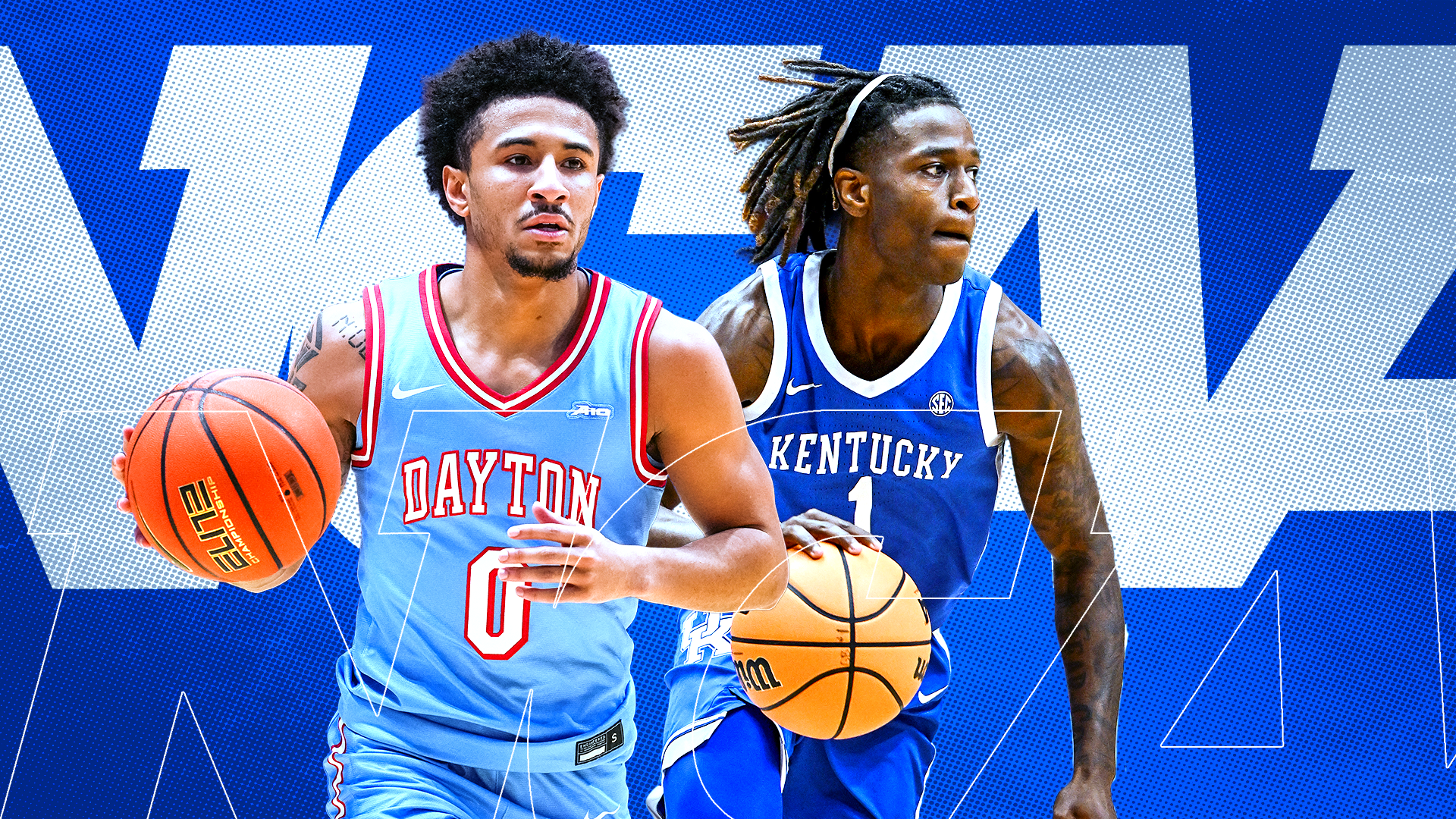
CBS Sports' Candid Coaches returns for 2026 with the hottest topic of the offseason in college basketball

• 12 min read
Welcome back to another year of CBS Sports' Candid Coaches feature. College basketball insiders Gary Parrish and Matt Norlander surveyed nearly 100 men's Division I coaches in the thick of the offseason; as always, interviewees were given the promise of anonymity in a swap for honest and enlightening answers on a medley of topics. Be it some of the most high-profile names in the game or assistants at low-major programs, Norlander and Parrish spanned the sport to get a wide range of feedback. This year's survey had nine questions, and this is the first in our 2026 series.
The biggest story in college basketball over the past three-plus weeks has been the spate of court-issued injunctions that have pushed back against the NCAA's decision to invoke a new eligibility landscape that officially went into effect less than two months ago. If you're reading a college basketball story in the middle of August, chances are you're mostly aware of what's going on here, but just in case you're not all the way up to speed, here's a summary of what's had college sports abuzz since July.
In late June, the NCAA ratified a new age-based eligibility structure. Moving forward, all Division I athletes will have five years to play as many as five seasons of college sports, with the entry date "no later than the academic year after their 19th birthday." It used to be that students had five years to play four seasons. Now, instead, in an effort to streamline the eligibility clock and reduce the number of lawsuits, the new model is a trade-off is to eliminate almost all waivers and redshirt seasons (with rare exceptions for "pregnancy, active-duty military service and official religious missions.") But, but, but ... the 2025-26 senior class that graduated a few months ago did not get a five-year clock (nor was it discussed as a possibility when this class began college in the early 2020s).
Predictably, lawsuits have taken shape around the country in California, Tennessee, Ohio, Colorado, Georgia and Florida; more are sure to come, probably another by the end of this week. For the time being, dozens of 2026 college grads are moving forward with hopes their cases will win out. Meanwhile, the NCAA's lead lawyer recently put out a statement reinforcing the organization's unwillingness to double back on its June vote.
High-profile teams — Louisville, Arizona, Texas Tech, Houston, Tennessee, Gonzaga — have recently received commitments from players banking on a bonus fifth season, scraping up even more money to deepen their rosters with de facto free agency acquisitions in the depth of the offseason. A handful of players who could be seen trying to cut it at Summer League a month ago are now seriously looking into returning to college ... and hoping they can find the right judge to allow them back in.
College basketball transfer portal five-for-five tracker: Grading each move in unparalleled free agency window
Isaac Trotter

The topic is obviously polarizing, beyond all other reasons, because of the NCAA's timing of the rule change. It's empowering an unprecedented surge: basketball programs across the country are recruiting and adding players four-plus months after the end of the previous season.
Given how fervid this issue is, we asked ...
Do you support 2026 seniors getting a fifth year?
| Yes | 58% |
| No | 42% |
Quotes that stood out
Those who voted 'yes'
- "Making this rule and announcing it before the start of classes is maybe the dumbest move of all time. Maybe as dumb as Mark Emmert saying paying players will never happen."
- "Yes. I will either be Warden Norton in his office or Red meeting up with Andy on the beach in a month's time."
- "I just wish it was done either last October when it was first being discussed OR in the spring. However, all of us always think our world is the most important and it's not. If the rule officially changed any other time, football would be 100% more chaotic with lawsuits than what basketball is seeing currently."
- "Yes — if they all get the year. I don't think giving it to people because they sue is wise."
- "Do I support it? Yes. Was it handled the right way? Not at all. No reason to cut off that group when they just finished. You were just asking for trouble."
- "YES. We have made exceptions and appeals for most athletes the last 20 years, so why start now? Let them all play. Start anew."
- "This should have been a no-brainer. The 2022 (high school) class dealt with so many obstacles that were completely outside of their control, so I think they should absolutely be grandfathered into the five-for-five rule. My biggest frustration is the timing. This decision should have been made back in January. If it had, every program could have planned for scholarships, roster management and finances. Instead, making this decision this late creates a huge advantage for some schools, a disadvantage for others and a lot of unnecessary chaos. But at the end of the day, if it's about doing what's right for the student-athletes, I'd give this group that extra year."
- "For the athletes, yes. The NCAA screwed themselves with the timing of this. They could've easily passed this in October and not had any issues. The timing was baffling."
- "I think that we are at that point where the scab needs to be ripped off, and considering where we find ourselves today this is the best solution. If they aren't grandfathered in (now at the last minute, which is what was probably expected to be the case anyway) the amount of lawsuits out there make it extra confusing at this point. There aren't many spots or money left and the amount of opportunities are what they are, but at least everyone can move on knowing what the reality is. Minimizing the overall confusion should be part of the goal at this point."
- "Simply put: Many others before them benefited from an extra year and many others after them will get an extra year. (The) NCAA should have rolled this out in November, not June. Basically begging to get sued."
- "Yes, because I don't think there is sound legal precedent for that class versus the last five years or the next five years. I do wonder if the chaos was allowed by the NCAA to further their political pursuits. Ultimately what everyone has been wanting is for the dust to settle and nothing about the way the NCAA chose to time these decisions pointed toward that happening or has helped create certainty and a level playing field."
Those who voted 'no'
- "I think if this had been established in March or April I would have been 100% on board. However, 95% of college basketball has built our rosters with the assumption that these players would not be grandfathered in."
- "No. The timing is messed up. Not sustainable. No rules and where does it stop?"
- "No. And to be clear, my issue isn't with these players. If the NCAA had made this call at the conclusion of the season, I'd probably be singing a different tune. It's the timing. Changing the rule mid-stream, after guys have already made decisions based on what was in place, is exactly the kind of instability that makes it impossible for anybody — players or coaches — to actually plan around this sport. At some point the NCAA has to draw a line and hold it. This is a case where I'd rather see them enforce it and take the heat than set a precedent that every rule is negotiable after the fact. The rule changing at the worst times has been unbelievably frustrating."
- "We are setting back another group of high school players who have waited their turn to get recruited and play college basketball. It's a disgrace to see where the sport is with 18-year-olds having to compete for a position against 24-, 25-year-old grown men."
- "Against. And yes I will take one or possibly two if we feel confident they will play. At the end of the season I had a senior come into my office and he wanted to try and come back. My compliance director, [in addition to sports attorney] Darren Heitner said he had no case. So we went about finding him an agent and his first overseas job. We were told very specifically for a long time that five-for-five wouldn't pass then. ... So now we have to upset the apple cart?"
- "Originally yes, but to do it at this point would be extremely hard in my opinion. What about the players who have been working all summer building equity with their teammates and coaches? I personally think it sends a terrible message to do it this late in the game. The clear benefit is to the programs who have unlimited resources from a budgetary standpoint."
- "No, not at this point. I believe we should have had clarity in the spring in order to finalize rosters properly. There are a lot of players that would change their decisions if new additions would be made this late."
- "I DO NOT agree with 2026 seniors getting a fifth year. They were not recruited out of high school, nor the portal with this understanding. Not to mention that every player on a roster chose the school they are attending based on current rosters. I don't agree with changing the rules in the middle of the game."
- "No, but I reserve the right to take one if they do. The NCAA has to be able to make eligibility rules we can count on everyone being held to. It's a fact that players being granted extra years hurts younger players."
- "No, just rip the Band-Aid off. We could go back every year and say the same thing. If so, go back to 2008 so I can get some money."
- "No I don't support the 2026 seniors getting a fifth year! Is it unfortunate for them, yes, but these are the rules they accepted when they entered college! We can't continue to try and make everyone's experience fair. None of this is fair. Those seniors got advantages athletes before them never received. Athletes after them will get advantages they didn't. I think that is pretty much how most evolutions occur. Leave it better than you found it, not complain and sue until you get your way!"

The takeaway
Like clockwork, every year Candid Coaches has a question that prompts significantly more responses and longwinded answers/reasoning in comparison to the rest of the survey. We're starting this year's series with that question. (Though another one coming down the pipe also garnered some very interesting reveals. Stay tuned.)
We asked knowing it was going to have people passionately standing on opposite sides of the debate. The five-in-five twist has caused arguably as much angst as any rule change since NIL implementation in 2021. While nobody knows the fate of this issue just yet, it remains a real possibility that dozens of players successfully sue their way into another year of eligibility in the coming weeks/months ... and the NCAA would be powerless to stop it.
The five-in-five rule itself isn't controversial. If we polled coaches asking them if they were in favor of it moving forward, that would not have been a compelling return because, best I can tell, most like the new standard. College basketball gets a little older, there are no more redshirt seasons, and the eligibility timeline is more clear. But because the NCAA decided to adopt its age-based eligibility model quite literally the week the 2025-26 sports calendar ended, it left a big opening to specifically impact college basketball because it is classified as a winter sport.
But the idea that programs can (and are) adding significant players to their roster in mid-August is borderline farcical. It's one thing to be in the free agent pool in April and May, when the portal is chaotic but everyone is operating (relatively speaking) within the same parameters. Now, instead, it's a matter of which schools still have the money and which schools have the openings to justify trying to bring another guy onto the roster ... months after everyone else came aboard.
It just doesn't sit right with me.
Some coaches I spoke with said it is straight-up not an option due to either financial constraints, roster limitations or personal philosophy. There are some coaches out there who think it's morally wrong to aid players through lawsuits just so they can extend their college career on a litigious technicality. Others said it would be negligent not to pursue every avenue to better their team, even at the expense of potentially messing with locker room chemistry. (Some coaches suggested that adding a player in midsummer isn't as problematic, from a team-building standpoint, as other coaches make it out to be.)
One common argument in favor of the 2026 seniors getting that extra year goes this way: Consider how inbound freshmen have been affected since 2021 due to the COVID bonus year that was granted to all players who were in college in 2020-21. While the 2025-26 graduating class was never promised a fifth year (and nor was the 2024-25 class), it now looks arbitrarily harsh to restrict players who had to enter college basketball at a time when the sport was at its oldest (and arguably deepest) point in generations.
The good news is this should only be a one-year issue. Moving forward, everyone will be on the same timeline with five years to play as many as five seasons. There had to be a year to finally cross the Rubicon and 2026 happened to be it. For now, everyone is — almost to a comical level — just going along assuming the lawyers will win out and all these players in these class action lawsuits will be cleared. I think that's how this winds up, but no one really knows. (The NCAA loses a lot in court, but it won the James Bediako case earlier this year, remember.)
This issue is but the newest in a heap of massive alterations to the NCAA's rules and regs in the past eight years. Here's a simplified recap of the most consequential changes since 2018:
»October 2018: Transfer portal launches
»Spring 2020: COVID leads to the halt of most winter and spring sports seasons
»October 2020: COVID eligibility year is granted
»April 2021: One-time transfer exception is approved for immediate eligibility
»July 2021: NIL legislation becomes official
»Late 2021: NIL collectives are formed to pay players
»December 2022: Transfer portal windows are approved
»December 2023: Players allowed to be immediately eligible if they were sitting out
»June 2024: Multi-time transfers approved for immediate eligibility
»June 2025: The House Settlement is formally adopted, salary caps are part of the deal
»June 2025: NIL Go clearinghouse is established to police third-party endorsements
»June 2026: Five-in-five age-based model is established
And that's to say nothing of what will or won't become of the Protect College Sports Act. The parameters of what's allowable will probably continue to be redefined.
One ACC coach told me: "Pretty soon mid-year transfers will be eligible and so on and so forth. Either swim in the pool or drown but likely you are going to have get in the water to survive."
A lot of coaches aren't comfortable with that, but it's been their reality for years at this point. And the waters don't show signs of receding.
KioskNews shows a cleaned-up reading view extracted from the publisher’s page — the original always lives on their site, not ours.