Facebook Ads, Fake Calls: How 3 Mumbai Residents Lost Over Rs 7 Lakh
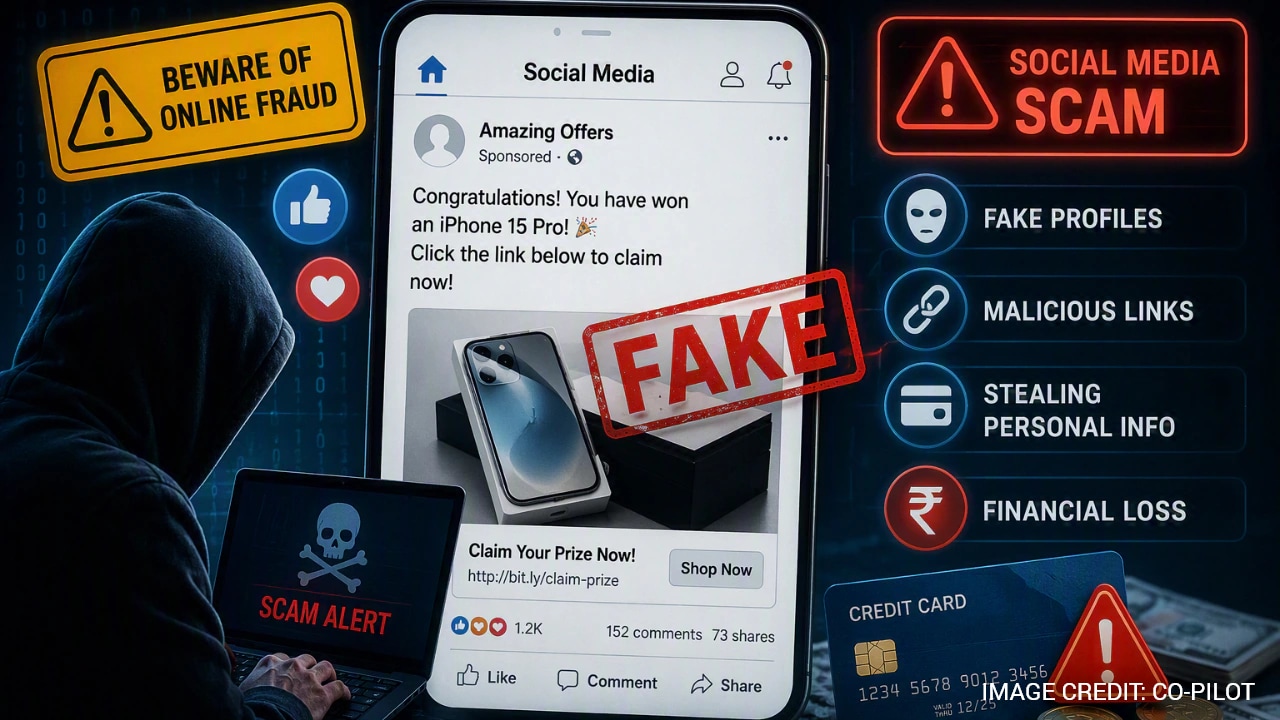
Social media platforms are increasingly being used by cyber fraudsters to target unsuspecting users through advertisements, comments and fake customer care calls.
In three separate cases reported in Mumbai, a businessman, a hotel waiter and a salesman collectively lost more than Rs 7 lakh after falling victim to online scams linked to Facebook and Instagram.
Businessman Duped Of Rs 3 Lakh
A 58-year-old businessman from Andheri lost Rs 3.34 lakh after sharing his details through a Facebook advertisement promoting an HSBC credit card.
The victim, Ketan Shah, had entered his name and mobile number in response to the advertisement. On August 14, he received a call from a man identifying himself as Rahul and claiming to be an HSBC customer care executive.
The caller sent Shah a link and asked him to provide details of his existing bank cards. After Shah entered information related to his IndusInd Bank and ICICI Bank cards, fraudsters withdrew Rs 3,34,534 from his IndusInd account within minutes.
Shah said his mobile phone suddenly switched off after the transaction, which made him suspicious. When he switched it back on, he found transaction alerts on his phone. He immediately blocked his card and later filed a complaint.
Waiter Loses Rs 2.41 Lakh
In another case, a hotel waiter searching for a job abroad was cheated of Rs 2.41 lakh after sharing his phone number on social media.
The complainant, Ramesh Singh Anand Singh Asnal, works as a waiter at a hotel in Mumbai and had been looking for overseas employment opportunities.
He came across a post by celebrity chef Shubham Rawat on Instagram and Facebook and posted his mobile number in the comments section, hoping to find a job.
On August 27, Asnal received a WhatsApp call from a man who identified himself as Sohan Bhandari. The caller claimed that chef Shubham Rawat had shared Asnal's number with him and said a job had been arranged for him in Dubai.
The caller told him that money was needed for visa processing, medical tests and an offer letter. Believing the claims, Asnal transferred money through 18 separate transactions over seven days, between August 27 and September 3, paying a total of Rs 2,41,200.
When neither a job offer nor further communication followed, Asnal realised he had been cheated.
Police investigations later found that chef Shubham Rawat had no connection to the fraud. The scammers had allegedly created a fake WhatsApp account using his profile photograph to gain the victim's trust.
Police have registered a case against the person posing as Sohan Bhandari and have begun an investigation.
Salesman Loses Rs 1.8 Lakh In Credit Card Scam
In the third case, a salesman lost Rs 1.80 lakh after clicking on an Instagram advertisement for an ICICI Bank credit card.
The complainant, Salim Ibrahim Patel, works as a salesman at a mall. According to police, Patel was scrolling through Instagram on the afternoon of September 10, when he saw an online advertisement for an ICICI Bank credit card.
Since he needed a credit card, Patel clicked on the advertisement link.
The next morning, he received a call from an unknown number. The caller claimed to be from the ICICI credit card department and said a KYC process needed to be completed.
The caller then sent a file named "ICICI CREDIT CARD.apk" through WhatsApp and instructed Patel to open it and enter his PAN card details along with information related to his existing SBI credit card.
Patel followed the instructions and submitted the details.
Within minutes, two transactions were carried out through his SBI credit card. He received alerts showing that Rs 1,80,000 had been debited from his account.
Realising that he had been cheated, Patel approached the police station and lodged a complaint. Police have registered a case against an unidentified cyber fraudster and are conducting a technical investigation into the mobile number and bank account allegedly used in the scam.
KioskNews shows a cleaned-up reading view extracted from the publisher’s page — the original always lives on their site, not ours.