The 5 Strongest Opening Chapters in Stephen King Books

David is a Senior Editor at Collider focused primarily on Lists. His professional journey began in the mid-2010s as a Marketing specialist before embarking on his writing career in the 2020s. At Collider, David started as a Senior Writer in late 2022 and has been a Senior Editor since mid-2023. He is in charge of ideating compelling and engaging List articles by working closely with writers, both Senior and Junior, as well as other editors. Occasionally, David also reviews movies and TV shows and writes episode recaps. Currently, David is also writing his second novel, a psychological horror satire that will, hopefully, be picked up for publication sometime next year.
Few writers are as prolific, well-regarded, or popular as Stephen King. The iconic author is a certified legend of the horror, thriller, and supernatural genres, producing banger after banger with such consistency that fellow authors like George R. R. Martin have openly expressed their admiration for his speed. Indeed, King has written many of the most beloved and enduring classics of the last 50 years, covering a wide range of genres and introducing some of modern literature's most iconic characters. Not every King book is the same, though, and some stand out because of their strong opening chapters.
In the author's words, "there are books, and there are books," and most of the latter benefit from instantly impactful openers that not only capture the reader's attention but also set the stage for what's to come. Here, we list the five King books with the strongest opening chapters, the ones that immediately compel you to pay attention and keep the pages turning. They benefit from strong prose, confident worldbuilding, and a distinct sense of atmosphere that cements King as a master of his craft.
'It' (1986)

It might be King's best-known novel, and for good reason. The book follows the Losers' Club, a group of eleven-year-olds living in the town of Derry, Maine, where children mysteriously disappear. The Losers eventually discover the existence of the creature responsible, a mysterious being who commonly assumes the guise of Pennywise, the Dancing Clown, and uses fear as a weapon against them. 27 years later, the adult Losers reunite in Derry again to finish the job they couldn't as children.
The opening chapter is well-known by now. In it, Six-year-old Georgie Denbrough chases after his paper boat on a rainy afternoon, eventually reaching a sewer where Pennywise awaits him. Their seemingly sweet conversation quickly takes a turn, and Pennywise rips Georgie's arm before killing him. It's a brutal and profoundly creepy opening even before the gore. The opening line lets you know that the main evil won't be defeated for another 27 years, if ever, making the chapter feel all the more ominous. King is a master at crafting atmosphere, and here, he makes Georgie's last minutes feel like an entire odyssey.
'The Gunslinger' (1982)
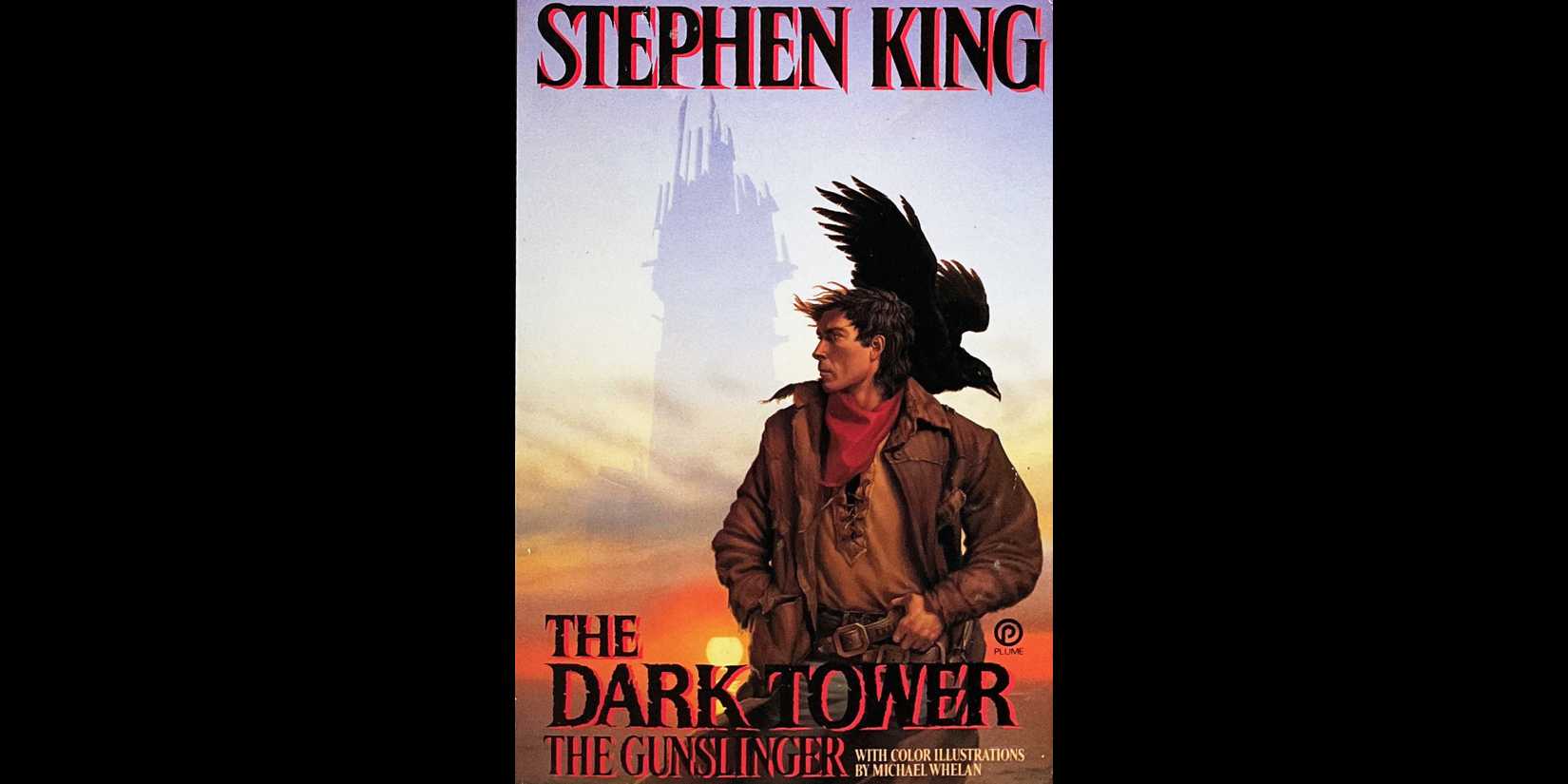
Now on to something a lot grander. The Dark Tower is probably King's magnum opus, a sprawling saga that began in 1982 with The Gunslinger. The story focuses on Roland Deschain, the last gunslinger, and the years-long pursuit of his nemesis, the Man in Black. Here, King balances multiple genres, most notably Western, fantasy, thriller, and science fiction.
The opening line of this book is probably King's most celebrated: "The man in black fled across the desert, and the gunslinger followed." There's such a haunting quality to this line; it may seem simple at first glance, but it packs so much in just a few words, hinting at the backstory behind these two characters and painting a vague but instantly compelling picture of what's to follow. From there, King makes the desert feel alive in its scarcity, depicting a vague and endless land that threatens to overwhelm with its nothingness. Few chapters are as immersive or atmospheric as this one, and it's quite surprising how little of the larger plot it concerns itself with.
'Desperation' (1996)

Desperation is among King's scariest yet most underappreciated efforts. The plot centers on a couple traveling the Nevada desert, who are kidnapped by Collie Entragian, the deputy of the remote mining town Desperation. Along with other victims, they realize that Collie has been possessed by a dark entity that controls the desert and wildlife. The entity must also change hosts, meaning they are all trapped in Desperation and subjected to becoming the being's next target.
Desperation's opening chapter is among the tensest, most discomforting things King has ever written. A masterclass in buildup and escalation, the chapter sees Entragian slowly take command of the situation, as the helpless couple slowly realizes, along with the reader, that the situation before them will be far darker than they could imagine. From there, Desperation tells a truly bleak and brutal story full of violence, gore, and supernatural danger. It's probably King's last truly horrific work, and it all begins with a remarkable opening chapter. An upcoming movie adaptation is in the works, which hopefully will live up to the source material's eeriness (the 2006 ABC version is pretty solid).
'The Girl Who Loved Tom Gordon' (1999)
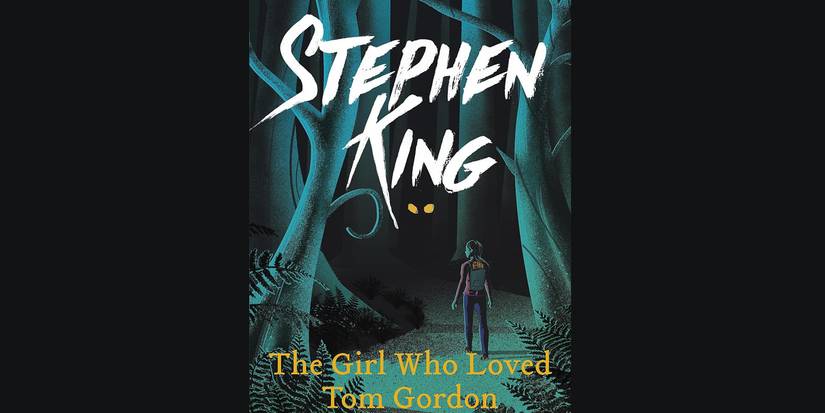
Now we move on to the book with possibly the best opening line in any King work: “The world had teeth, and it could bite you if you bothered it. Trisha McFarland discovered this when she was nine years old.” The Girl Who Loved Tom Gordon is a survival story centered on Trisha McFarland, a 9-year-old who gets lost in the wilderness during a hiking trip with her mother and older brother. With only a Walkman to keep her company, Trisha hallucinates a version of baseball player Tom Gordon and becomes convinced a being she names The God of the Lost is after her.
The book wastes no time going into the thick of it. In the first chapter, Trisha escapes a complicated family dynamic by trailing off for a bathroom break. Strong character work sets the background for Trisha's story, but the main attraction is how King writes this girl's inner thoughts: it's intimate, childlike, but never dumbed-down. King has enough respect not only for his audience but, most importantly, for his creation. The most important relationship — that of Trisha and Tom Gordon — is also established here. Then, she's lost in the woods, and King's prose gets us as confused and disoriented as the girl herself.
'Mr. Mercedes' (2014)

Lastly, we finish with one of King's strongest late-career works. The book chronicles the aftermath of an attack in which the mysterious driver of a Mercedes S-Class drives into the crowd at a job fair in the Midwest, killing eight people and injuring fifteen. Months later, retired, suicidal cop Bill Hodges receives a taunting letter from the perpetrator, dubbing himself Mr. Mercedes, and decides to investigate the crime.
A classic hard-boiled detective novel, Mr. Mercedes is among King's best thriller efforts. As expected, the book opens with the attack, with King putting us in the eyes of Augie Odenkirk, a hopeful who rides the last bus to camp outside a job fair that opens in the morning. Augie is kind and sympathetic, quickly striking up a conversation with desperate single mother Janice Cray, who is there with her young daughter. In just a couple of paragraphs, King makes us care about these two characters before Mr. Mercedes arrives and runs over the crowd twice, killing Augie, Janice, and her daughter. It's a harrowing, unforgiving opening that sets the tone for the rest of the book.
KioskNews shows a cleaned-up reading view extracted from the publisher’s page — the original always lives on their site, not ours.