Fuel prices keep climbing as big hike takes effect September 15
Already have Rappler+?
to listen to groundbreaking journalism.

HIKE. A pump attendant fills vehicles with fuel at a gas station in Paco, Manila, on January 12, 2026.
Rappler
This is now the second straight large price increase, as the government considers suspending excise taxes on LPG and kerosene again
AT A GLANCE
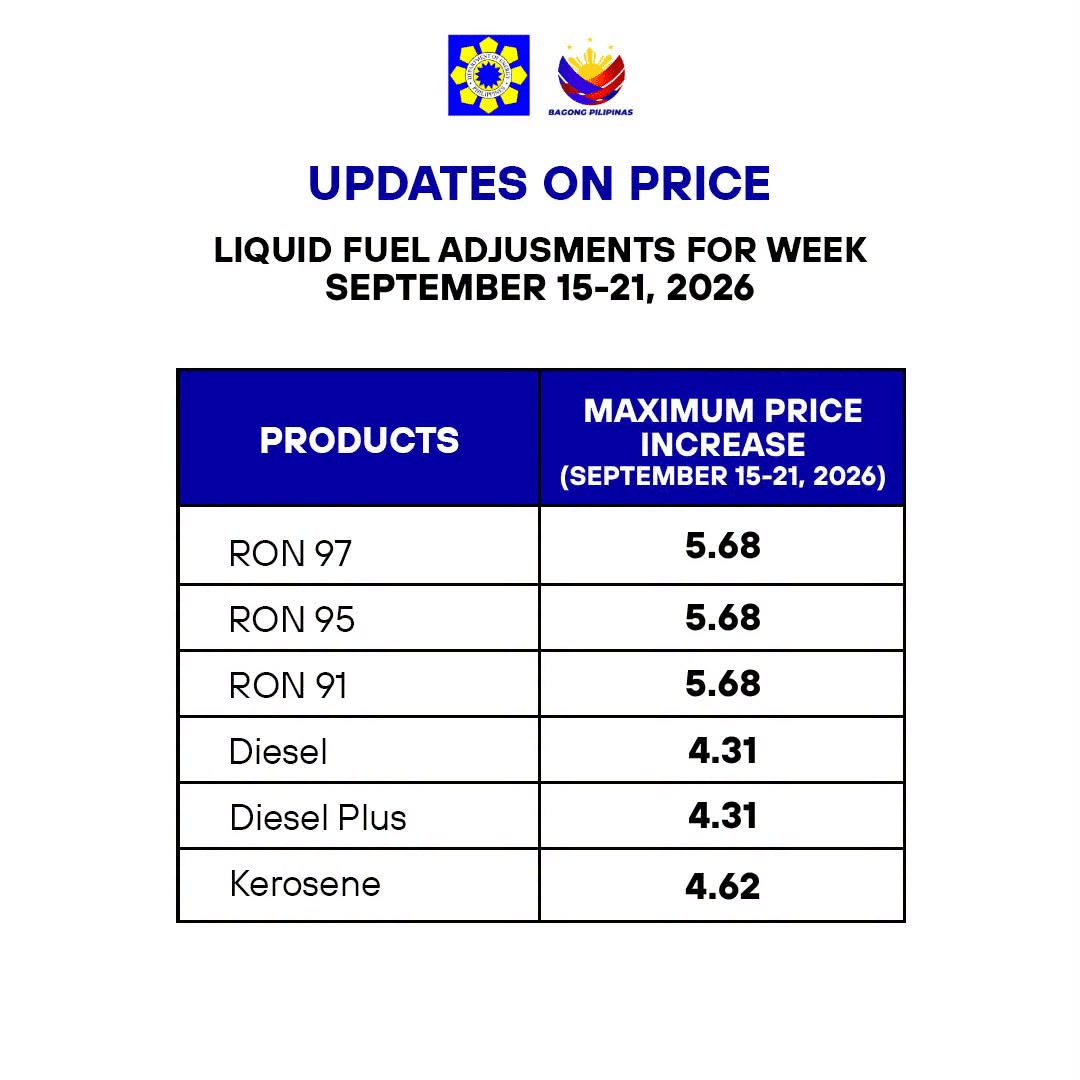
- Starting September 15, fuel prices in the Philippines will increase significantly, with gasoline rising by P5.68 per liter, diesel by P4.31, and kerosene by P4.62.
- The latest hike follows a previous increase and is compounded by ongoing global supply concerns, particularly in the Middle East, affecting oil markets.
- Transport groups are protesting rising fuel costs, urging the government to provide more support for public utility drivers, while discussions on suspending excise taxes on certain fuels are ongoing.
This is AI-generated. Read the article for full context. Report any errors.
MANILA, Philippines – Fuel prices are going up sharply again starting Tuesday, September 15, continuing another run of big pump price hikes as fuel markets remain under pressure.
The Department of Energy (DOE) on Monday, September 14 announced the following fuel price adjustments for the week of September 15 to 21:
- Gasoline – increase of P5.68 per liter
- Diesel – increase of P4.31 per liter
- Kerosene – increase of P4.62 per liter
The adjustments will take effect on Tuesday, September 15.
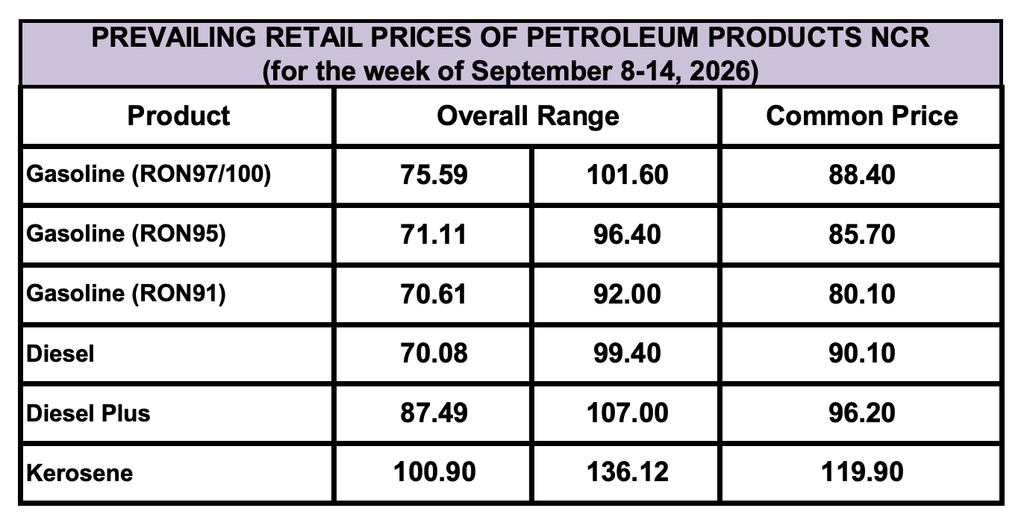
Before the latest adjustment, the DOE price monitoring showed common retail prices in Metro Manila at P85.70 per liter for gasoline RON95, P80.10 per liter for gasoline RON91, P90.10 per liter for diesel, and P119.90 per liter for kerosene for the week of September 8 to 14.
The latest increase follows last week’s big fuel price hike, when gasoline rose by P4.69 per liter, diesel by P5.18 per liter, and kerosene by P5.58 per liter.
Transport group Manibela is also staging a nationwide transport strike on Monday, September 14, citing rising fuel prices. The group has called on the government to provide more relief to public utility vehicle drivers and transport workers, who are among the sectors most immediately hit by higher diesel prices.
The government has so far kept in place a fuel subsidy program for qualified public utility vehicle drivers, with the discount raised to P12 per liter starting August 15, and continuing through September.
The Department of Finance has also said excise taxes on liquefied petroleum gas and kerosene could soon be suspended again if the Department of Energy certifies that Dubai crude oil has breached the government’s $80-per-barrel trigger level.
Finance Secretary Frederick Go is waiting for the DOE certification before recommending the suspension to the Development Budget Coordination Committee, according to the DOF. If approved by President Ferdinand Marcos Jr., the move would revive the tax break for LPG and kerosene that was used earlier this year before it ended on July 8, after the DOE certified that Dubai crude had fallen below the threshold.
The latest fuel price hike comes as global oil markets face another round of supply concerns from the Middle East. Saudi Arabia shut down its East-West oil pipeline after an aerial attack, while the advance of Yemen’s Houthis along the Red Sea raised fears of further disruption to another key shipping route.
That adds to continuing concerns over the Strait of Hormuz, the narrow waterway between Iran and Oman that remains one of the world’s most important oil shipping routes. Any disruption to tanker traffic through Hormuz or the Red Sea can quickly affect global crude and refined product prices.
Local pump prices also remain well above levels seen before fighting involving Iran and US-Israeli forces broke out on February 28. In the last full week before the conflict, DOE data showed common retail prices in Metro Manila at P56 per liter for gasoline RON95, P54.70 per liter for gasoline RON91, P55 per liter for diesel, and P83.47 per liter for kerosene.
The Philippines is a net importer of petroleum products, making local pump prices vulnerable to global oil price swings, foreign exchange movements, regional refined fuel prices, and disruptions in international supply routes. – Rappler.com
KioskNews shows a cleaned-up reading view extracted from the publisher’s page — the original always lives on their site, not ours.