Asia outnumbers North America and Europe combined in top 100 of global science ranking
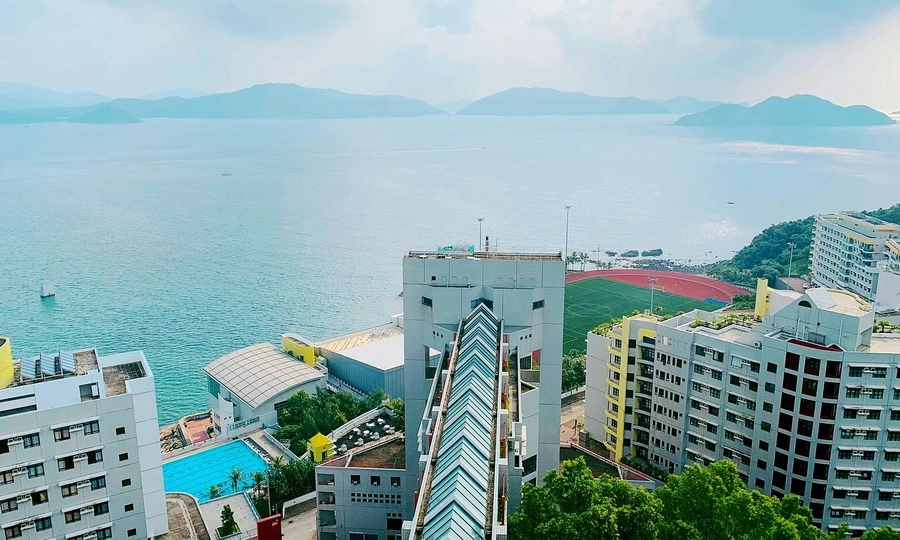
Asian universities hold 47 of the top 100 places in a global ranking of interdisciplinary science, outnumbering those from North America and Europe combined.
North America has 29 institutions in the top 100 of the Interdisciplinary Science Rankings 2027 and Europe 16, British magazine Times Higher Education said in its report on the results, released on Wednesday with Schmidt Science Fellows. Asia's tally is down two from last year.
India has seven universities in the top 100, Hong Kong and Saudi Arabia six each, Indonesia four, and mainland China, Taiwan, Japan and Thailand three each.
Singapore, South Korea, Malaysia, Turkey and the United Arab Emirates have two each, and Jordan and Palestine one each.
The ranking's Asia extends to the Middle East: Saudi Arabia, Turkey, the UAE, Jordan and Palestine account for 12 of the 47. Without them, Asia's count would be 35.
The U.S. alone has 26 universities in the top 100 and six of the top 10, led by the Massachusetts Institute of Technology, which ranks first for a third consecutive year.
Three Asian universities are in the top 10 for the first time, the magazine said. The National University of Singapore climbed from eighth to second, while Nanyang Technological University, also in Singapore, shares seventh place with the University of Hong Kong (HKU), which jumped from joint 32nd.
Seven Asian universities are in the top 20, up from five last year. Saudi Arabia's King Fahd University of Petroleum and Minerals is 13th, City University of Hong Kong 16th, the Hong Kong University of Science and Technology 18th and Thailand's Chulalongkorn University 20th.
Hong Kong's six universities in the top 100, one more than last year, tie it with Saudi Arabia for the third-highest number, behind the U.S. and India. The city also has the highest average overall score, 74.4, among countries and territories with at least five ranked universities.
The Hong Kong University of Science and Technology's 18th place came on its first appearance in the ranking, while City University slipped five places from 11th and the Chinese University of Hong Kong rose 30 places to 39th, Hong Kong newspaper Sing Tao Daily reported.
 |
|
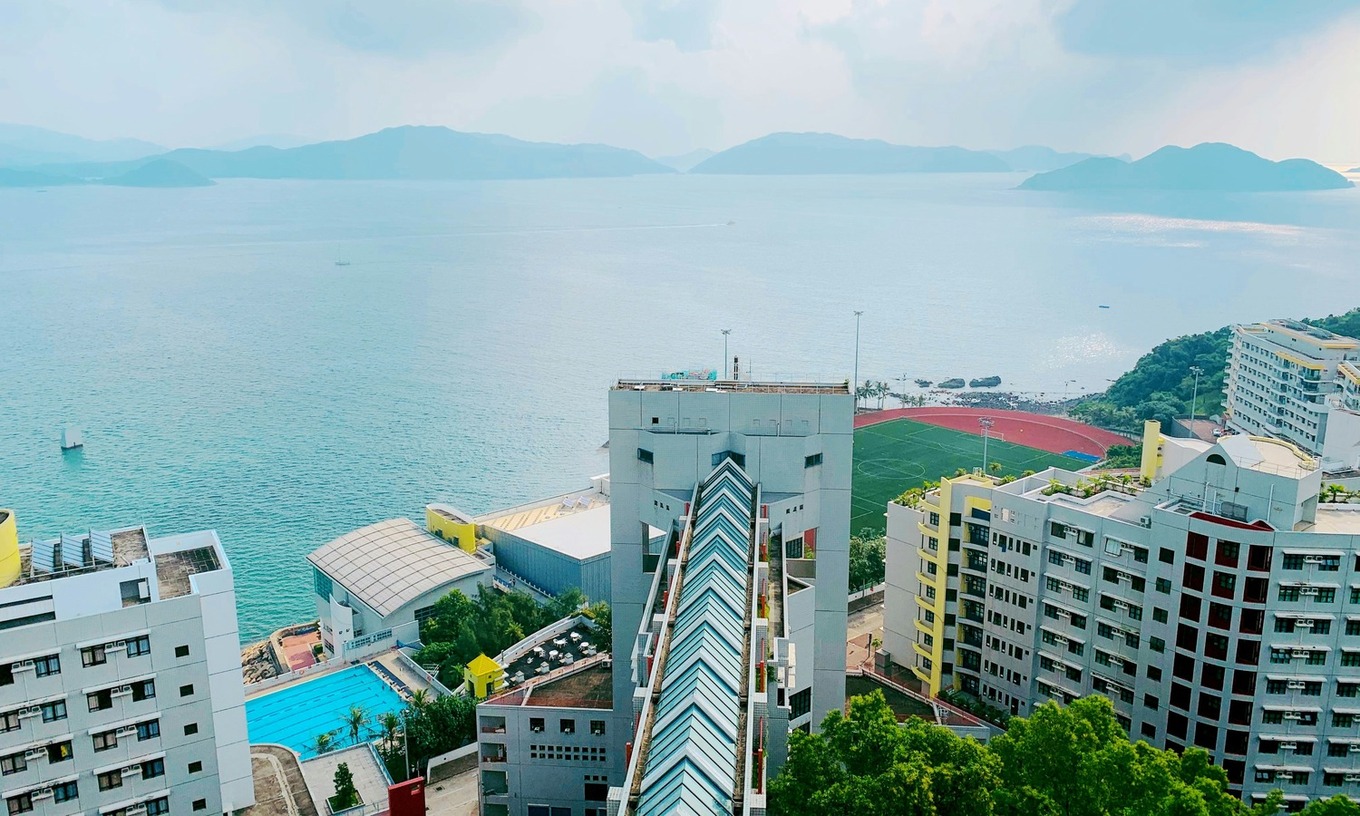
The Hong Kong University of Science and Technology campus in Clear Water Bay, Hong Kong. Photo by Unsplash/Ribhav Kala |
HKU President Xiang Zhang said in a university statement that challenges such as climate change, global health and artificial intelligence "cannot be solved within the boundaries of a single academic discipline."
Launched in 2024, the ranking scores universities on three pillars: inputs, or how well interdisciplinary research is funded; process, covering facilities and administrative support; and outputs, the quality and reach of the research.
Hong Kong and Singapore lead the inputs pillar with average scores of 86.5 and 82.5, and HKU scored 90.8 out of 100 on it, the magazine said.
"Both Singapore and Hong Kong have small but very well funded higher education systems which have received good government support consistently," Philip Altbach, emeritus professor at Boston College's Center for International Higher Education, told Times Higher Education.
Joshua Ka Ho Mok, president of the Hang Seng University of Hong Kong, cited "a few years of hard work" and continued "investment from universities" as factors behind the city's rise.
Asian institutions rose markedly on inputs but performed less well on process and outputs.
The third edition of the ranking covers 1,058 institutions from 102 countries and territories, up from 911 across 94 last year. Asia accounts for 565 of them, more than Europe's 218 and Africa's 113 combined.
The table lists only universities that take part, and Harvard, Oxford, Cambridge, Tsinghua, Peking University and the University of Tokyo are among the major institutions that do not appear in it.
India has the most ranked universities of any country, 102, though its highest, Saveetha Institute of Medical and Technical Sciences, is joint 62nd. Mainland China's top entry, Shanghai Jiao Tong University, is 23rd, South Korea's Sungkyunkwan University 24th and Japan's Tohoku University 46th.
KioskNews shows a cleaned-up reading view extracted from the publisher’s page — the original always lives on their site, not ours.