Beyond Cricket and Hockey: Five Lesser-Known Sports India Will Compete In At Asian Games 2026
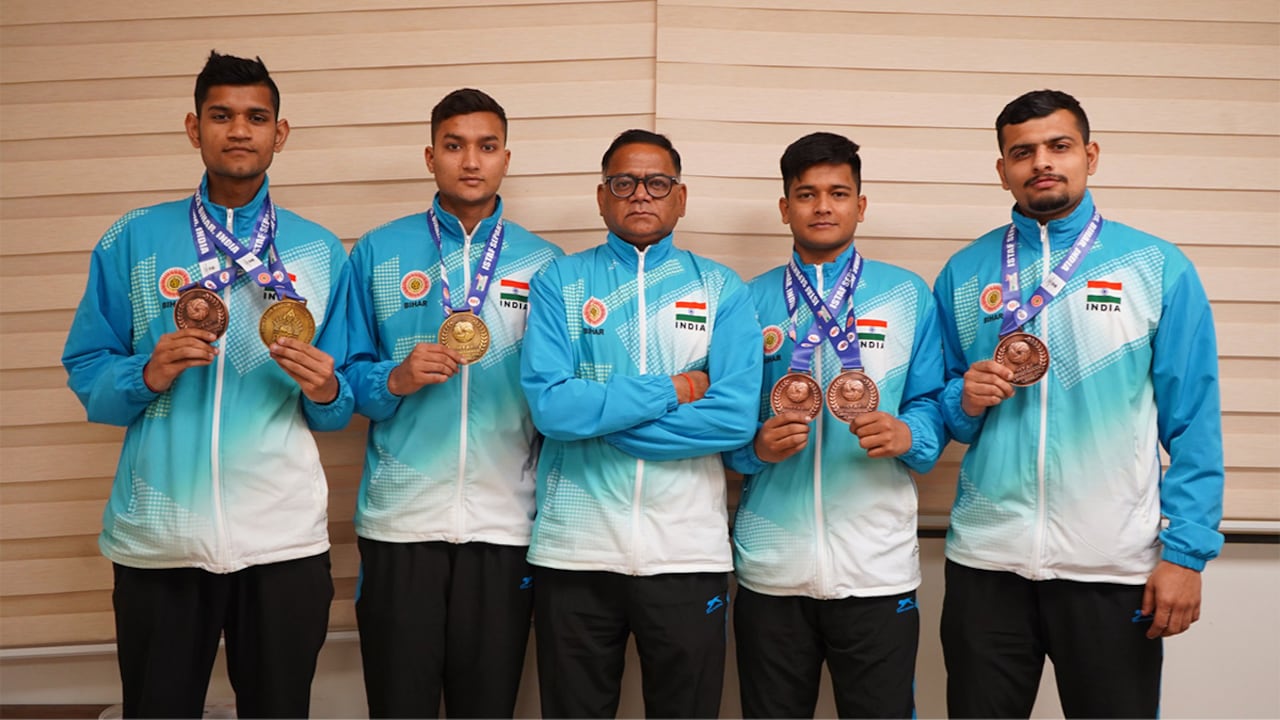
Here's a look at five lesser-known sports in which India will compete at the 2026 Asian Games:© SAI
The Asian Games 2026 will be held in Aichi-Nagoya, Japan, from September 19 to October 4, with around 11,000 athletes competing across a wide range of disciplines. Indian athletes are preparing not only for traditional medal-winning sports such as athletics, hockey, cricket and kabaddi, but also for several lesser-known disciplines where the country hopes to make an impact. From Teqball and Kurash to Soft Tennis and Sport Climbing, Indian competitors will be looking to leave their mark on the continental stage.
Here's a look at five lesser-known sports in which India will compete at the 2026 Asian Games:
TEQBALL: Football Meets Table Tennis
Teqball is played on a specially designed curved table, with players required to control and return a football using any part of their body except the hands and arms.
Combining football skills with the rhythm and structure of table tennis, the sport allows a maximum of three touches before the ball must be returned to the opponent. Events are contested in singles and doubles formats.
Originating in Hungary, Teqball has grown rapidly around the world over the past decade. The sport was officially added to the Asian Games programme by the Olympic Council of Asia in March 2026 and will make its debut in Aichi-Nagoya.
India will be represented by Mohamed Anas Imran Beg, Declan Marshall Gonsalves and Quimcy Dsouza, who will compete in the men's doubles, mixed doubles and women's singles events.
KURASH: Wrestling Without Groundwork
Kurash is an ancient Central Asian form of wrestling in which athletes attempt to throw their opponent onto their back while remaining in a standing position throughout the contest.
The match takes place on a mat called a Gilam. Unlike judo and wrestling, groundwork is prohibited, making throws and balance the key elements of the sport.
Competitors wear a traditional jacket known as a Yakhtak, along with white trousers and a red belt, and compete barefoot.
Actions such as kicking, striking, choking and gripping below the belt are strictly forbidden.
A clean throw that lands an opponent flat on their back with full control is called a Halal, resulting in an immediate victory.
Several traditional commands are used during a match, including Kurash (start), Tokhta (pause) and Bekar (cancel a score).
India has won two Kurash medals at the Asian Games. Pincky Balhara claimed silver in the women's 52kg category at Jakarta 2018, while Malaprabha Jadhav secured a bronze medal.
India's Kurash squad
Men:
Vipin Kumar (-66kg)
Vishal (+90kg)
Yash Kumar (+90kg)
Women:
Pincky Chauhan (-78kg)
Bharti Balhara (-57kg)
Sangita Balhara (-57kg)
SOFT TENNIS: Tennis With A Softer Touch
At first glance, Soft Tennis looks similar to conventional tennis, but the sport uses a lightweight, air-filled rubber ball and lighter rackets, creating a distinctly different style of play.
The sport originated in Japan in the late 19th century before spreading across Asia. It was first included in the Asian Games programme in 1994 and has remained part of the event ever since.
According to the International Soft Tennis Federation, the ball used in competition weighs approximately 30-31 grams, significantly lighter than a standard tennis ball.
Another key difference is the scoring system, which follows a straightforward numerical format rather than tennis' traditional 15-30-40 sequence.
India has participated in Soft Tennis at previous Asian Games editions but is still searching for its first medal in the sport.
India's Soft Tennis squad
Men:
Yogesh Choudhary
Om Yadav
Jay Meena
Aniket Chirag Patel
Aryan Thakur
The men's team will compete in singles, team events and mixed doubles.
Women: Aadhya Tiwari
She will compete in women's singles and mixed doubles.
India will hope to end its medal drought in the sport at Aichi-Nagoya.
SEPAK TAKRAW: Football In A Volleyball Court
Sepak Takraw combines elements of football and volleyball, with teams of three players, known as a regu, competing across a net.
Players are not allowed to use their hands or arms and instead rely on their feet, chest and head to control the ball. Teams are permitted a maximum of three touches before returning the ball to the opposing side.
The sport is known for its spectacular acrobatic kicks, flips and aerial skills.
Originating in Southeast Asia, Sepak Takraw made its Asian Games debut in 1990 and remains one of the most visually exciting yet lesser-known sports in India.
A team earns a point by landing the ball inside the opposition's court or by forcing an opponent to commit an error. Sets are played to 21 points, with teams required to win by at least two points.
India has won two Asian Games medals in the sport, both bronze. The men's Team Regu secured bronze in Jakarta 2018, while the women's Regu team repeated the feat at Hangzhou 2022.
India's Sepak Takraw squad
Men: Arun, Jasvir, Ashish Chundawat, Shyam Singh, Lokhon Singh Elangbam, Bobby Kumar, Ashok Singh Mayengbam, Ram Kumar Sharma, O Amarjit Singha, Malemnganba Singh Sorokhaibam, Henary Singh Wahengbam and Akash Yumnam.
Women: Leirentonbi Devi Elangbam, Prity Langoljam, Menenu Tsukru, Maipak Devi Ayekpam, Priya Devi Elangbam, Shilpa Elangbam, Chaoba Devi Oinam, Seyiekhrieno Tepa and Malemnganbi Yumnam.
SPORT CLIMBING: A Test Of Speed, Strength And Skill
Sport climbing is a form of rock climbing conducted on artificial walls fitted with permanent safety anchors. The discipline made its Asian Games debut at Jakarta 2018.
The sport consists of three disciplines:
Speed
As the name suggests, speed climbing is a race. Competitors climb a 15-metre wall, and the athlete who reaches the top first is declared the winner.
Boulder
Bouldering requires climbers to complete short but highly technical routes without using ropes. The discipline emphasises strength, balance and problem-solving.
Lead
Lead climbing involves ascending a route while clipping a rope into safety points along the wall. Success depends on endurance, technique and route management.
Together, the three disciplines test an athlete's speed, stamina, strength and balance.
Although India has competed in both Asian Games editions featuring sport climbing, the country is yet to win a medal.
India's Sport Climbing squad
Men: Deepu Mallesh (Speed)
Women: Joga Purty (Speed)
With several emerging athletes competing in these niche disciplines, India will be hoping that some of its lesser-known sports can deliver surprise success and perhaps even medals at the 2026 Asian Games.
Featured Video Of The Day
CWG 2026 Weightlifting Gold Medallist, Mirabai Chanu Get Hero's Welcome in Delhi
KioskNews shows a cleaned-up reading view extracted from the publisher’s page — the original always lives on their site, not ours.