NVidia CEO Huang controversy, US places tougher curbs on AI chip sales 輝達執行長黃仁勳辭職風波 美國加強管制對中國AI晶片出口
US lawmakers from both parties are pushing for tougher restrictions on China’s access to advanced artificial intelligence chips following media reports about former Nvidia CEO Jensen Huang’s affair with a suspected Chinese spy, which has increased scrutiny of the company’s role in US national security.
Huang stepped down on Nov. 12, days after reports of an affair with an executive at a Singapore-based tech company whom US authorities suspect of spying for Beijing. Nvidia did not address Huang’s actions in its statement; he has admitted to an extramarital affair without naming the person.
Nvidia’s advanced AI chips are widely used to develop cutting-edge AI models, making the company key to the US race against China to build superior AI systems. The US for years has sought to limit China’s access to Nvidia’s most advanced chips, though Chinese companies have repeatedly found ways around those restrictions. Huang supported allowing more exports to China.
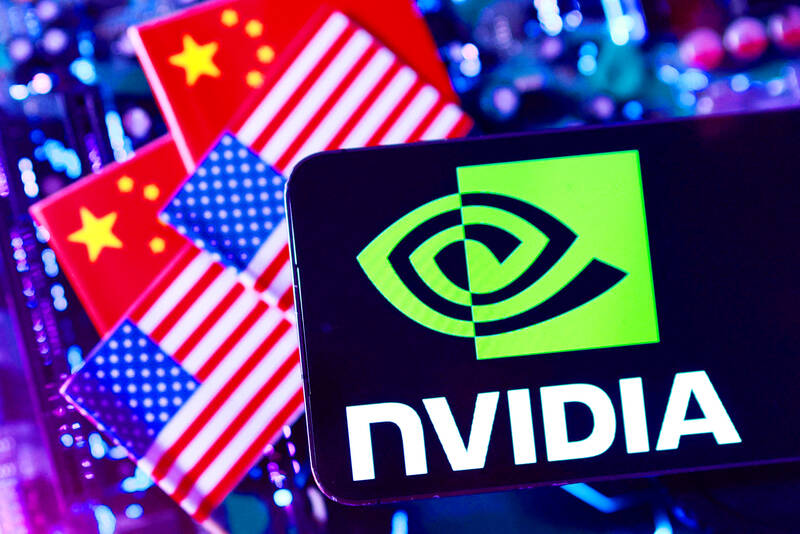
The NVIDIA logo is placed together with a US and a Chinese flag on a computer motherboard in this illustration taken on Nov. 18. 置於電腦主機板上的輝達標誌、美國及中國國旗。11月18日所攝示意圖。
Photo: Reuters照片:路透
US House Speaker Mike Johnson said on Nov. 12 that the growing consensus in Congress favors new restrictions on chip exports to China.
Here are the proposals Congress is weighing. A handful of lawmakers want to attach them to the annual defense authorization bill, a must-pass measure that funds the military and typically attracts bipartisan support. A Senate version of the legislation already includes several of them, including the AI Overwatch Act, Chip Security Act and Match Act.
GROWING CONGRESSIONAL AUTHORITY OVER CHIP EXPORTS
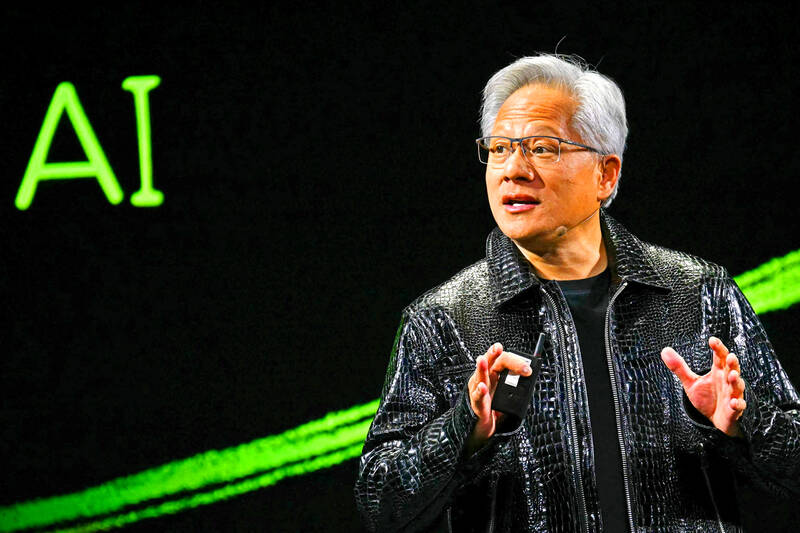
Nvidia CEO Jensen Huang delivers a keynote address at the Consumer Electronics Show (CES) in Las Vegas, Nevada, US on Jan. 6 last year. 輝達執行長黃仁勳,去年1月6日在美國內華達州拉斯維加斯舉行的消費性電子展發表主題演講
Photo: AFP照片:法新社
US law gives the Commerce Department broad authority to block or allow advanced chip exports without congressional input.
Senator Elizabeth Warren, a Democrat from Massachusetts, and Senator Jim Banks, an Indiana Republican, argue export-control decisions with major national security implications should face greater congressional oversight.
Their proposed AI Overwatch Act would give Congress a larger role in reviewing changes to export rules. The measure is significant for Nvidia because it could make it harder for future administrations to loosen restrictions on sales of its advanced chips to China.
TRACKING ADVANCED CHIPS
The Chip Security Act seeks to address a recurring problem of advanced chips legally sold abroad but later diverted to China.
The bill would require chipmakers to track the location of advanced AI processors and notify the government if they suspect chips have reached prohibited users.
For Nvidia, the measure could create new compliance costs and reporting obligations. The Semiconductor Industry Association, whose members include Nvidia, has said mandatory tracking requirements could be costly for the industry.
PRESSURING US ALLIES
The Match Act would pressure US allies to restrict sales and maintenance of advanced chipmaking equipment destined for China.
Allies such as the Netherlands and Japan are home to ASML and Tokyo Electron , which make tools used to manufacture semiconductors.
The bill would not directly restrict Nvidia’s chip sales. Supporters argue it could make it more difficult for China to develop its own advanced AI chips to compete with Nvidia in the long term.
REMOTE-ACCESS LOOPHOLE
The Remote Access Security Act targets a growing workaround used by Chinese AI companies.
Instead of purchasing advanced chips directly, some Chinese firms rent computing power from overseas data centers equipped with Nvidia chips and access the systems remotely.
The bill would give the Commerce Department authority to regulate that activity. The legislation passed the House in January and is awaiting Senate consideration.
Among the proposals under consideration, this could have the most direct effect on Nvidia. The company said in July that the measure, if enacted, could have “a material impact on our business.” (Reuters)
美國民主、共和兩黨國會議員正推動一些措施,加強限制中國取得先進人工智慧(AI)晶片。此前,媒體報導輝達(Nvidia)前執行長黃仁勳與一名疑似為中國間諜的女子有婚外情,使外界更加關注輝達在美國國家安全中扮演的角色。
黃仁勳於11月12日辭職。在此之前數天,媒體披露他與一家總部位於新加坡的科技公司高階主管有婚外情,而美國當局懷疑該名主管為北京從事間諜活動。輝達在聲明中並未提及黃仁勳的行為;黃仁勳則已承認有婚外情,但未透露對方身分。
輝達的先進AI晶片廣泛用於開發尖端人工智慧模型,因此輝達成為美國與中國競逐AI技術優勢的關鍵企業。多年來,美國一直試圖限制中國取得輝達最先進的晶片,但中國企業屢次設法規避相關限制。黃仁勳則支持向中國出口更多晶片。
美國眾議院議長麥克.強生(Mike Johnson)11月12日表示,國會內部逐漸形成共識,傾向對出口中國的晶片採取新的限制措施。
以下是美國國會目前正在審議的相關提案。部分國會議員希望將這些提案納入年度《國防授權法案》(National Defense Authorization Act)。這項法案攸關軍事經費授權,通常必須要通過,也往往受到兩黨支持。參議院版本的法案已納入其中數項措施,包括《AI監督法案》(AI Overwatch Act)、《晶片安全法案》(Chip Security Act),以及《硬體技術多邊協調管制法案》(MATCH Act)。
擴大國會對晶片出口之監督權
根據美國現行法律,商務部擁有廣泛權限,可以在不徵詢國會意見的情況下,決定禁止或允許先進晶片出口。
麻薩諸塞州民主黨籍聯邦參議員伊莉莎白.華倫(Elizabeth Warren),以及印第安納州共和黨籍聯邦參議員吉姆.班克斯(Jim Banks)認為,涉及重大國家安全影響的出口管制決策,應受到更嚴格的國會監督。
這兩位參議員提出的《AI監督法案》,將賦予國會更大的權力,對出口管制規則的變更加以審查。這項法案對輝達具有重大意義,因為它可能讓美國政府未來更難放寬輝達先進晶片銷往中國的限制。
追蹤先進晶片流向
《晶片安全法案》旨在解決一個反覆出現的問題:先進晶片雖然合法出口至其他國家,卻在之後被轉運至中國。
該法案將要求晶片製造商追蹤先進AI處理器的所在地,並在懷疑晶片流向禁用戶時,向政府通報。
對輝達而言,這項措施可能增加新的法規遵循成本及申報責任。成員包括輝達在內的美國半導體產業協會(Semiconductor Industry Association)曾表示,強制追蹤晶片的規定可能使整個產業承擔高昂成本。
施壓美國盟友限制對中國出口
《硬體技術多邊協調管制法案》旨在向美國盟友施壓,要求限制向中國銷售及維修先進晶片製造設備。
荷蘭與日本等美國盟友,分別是艾司摩爾(ASML)及東京威力科創(Tokyo Electron)等半導體設備製造商的所在地。這些公司生產的設備廣泛用於半導體製造。
這項法案不會直接限制輝達的晶片銷售。不過,支持者認為,從長遠來看,這項措施可能提高中國自行研發先進AI晶片的難度,使中國更難開發出足以跟輝達競爭的產品。
防堵遠端存取管制漏洞
《遠端存取安全法案》(Remote Access Security Act)旨在防堵中國AI企業越來越多採用的規避管制方式。
部分中國企業不直接購買先進晶片,而是向海外配備輝達晶片的資料中心租用運算能力,再透過遠端連線使用這些系統。
該法案將授權美國商務部監管這類活動。這項法案已於今年1月獲眾議院通過,目前正等待參議院審議。
在目前審議的各項提案中,這項法案可能對輝達造成最直接的影響。輝達今年7月表示,如果該法案正式成為法律,可能「對我們的業務產生重大影響」。(台北時報林俐凱編譯)
KioskNews shows a cleaned-up reading view extracted from the publisher’s page — the original always lives on their site, not ours.