Online hate researcher keeps hammering X despite deportation threat
The US is not backing down from its fight to deport noncitizen technology researchers who monitor safety risks on the biggest online platforms.
In July, a judge blocked as unconstitutional an immigration policy that the US relied on to weigh whether to detain and deport people who flag illegal or harmful online content as national security risks. In his announcement of the policy, Secretary of State Marco Rubio explained that by targeting a list of researchers—which he stood “ready and willing” to expand—the policy supposedly served to prevent foreign nationals from manipulating digital town squares and censoring Americans.
However, in his order siding with the Coalition for Independent Technology Research (CITR) and staying the policy, US District Judge James Boasberg said the US showed no evidence linking any targeted researchers to a foreign power that might be attempting to censor Americans or manipulate US public debate. Deemed too broad, the policy could sweep in seemingly any noncitizen working in content moderation, the judge said.
Last week, the US appealed that ruling, a move that CITR expected. It notably came two days after another court found that it had no jurisdiction to decide a case raised by a hate speech researcher and lawful permanent resident fighting to strike down the policy permanently.
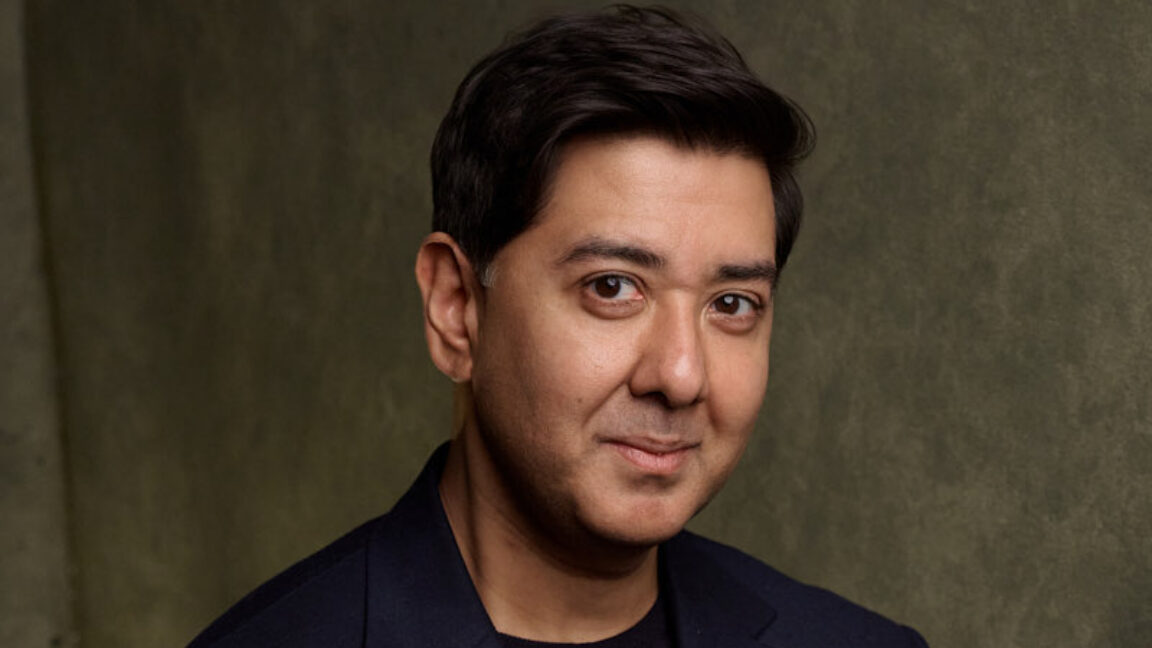
In that case, US District Judge Loretta Preska called out Rubio for determining that the founder of a United Kingdom group called the Center for Countering Digital Hate (CCDH), Imran Ahmed, was a threat due to his lobbying and advocacy.
“Without any hint of irony,” the secretary decided it was “necessary” to deport Ahmed in order to protect American “freedom of expression” and to “reject encroachments” that “undermine the exercise of our fundamental right to free speech,” Preska wrote.
Ultimately, however, she ruled that Congress had removed courts’ authority to block the US government from initiating removal proceedings, so she could not grant Ahmed’s request for a permanent injunction. Even though “Ahmed may very well have valid causes of action,” Preska wrote that his lawsuit was “premature.” Technology researchers are alarmed that the decision seems to suggest that federal courts can never review the legal basis for an immigration policy connected to removal proceedings, even if it’s unconstitutional.
For Ahmed, Preska’s ruling came with high personal stakes. Although the Trump administration has not initiated removal proceedings, Preska’s order allowed it to start that process after only five days. Acting quickly, Ahmed appealed, then asked both Preska and the appeals court to extend a temporary restraining order blocking his detention or deportation. Since she expressed sympathy in her order, it’s not surprising that Preska quickly granted that request, blocking the US from taking any action until the appeals court rules on Ahmed’s request.
But now his fate depends on the appeals court agreeing that a federal court should have the “power to prevent the illegal arrest, detention, and transfer of a green card holder based on the Administration’s policy of retaliating against speech criticizing the practices at the major technology companies,” his appeal said.
Ahmed told Ars that he remains optimistic that the Court of Appeals for the Second Circuit will see through the government’s seeming plan to use the policy to “broadly chill protected speech.”
“As a plurality of the active judges of the Second Circuit has already held,” the State Department’s cited authorities “do not permit the Executive to arrest, detain, or transfer noncitizens without judicial review,” Ahmed argued.
Boasberg apparently agreed. He held in the CITR case that it matters that “the prospect that [a] policy may later contribute to some noncitizen’s removal does not transform a challenge to the policy into the review of an order of removal.”
US lacks evidence of censorship
Ahmed noted that the US never opposed the restraining order, even though his research with CCDH has continued. Last week when the US started more aggressively defending the policy, CCDH contributed research to a major New York Times investigation. In that report, spot checks showed that some of the “most egregious examples” of child sexual abuse material (CSAM) continue to go undetected on Elon Musk’s social media platform X.
CCDH “gave access to more than four million links to Grok-generated images compiled for researchers” at the Canadian Center for Children Protection for that review, the NYT reported. In total, 65 AI-generated CSAM images were found, as well as 75 known CSAM images. Some images were viewed hundreds of times. (Asked for comment, X linked to an X Safety post saying, “X has zero tolerance for CSAM.)
Ahmed told Ars that officials specifically cited his group’s support for the European Union fining X a record $1 billion as cause for his national-security designation. However, so far, no evidence has shown that he might pose “serious adverse foreign policy consequences.” Instead, officials rely on “shifting, contradictory, and unsupported rationales” to justify what Ahmed alleged is retaliation for being a thorn in Musk’s side.
Meanwhile, Ahmed “faces the imminent prospect of unconstitutional arrest, punitive detention, and expulsion” from his home country, where he lives with his American wife and daughters.
“I may be British, but even I know that transparency isn’t censorship and that speaking truth to the most powerful person on the planet is precisely the intention of the First Amendment,” Ahmed said.
Reached for comment on what risk Ahmed’s ongoing research might pose to American tech firms or online discourse, a spokesperson told Ars that the State Department does not comment on ongoing litigation. However, the spokesperson reiterated that the department has authority to recommend removal proceedings for any noncitizen whose US activities could have “serious adverse foreign policy consequences.”
Appeals court may favor content mods
In his appeal, Ahmed argued that the immigration policy violates several laws, including the First Amendment and the due process clause of the Fifth Amendment.
Preska agreed that those claims may be valid, but she nevertheless found that the relief he was supposedly seeking—a permanent injunction blocking the US from using the policy to detain or deport him—stripped the federal court of jurisdiction.
Although Ahmed disclaimed seeking that relief and sought other relief, including vacating the policy and declaring the government’s actions unconstitutional, his “single most important reason for filing this case is to be able to remain here with his wife and daughters,” Preska wrote. To her, it seemed the relief he sought was “inextricably linked” to “any potential removal order he might face because it is ‘a necessary prerequisite’ to stop his deportation.”
Preska was further bound to deny Ahmed’s petition because of a recent ruling that found the government’s authority over removal proceedings can extend to “questions of law and fact” arising in challenges to removal, “not just removal orders,” she wrote.
But that recent ruling is currently being challenged, Ahmed’s appeal noted. “The full Court took the unusual step of granting rehearing en banc before a petition for rehearing was filed,” due to the belief by six judges that federal courts do “have jurisdiction to provide relief in these circumstances,” his appeal said.
“That history strongly suggests that the Court will soon hold that federal courts possess jurisdiction,” Ahmed argued. “At the very least, it raises a strong showing” that he “will prevail on the merits with respect to jurisdiction.”
He also argued that courts have distinguished claims of retaliatory detention as independent of claims tied to removal proceedings.
To keep his fight alive, Ahmed reiterated to the appeals court that he does not want an injunction that “would prevent the Government from commencing removal proceedings against him.” Instead, he wants to resolve his challenges regarding the “government’s use of arrest and detention to punish protected speech,” which he argued “can be resolved without reviewing a removal order or preventing an immigration court from adjudicating his removability.” That’s necessary to prevent widespread harms across the content-moderation sector, he alleged.
“It would be deeply concerning if people could be detained at the whim of any government official,” Ahmed told Ars.
“We will not be silenced”
Ahmed is hoping the appeals court will approve his request to stay the restraining order while weighing these questions that could impact technology research across the US.
In his appeal, he confirmed that he “does not intend to leave the United States or voluntarily submit to immigration detention while he seeks appellate review. He will remain with his American wife and children and continue to advocate for transparency and accountability for social media companies. Without a stay, he will do so under the immediate threat that the government may arrest and detain him at any time.”
Ahmed told Ars that he’s willing to risk temporary detention to protect technology researchers’ speech rights. But he thinks that “anyone with a passing familiarity with the US Constitution will be able to see this for what it is, which is the use of the awe-inspiring power of the US government to silence someone who has annoyed a friend of the administration, Mr. Musk.”
He said that he founded CCDH with the goal of making platforms safer for everyone after losing a colleague to a gunman radicalized online. About 90 percent of that work is simply testing if promised safeguards actually work, Ahmed told Ars. Despite the pressure from Trump officials, CCDH continues to flag defective safeguards. This fall, they’re preparing a report on safety on AI platforms that he confirmed will show that safeguards from firms, including OpenAI, aren’t working as they should.
“If the aim of the State Department or the tech overlords who’ve been celebrating this and no doubt urging them on from the beginning was to silence us, they failed,” Ahmed told Ars. “We will not back down,” he continued. “We will not be silenced.”
At home, his daughters are too young to understand how his work now threatens to break up their family. Seven years into CCDH’s monitoring of social media for harmful content, Ahmed told Ars that he remains dedicated to protecting Americans online and still hopes to become an American citizen one day. If necessary, he’ll take his fight to the Supreme Court.
“We have to show that we will not be cowed from this vital work, and it is vital,” he told Ars.
And while the focus isn’t completely on Musk, when it comes to X—which has come under fire globally after its chatbot Grok generated CSAM—Ahmed questioned why the Department of Justice hasn’t sparked their own probes based on his group’s and others’ reporting.
“I do think that DOJ should be focusing on a platform that is now proliferating and creating child sex abuse material rather than trying to punish the person who’s identifying the problem,” Ahmed told Ars.

Ashley is a senior policy reporter for Ars Technica, dedicated to tracking social impacts of emerging policies and new technologies. She is a Chicago-based journalist with 20 years of experience.
KioskNews shows a cleaned-up reading view extracted from the publisher’s page — the original always lives on their site, not ours.