US-Israeli browser startup valued at $6.4 billion as AI agents reshape workplace risk

Island, a cybersecurity startup behind an Israel-built enterprise browser that competes with Google’s and Microsoft’s web browsers, has raised fresh capital, pushing its valuation to $6.4 billion.
With the $400 million in new funds announced on Thursday, the US-Israeli firm plans to hire more engineers for its Tel Aviv research and development center and expand its browser platform to help businesses manage security threats as AI agents are increasingly integrated into the everyday workplace. Island last raised $250 million in capital at a valuation of $4.8 billion in May 2025, following a $175 million investment at $3 billion two years ago.
The Dallas-based firm was founded in 2020 by Dan Amiga, a serial entrepreneur and veteran of the Israeli army’s 8200 unit, and Mike Fey, former Symantec President. Built by its R&D team in Israel, Island’s browser for enterprises — named simply the Island Enterprise Browser — is designed to be more secure than commercial browsers such as Google Chrome and Microsoft Edge. Its added security and productivity features give businesses control over web app access while allowing employees and external workers or partners to safely use company data from any device after logging in.
0:00 / 0:00
Promoted: Bridges for Peace

The features include tools to monitor how users copy, paste, upload and download information, and to investigate potential threats by bad actors that lead to breaches, data loss and ransomware attacks.
Amiga, who also serves as Island’s CTO and is based in Israel, elaborated that the platform “tells the enterprise who or what is acting, what it can reach, what data it can use, what it is doing, and whether that action should be allowed.”
Sign up for the Tech Israel Daily and never miss Israel's top tech stories
By signing up, you agree to the terms
“This lets organizations see the full chain of activity and govern it in real time,” Amiga said.
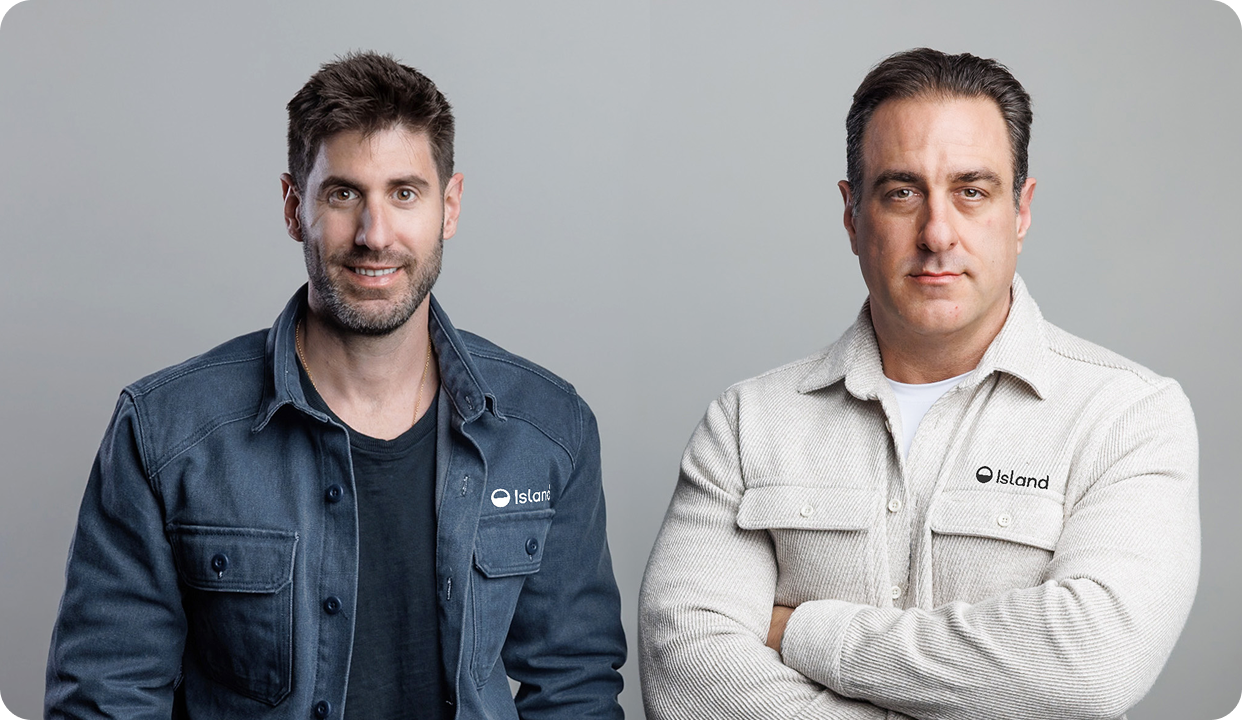
Island has grown to a workforce of 1,000 people, 400 of whom are based at the firm’s Tel Aviv R&D facility. Among its customers are eight of the 10 largest US banks, pharma giants like Pfizer, e-commerce firm Amazon, American Airlines, the Marriott hotel chain and travel website booking.com.
“We’ve entered a new era in which people and AI agents work side by side,” said Island’s CEO Fey. “Just like humans, agents need the right context, access, guardrails and accountability to succeed.”
“Island created the first Enterprise Browser to protect the primary place people work — this investment gives us even more capacity to innovate with our customers and help them safely scale AI,” Fey added.
With AI agents increasingly becoming part of the workplace, Island said it has expanded its focus to help enterprises onboard, govern and audit AI tools across the human and agentic workforce.
Island joins a host of startups racing to protect businesses from new security threats that must be blocked at the browser level — increasingly the main gateway through which employees interact with company systems in hybrid workplaces. Another player in the enterprise browsing space is Israeli-founded Talon Cyber Security, bought by Santa Clara, California-based cybersecurity firm Palo Alto Networks in 2023.
Island’s latest funding round was led by New York-based venture capital firm Evolution Equity Partners. Other investors, including Prysm Capital, Sequoia Capital, Coatue Management, Cyberstarts, Insight Partners, and J.P. Morgan Growth Equity Partners, participated. CrowdStrike co-founder and cybersecurity entrepreneur Dmitri Alperovitch also joined. To date, Island has nabbed a total of $1.2 billion from investors.
Help us report truthfully on social media

As a multimedia journalist, my job is to take the quality, fact-based journalism produced by The Times of Israel newsroom and make it accessible across every platform — from Instagram posts to podcasts to short-form videos.
This is how many, especially young people, consume news these days. But misinformation is rampant on social media. Our team at ToI produces accurate, responsible short-form reporting on Israel and the Jewish world.
If you believe in the importance of factual social media journalism, please consider joining our reader support group, The Times of Israel Community. Your financial support is essential to sustain responsible multimedia reporting.
— Gabriella Jacobs, multimedia journalist
Support our work Support our work Already a member? Sign in to stop seeing this
KioskNews shows a cleaned-up reading view extracted from the publisher’s page — the original always lives on their site, not ours.