‘Protest not offence because it displeases authorities’: Calcutta High Court quashes FIR
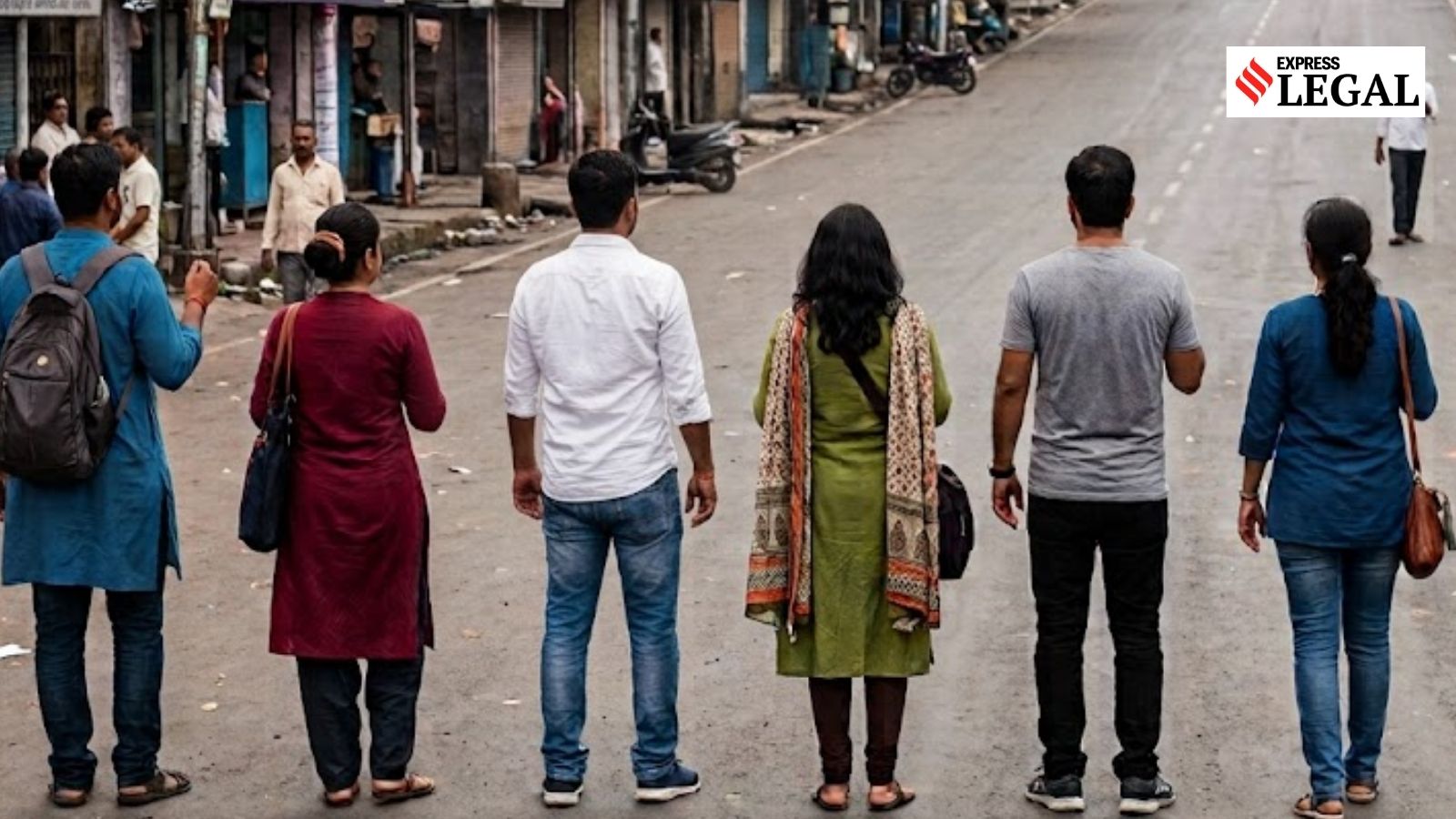
The FIR does not disclose the ingredients of any of the offences invoked in the FIR, and no prima facie case is made out against the petitioners. (AI-generated image)
The Calcutta High Court has quashed criminal proceedings against six School Service Commission candidates booked over a protest against alleged recruitment irregularities in 2021, for allegedly violating COVID-19 protocols.
Justice Anuj Singh observed that “a demonstration does not become an offence merely because it was unwelcome to those in authority.”
Calling it a settled principle of law, Justice Singh added that when commission of any offence is not disclosed on a careful and constructive reading of the FIR as a whole, the court is empowered to quash such proceedings to prevent any further abuse of the process of law and to meet the ends of justice.
In an October 7 order, the court said, “A bare reading of the FIR does not disclose the ingredients of any of the offences invoked in the FIR, and no prima facie case is made out against the petitioners. It is an unavoidable inference that the petitioners are being punished for the protest, making it a vexatious and frivolous proceeding.”
The order added, “In the present case as well, the FIR does not disclose whether there was any reason to believe that the petitioners were carrying any disease or were infected with COVID-19.”
Protest over recruitment to an FIR
The petitioners are a group of aggrieved persons who, to express their grievances against the improper recruitment procedure adopted by the School Service Commission, started a peaceful protest on September 28, 2021.
They contended that they wanted to express their grievances in front of the Education Minister of the Government of West Bengal, and thus went in front of his house to protest against hunger, unemployment and illegal recruitment. However, the police filed an FIR, which alleged that the candidates violated COVID protocols and did not disperse on being asked, tried to obstruct the way of public navigation and restrained the officials from discharging their duties.
Story continues below this ad
Advocates Arka Pratim Chowdhury, Puja Rajbhor and Swasttik Batabyal submitted that the petitioners were exercising their right to assemble peacefully and voice their grievances under Articles 19(1)(a) (freedom of speech and expression) and 19(1)(b) (right to assemble peacefully without arms) of the Constitution of India.
It is further submitted that the police authorities were not authorised by the State to take action against the petitioners, as no notification/notice was issued in 2021 authorising such action against peaceful assembly and protest.
Advocate Goutam Misra, representing the State, has opposed the instant petition and argued that the petition is not maintainable and deserves to be dismissed.
No unlawful assembly, criminal case quashed
The court said that even if the allegations in the present FIR are accepted in their entirety, they fall short of the requirements to be considered as an unlawful assembly. It said that the FIR does not disclose the common object with which the assembly was formed, and unless the common object is one of the five objects enumerated under 14 section 141, it cannot be held as an unlawful assembly.
Story continues below this ad
The court held that mere protest and raising slogans cannot be said to be an unlawful common object under section 141. Hence, the conduct described, therefore, does not attract section 143, the court added.

Somya Panwar is a legal journalist at The Indian Express (Digital), where she covers the various High Courts across the country and the Supreme Court of India. Her writing is driven by a deep interest in how law influences society, particularly in areas of gender, feminism, and women’s rights. She is especially drawn to stories that examine questions of equality, autonomy, and social justice through the lens of the courts. Her work aims to make complex legal developments accessible, contextual, and relevant to everyday readers, with a focus on explaining what court decisions mean beyond legal jargon and how they shape public life. Alongside reporting, she manages the social media presence for Indian Express Legal, where she designs and curates posts using her understanding of digital trends, audience behaviour, and visual communication. Combining legal insight with strategic content design, she works on building engagement and expanding the desk’s digital reach. Somya holds a B.A. LL.B and a Master’s degree in Journalism. Before moving fully into media, she gained experience in litigation and briefly worked in corporate, giving her reporting a strong foundation. ... Read More
KioskNews shows a cleaned-up reading view extracted from the publisher’s page — the original always lives on their site, not ours.