Josh Hartnett's Netflix Thriller 'Below' Subverts Its 'Jaws'-Style Horror With Deeper Themes | Review

Carly Lane is an Atlanta-based writer and critic who has been with Collider in some form or fashion since 2021. She considers herself a television nerd, diehard romance/sci-fi/fantasy reader, and nascent horror lover. Her fondness of books is only eclipsed by the towering TBR that her shelves can't possibly contain.
She is the author of A REGENCY GUIDE TO MODERN LIFE: 1800s ADVICE ON 21ST CENTURY LOVE, FRIENDS, FUN AND MORE, published through DK Books (an imprint of Penguin Random House) and currently available wherever books are sold.
Sign in to your Collider account
For many, the possibility of what's really beneath the water is a terrifying notion, so it's hardly surprising that deep-sea threats have fueled countless horror and thriller stories over the years. From Jaws to The Meg, Creature from the Black Lagoon to Underwater, these tales of unknown perils lurking fathoms deep are all rooted in what could finally come to the surface and make themselves known to the unsuspecting characters who believe they're safe on land.
Some of these hover more decisively in the category of "creature feature," where an oversized fish, bordering on monster status, is willing to defend its territory by any means necessary. Others are more wrapped up in psychological horrors, where fears rooted in very real anxieties prove more unsettling than anything the ocean itself could birth. Jesse McKeown's new Netflix thriller, Below, combines both of these concepts, using the ominous threat of a mysterious sea creature to offer a quieter examination of family, legacy, and community. Its refreshingly brisk run of six episodes — all of which were provided for review — means the series never overstays its welcome, but it also results in the story only going so deep into its most intriguing themes.
What Is 'Below' About?
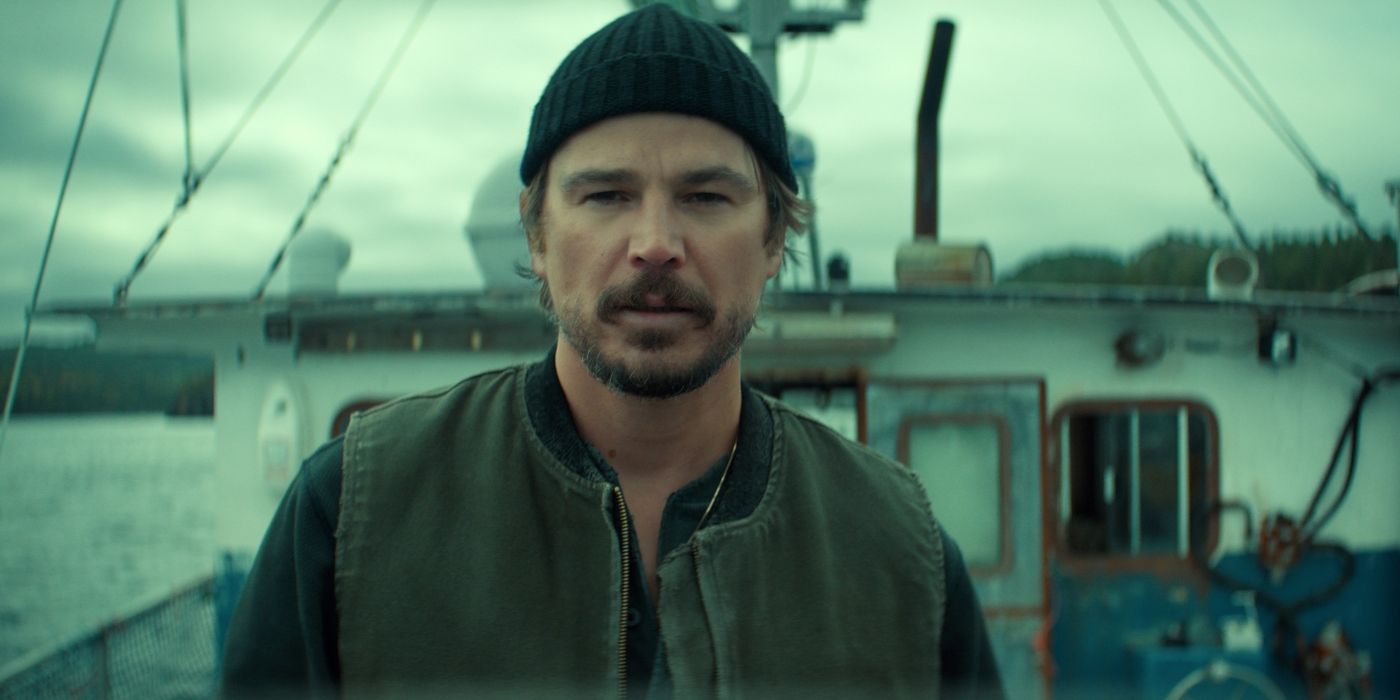
Calvin Penney (Josh Hartnett) is a consummate fisherman who hails from generations of the same, steadfast in his convictions and dedicated to providing a comfortable life for his family in the remote Newfoundland town of Snook's Arm. His humble existence hasn't come without loss, though, starting with the death of his father decades prior, which he himself witnessed at a young age. By present day, Calvin is a widower and father to three children — Mary (Ruby Stokes), who's sought a bigger life beyond her small-town upbringing; Jay (Rohan Campbell), whose reckless ways with money are starting to have dangerous consequences; and Wade (Charlie Heaton), who's remained in Snook's Arm with the hope of one day becoming his father's right-hand fisherman.
Even though his kids are now essentially grown-ups themselves, Calvin alternates between trying to let them chart their own path and not wanting them to forget their roots. To a point, that might be impossible when Snook's Arm is small enough that everyone knows everyone else's business; in addition to Calvin's sister, Ruth (Willow Kean), who also happens to be the town's harbormaster, the locals give the adage "it takes a village" whole new meaning.
When a massive iceberg drifts in from the Arctic, it seems like the perfect omen during a designated "Come Home Year," in which any Newfoundlanders who have moved away are welcomed home for the summer. It's also a much-needed boost for a local economy that mostly sustains itself on fishing and selling vodka made from ice that breaks off from glaciers up north. What the townspeople couldn't have anticipated, however, is the mysterious sea creature that seems to have tagged along for the ride.
When lifelong residents of Snook's Arm and tourists alike start getting picked off — not just along the shore, but out on the boats that make their very livelihoods possible — Calvin partners with visiting marine zoologist Fonda Howander (Mackenzie Davis) to figure out what's ultimately responsible and put a stop to it if necessary. As the body count rises and superstition begins to override logic, the arrival of multiple outsiders, including those who have dedicated themselves to hunting the creature itself, could be even more dangerous than the unknown threat beneath the surface.
Netflix's 'Below' Makes Newfoundland Feel Like Another Character
Comparisons to Steven Spielberg's classic thriller are probably inevitable, but one element that McKeown's Below undoubtedly has working in its favor is the setting. Since the series not only takes place in Newfoundland but was also filmed there, the resulting immersiveness is as effective as dropping the viewer into the deep end, providing a definitive visual identity for a story that revolves around long-held tradition. The characters' lilting Newfoundland accents, which some actors deliver more consistently than others, only help Snook's Arm feel more lived-in — every man is likely to be dubbed a "b'y," for instance, regardless of their true age. The series' decision to supplement its cast with true locals results in the presence of any mainlanders, with their lack of dropped g's, feeling even more like an encroachment compared to the potentially mythical monster prowling offshore. Even if the mention of a sea hag might be
When we first meet the Penney family, they're at a clear crossroads — one that involves leaving the only home they've ever known or digging in their heels and staying put, come hell or high water. Hartnett, who many have argued is having a career renaissance all his own, proves more than up to the task of serving as Below's main narrative anchor, inhabiting Calvin's seemingly inherited stubbornness as well as his instinct to submerge deeper vulnerabilities with equal commitment. As Wade, Heaton is afforded a bit more humor and credulousness to play than he did over five seasons on Stranger Things, and deftly navigates moments of bearing wide-eyed witness to the story's various terrors with a young man's increasing desperation to prove his worth to his father.
Collider Exclusive · 8 Questions · 2 Minutes What Is Your Biggest Horror Nightmare? Elm Street · Chucky · Scream · The Conjuring
Four horror franchises. Four completely different ways of scaring you. One waits until you fall asleep. One makes sure nobody believes you. One is already in your group of friends. And one is in the house with your family. Answer eight quick questions about how you actually watch horror, and find out which nightmare was built for you.
😴Elm Street(Freddy Krueger)
🧸Chucky(Child's Play)
📞Scream(Ghostface)
🕯️The Conjuring(The Warren Files)
01
Which horror scene makes you cover your eyes? Four classic images. One of them is worse than the others for you.
02
You are home alone and you hear a noise. First thought? Everybody has one. It arrives before you have decided anything.
03
Which horror movie rule would you break first? Everybody thinks they would survive. Almost nobody actually does.
04
Something genuinely frightening happens. What do you do? Not in a film. In your actual living room, tonight.
05
How do you actually watch a horror film? Be honest about this one. Nobody is checking.
06
Somebody offers you serious money. Which do you still refuse? The amount does not matter. There is one on this list you are not doing.
07
Which feeling stays with you a week after the film? Good horror does not stop when the credits do.
08
Something wakes you at 3am. What is the worst possibility? Eight questions in, this is the one that decides your nightmare.
The Lights Just Went Out Your Nightmare Is…
Four franchises, four completely different ways of getting underneath your skin. This is the one built out of your particular fear, why it works so well on you, and what it would leave behind.
Elm Street
Your nightmare does not wait outside the door. It waits for you to close your eyes, which you are going to have to do eventually, because nobody has ever won that particular argument.
- Freddy is horror's cruellest idea: a threat that lives in the one place you cannot guard, cannot lock, and cannot avoid forever.
- You are the one who is fine during the film and wide awake at two in the morning. Your own head is where this does its damage.
- These films understood exhaustion as a horror engine. The kids on Elm Street do not lose because they are weak. They lose because they are tired.
- You can lock every door in the house. You still have to sleep.
Chucky
Your nightmare is not really the doll. It is the face of the person you tell, and the way they decide, very kindly, that you have imagined all of it.
- Chucky works precisely because he is absurd. That is the trap: the more accurately you describe him, the less anybody is going to believe you.
- You are the one shouting at the screen because the characters are not listening. You know that feeling from real life too.
- The franchise is at its best when the adults in the room are the real obstacle, and you have met those adults.
- By the time somebody finally believes you, you will have handled most of it on your own.
Scream
Your nightmare has your number, knows your name, and has almost certainly been inside your house before. The worst part is that you already know them.
- Scream is the only one of these where the killer takes the mask off and turns out to be somebody who was at the party.
- You are the person who calls the twist out loud before it lands. You watch people the same way you watch films.
- The franchise made the rules of horror part of the plot, which means the survivors are the ones paying attention. You would be paying attention.
- Everybody is a suspect, including the person who just offered to walk you home.
The Conjuring
Your nightmare is not really about you. It is about the people asleep down the hall, and the feeling that whatever is here is not interested in leaving.
- The Conjuring films are domestic horror. The house, the family, the perfectly ordinary room that quietly stops feeling ordinary.
- Your instinct is to get everybody into one room. Your fear is protective rather than personal, which is rarer than it sounds.
- This is the one franchise where belief is the weapon. The people who come through it are the ones who are not alone and refuse to be.
- Whatever is here did not come for you. It came for the household, and you are the one standing in the hallway.
Stokes and Campbell, to their credit, add welcome dimension that renders the Penney family that much more layered, while Kean grounds her performance as Aunt Ruth in a straight-talking pragmatism that allows her to believably go toe to toe with her onscreen sibling. Meanwhile, Davis takes a character who could have only amounted to scientific exposition and little else and makes her immensely likable; it's hard not to yearn for more scenes between her and Hartnett, though, especially since the show drops more than one hint that Fonda and Calvin might be harboring a mutual crush.
'Below' Subverts the Traditional Deep-Sea Thriller in More Ways Than One
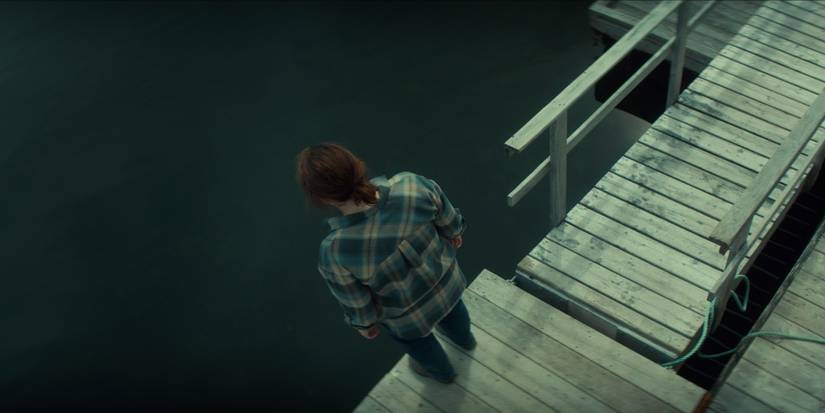
With only six episodes, there's very little opportunity for Below to meander, which honestly makes for a refreshing change of pace in a streaming landscape where so many series feel like they're pulling every story thread to its breaking point to justify a longer season. Simultaneously, though, it means that Below can't spend too much time keeping its cards close to the vest, but it turns out that the series is infinitely more interesting when it can't easily offer an explanation. The first half of the season is unquestionably where the show is at its strongest and scariest, from a late-night boat trip going horribly wrong to a tense submersible sequence that may trigger even the most latent claustrophobia. The smaller episode count, however, also provides less runway to delve into the inner lives of certain characters, resulting in some parties being defined by pretty simplistic motivations when all is said and done.
It's hard not to respect a show willing to delve into bigger themes as impactful as the climate crisis and forced resettlement, but it does result in the story migrating from supernatural thriller to more of a heartfelt family drama once the creature's origin and intention are unmasked, which may turn off some viewers who were expecting a more consistent horror throughline. By the time you've concluded your own visit to Below, you might not be tempted to return, but you won't regret spending a weekend there.
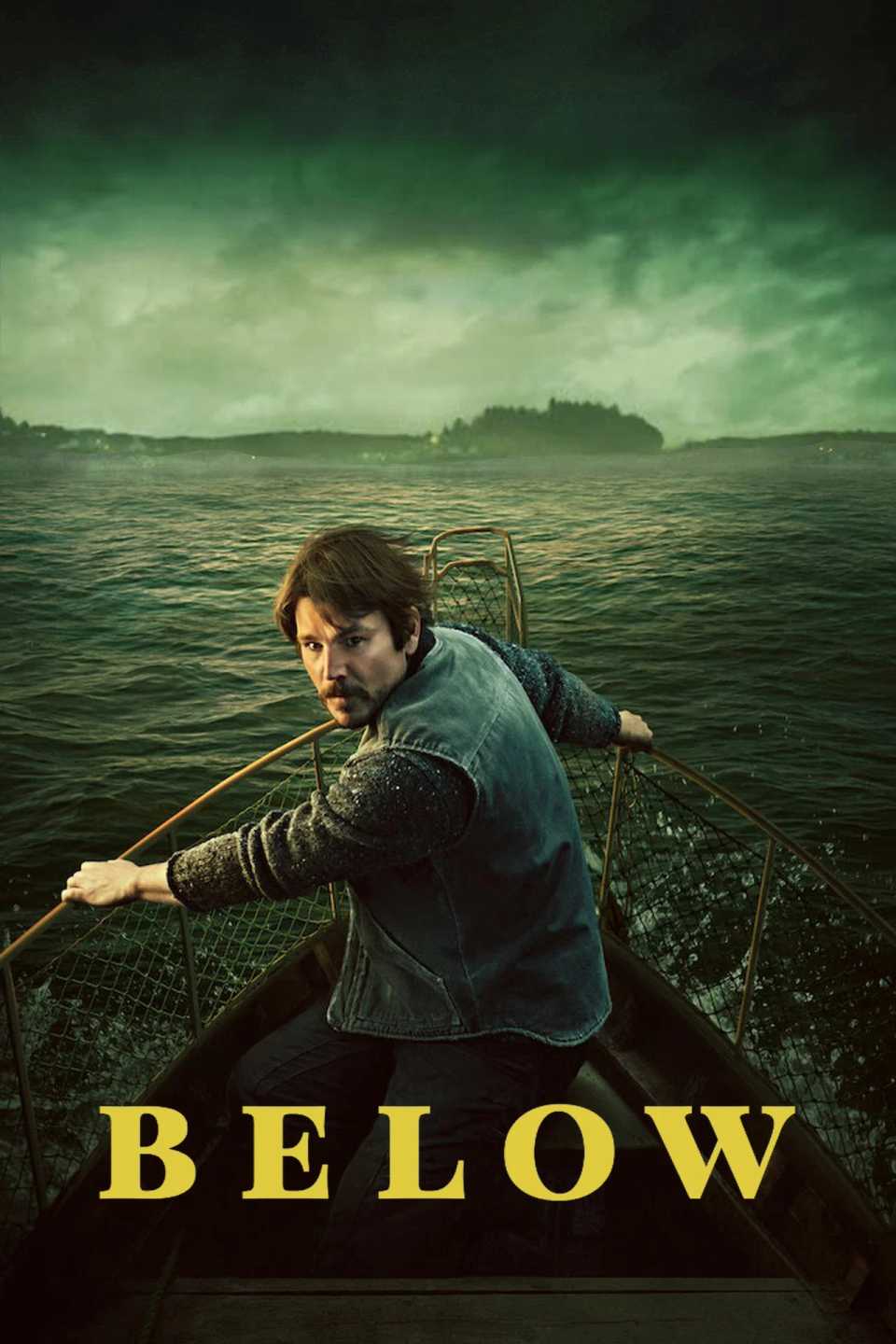
Below is now streaming on Netflix.
- Release Date
- October 8, 2026
- Network
- Netflix
- Showrunner
- Jesse McKeown
- Directors
- Jamie Childs, Stephen Dunn, Helen Shaver
- Writers
- Perry Chafe, Jesse McKeown, Karen Walton, Natty Zavitz
Cast
-

Calvin Penney
-

Fonda Howander
- Creator(s)
- Jesse McKeown
Pros & Cons
- Josh Hartnett plays a solid lead as Calvin Penney, who finds himself torn between tradition and encroaching threats.
- The show is infinitely scarier and more interesting when the mystery hasn't been unveiled yet.
- The decision to film on location gives the story a welcome immersion, with Newfoundland becoming a character in itself.
- With only six episodes, there's not much time for every character and their motivation to be explored to the fullest.
- The show's genre pivot from supernatural thriller into family drama may turn off some viewers expecting more consistent horrors throughout.
KioskNews shows a cleaned-up reading view extracted from the publisher’s page — the original always lives on their site, not ours.