Food For Charles Sobhraj's Girlfriend: Sonia Gandhi On Her Tihar Visits When Indira Gandhi Was Jailed
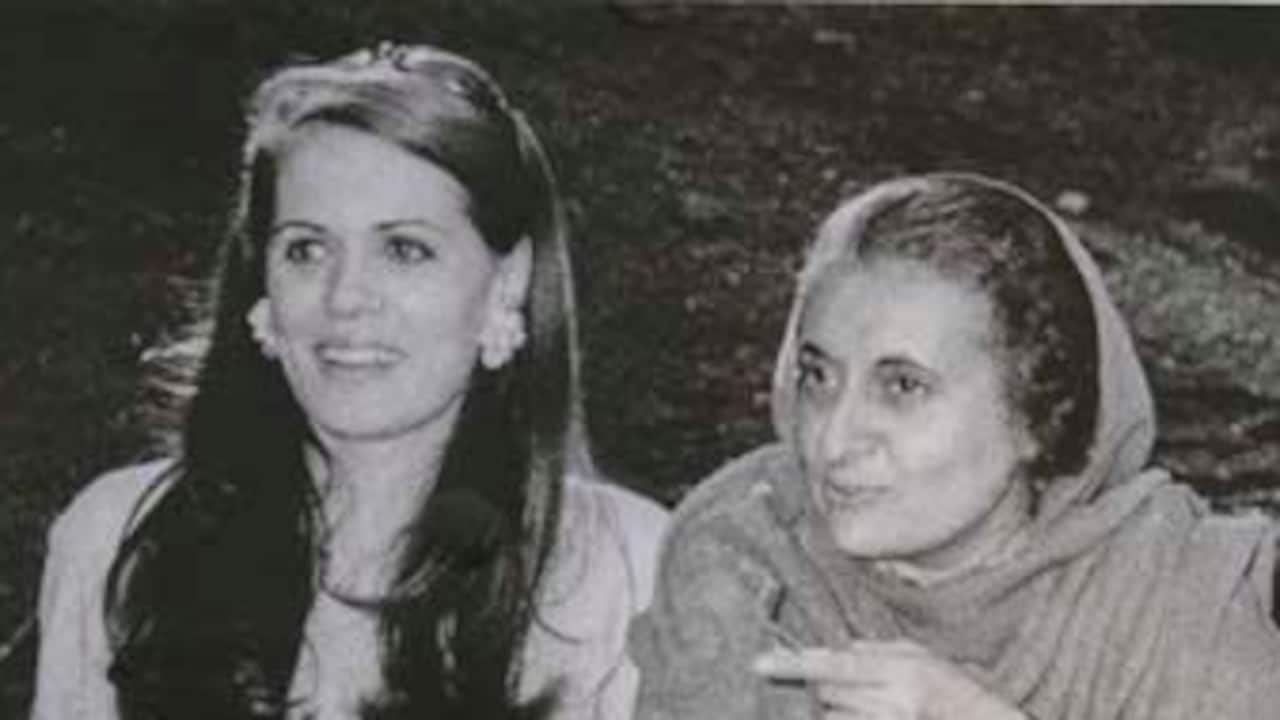
On Christmas Day 1978, Sonia Gandhi carried lunch into Delhi's Tihar Jail for her imprisoned mother-in-law, Indira Gandhi. At the former prime minister's request, she also brought enough for the three women guarding her and for a young foreign prisoner in the same compound. Sonia Gandhi identifies that prisoner as an accomplice of serial killer Charles Sobhraj.
The account appears in her memoir, 'Belonging: A Journey of Love', released on November 10. It describes her daily visits to Tihar during the week Indira Gandhi spent there after the combined opposition formation, the Janata Party, came to power in the 1977 elections that followed her imposition of Emergency.
"At my mother-in-law's request, the food had to be enough also for the three women who took turns guarding her and a young woman prisoner in her compound -- an Australian girl, the accomplice of the dreaded Charles Sob[h]raj, convicted for multiple murders of young tourists in Thailand, Nepal, and India," Sonia Gandhi writes.
"My mother-in-law felt sorry for her, and when it turned out that she didn't eat ham, we quickly had to change the menu and prepare a roast chicken instead," she further recalls.
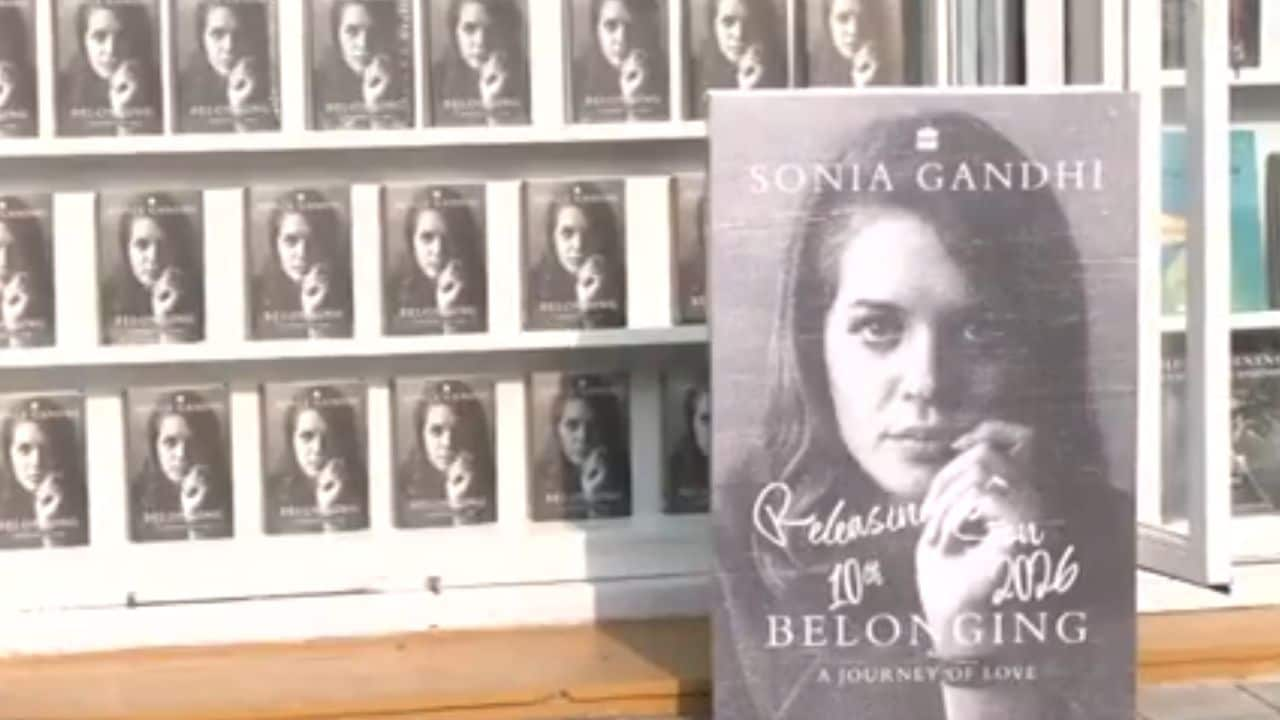
The memoir came out on November 10. Photo: NDTV
READ | Why Sonia Gandhi Wrote Her Book At All: There's An Unnamed Natwar Singh Connection
A friend offered her sliced ham with roast potatoes and a small Christmas pudding to take to prison. Sonia Gandhi was to make a soup and vegetables. Indira Gandhi had told her not to come personally to deliver it. "My mother-in-law had said in a note that under no circumstances should I deliver her lunch -- I should have my Christmas meal with Rajiv and the children. I couldn't do it," she writes. She took the food, a book, and cards from the children, and got home "rather late" for lunch with her family. "As it happened, she was released the next day and came home."
Sobhraj's 'Australian' Accomplice
Sonia Gandhi does not name the young foreigner for whom Indira Gandhi had asked for food to be sent. She remembers her as "an Australian girl".
Three women were arrested with Charles Sobhraj in Delhi in July 1976 and sent to Tihar. They were his girlfriend Marie-Andree Leclerc, a Canadian from Quebec; Barbara Smith, a British citizen from Hampshire; and Mary Ellen Eather, an Australian nurse from Sydney.

French serial killer Charles Sobhraj, responsible for multiple murders in the 1970s across Asia, landed in France in 2022 after Nepal's top court ruled he be freed on health grounds and deported within 15 days. Photo: AFP/File
Of the three, Leclerc was likely the one being held in Tihar in December 1978. She was acquitted of the murder of Frenchman Jean-Luc Solomon in July that year, but stayed in jail pending trial in another murder case. She was allowed to return to Canada in July 1983 after being diagnosed with cancer, and died in 1984. During her years with Sobhraj, she had fraudulently travelled on the passports of their victims, including Australians -- a possible reason why she may have been misremembered as an Australian.
Sobhraj, an Indian-Vietnamese by birth and French by nationality, was later sentenced but escaped from Tihar in 1986, was recaptured, and was released in 1997. A Nepali court convicted him of murder in 2004. After he was freed in December 2022, he flew to France.
Read | How Jim Sarbh Turned Into 'Bikini Killer' Charles Sobhraj In 'Inspector Zende'
Why Indira Gandhi Was In Jail
Indira Gandhi was in Tihar after the Lok Sabha, under the Janata Party government, adopted a resolution moved by Prime Minister Morarji Desai on December 19, 1978. It expelled Indira Gandhi, then MP from Chikmagalur, for breach of privilege and contempt of the House, and committed her to jail until Parliament was prorogued. The case arose from the Privileges Committee's finding that she had obstructed officials collecting information for a question in the House about her son Sanjay Gandhi's Maruti car project.
A US embassy telegram reported that she was incarcerated on the evening of December 19 "in the same facility where many of her political opponents were imprisoned during the Emergency". She was released on December 26.
Sonia Gandhi calls the jailing "a political blunder that would rebound on them".
Indira Gandhi returned to power in January 1980. In 1981, the Lok Sabha rescinded the 1978 resolution that had sent her to jail.
A Tiffin Box, 193 Iron Bars, And 11 Padlocks
Of the jail visits to Indira Gandhi during that one week in 1978, Sonia writes that on the first day, she was frisked by a policewoman at the gate and the food was checked and taken in. The next day, the superintendent asked her to follow him: "Apparently I'd gained some credit by being polite and not objecting to their previous inspections." They passed through a series of enclosures "all of heavy iron bars, all secured by large locks" before she reached Indira Gandhi's cell.
"I was moved to tears seeing her tiny figure sitting on a metal chair in the corner of that bare, cold jail cell. It was freezing inside in the third week of December. There were no doors or windows, only thick iron bars, some portions covered by rough blankets. The toilet was an open one, part of the cell. A high concrete block was her bed," she recalls.
A takht, a wide wooden bench, was added that day, but without a mattress. A rough blanket, a steel plate and a steel mug sat on "a rickety old table".
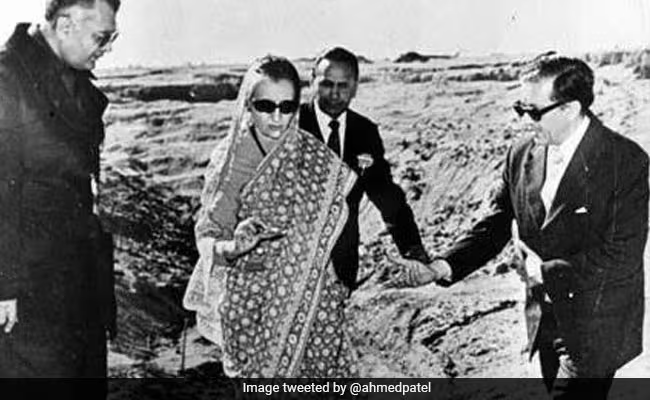
Indira Gandhi returned to power within two years of spending a week in jail.
Indira Gandhi tried to cheer her up: "It wasn't so bad, she said, nothing to feel upset about; she had been to jail in her young days and visited many when her father was imprisoned."
Sonia Gandhi got the superintendent's permission to bring Rahul and Priyanka. "It brought a lump to my throat to see her face light up as she darted forward to hug the children," she writes.
Indira Gandhi sometimes slipped handwritten notes into a book or the tiffin basket, Sonia Gandhi says. One referred to a telegram someone had sent her: "You remember the telegram I got asking me to count the bars? Well, I have!... A total of 193 bars and 11 padlocks!"
Read | When Sonia Gandhi Chased Away A Palmist: He Made A Prediction As He Ran
KioskNews shows a cleaned-up reading view extracted from the publisher’s page — the original always lives on their site, not ours.