Ways you can help your video doorbell stay charged in the winter

Winter can be tough on battery-powered video doorbells, but a few adjustments may help yours cope when temperatures drop.

Frame Stock Footage/Shutterstock
While video doorbells aren't a necessity per se, it can be hard to imagine living without them once you own one. Knowing who's at the door saves you run-ins with unwanted salesmen. More seriously, they may help deter burglars — or help you catch an offender in the act if deterrence fails. Of course, your ability to capture that activity will depend in part on the distance at which your video doorbell stops detecting motion.
Another catch is that they're perpetually outdoors. That might not be such a big deal if you live somewhere warm like Miami or San Antonio. But in places with prolonged cold weather, battery life can suffer to the point that a video doorbell becomes more of a burden than an aid. It's inherent to the chemistry of lithium-ion technology, unfortunately.
The main way to alleviate this issue is by bringing your doorbell or its battery in from the cold. There may be other tactics you can employ, though, such as strategic positioning.
Bring your doorbell battery indoors for charging in winter
Primestock Photography/Shutterstock
The critical point here is that an ideal charging range for lithium-ion batteries is between 50 and 86 degrees Fahrenheit (10 to 30 Celsius). When charging below the freezing point, there's a risk that metallic lithium will start plating onto electrodes, permanently reducing capacity. And even if the weather is slightly above freezing, charging will be less efficient than it could be. Cold-weather performance is one of the differences between sodium and lithium-ion batteries.
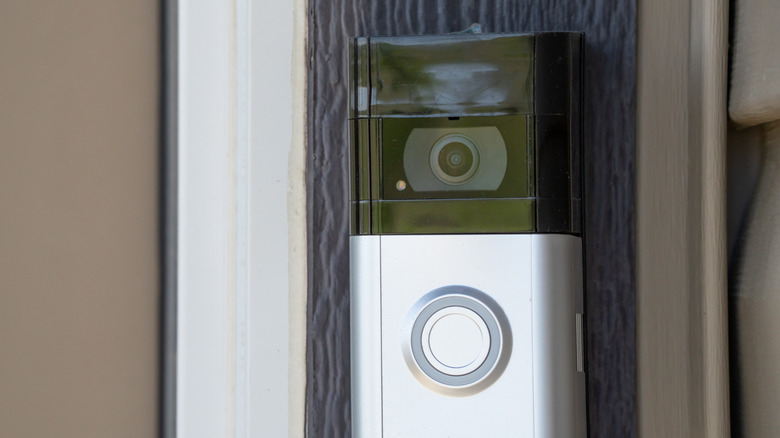
Before you charge a doorbell battery, make sure to let it warm up to room temperature first. This should not only preserve capacity but also help avoid cold-related charging delays. That's significant, considering that a Ring battery can take as long as 10 hours to top up. Let the battery charge fully before putting it back outside to maximize the time between recharges. If your doorbell has a removable battery, keeping a charged spare will minimize downtime. Some models in Ring's updated battery-powered doorbell lineup feature quick-release battery packs to make swaps easier.
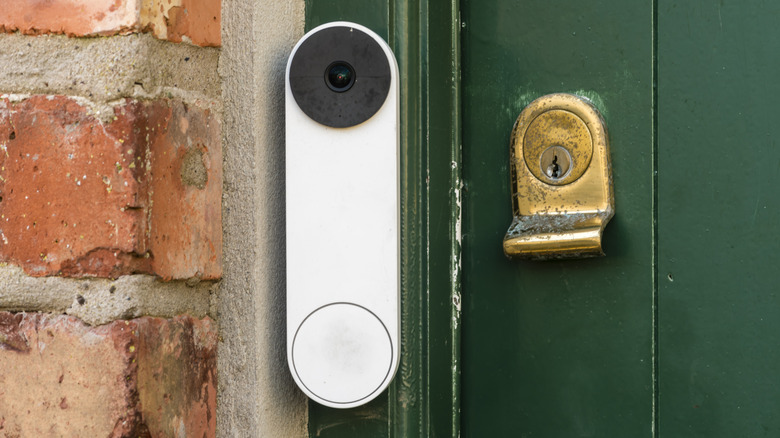
Some doorbells don't offer removable batteries, however. One example is the battery-powered Google Nest Doorbell. In that case, you'll need to become familiar with removing your doorbell and bringing it indoors. Be sure to time this properly. Since a recharge might take several hours, it's probably wise to charge overnight unless you're worried about security and don't have any other cameras covering the front of your home.
What else can you do to keep a doorbell battery healthy?
Stephen Barnes/Getty Images
In climates with borderline winters — that is, where the temperature only occasionally dips below freezing — you may be able to extend battery life by aiming or sheltering your doorbell in just the right way. If you can block the wind, for example, or maximize sunlight, your doorbell will naturally run warmer than it might otherwise.
A vital point here is that in extreme cold, it's possible for a doorbell to stop functioning for the duration. Anker, Ring, Google and others all agree on a minimum operating temperature of -4 degrees Fahrenheit (-20 Celsius). Between that and the freezing point, devices may still refuse to charge in order to prevent the plating we mentioned earlier.
Honestly, then, the best choice if you live in a frostbitten region may be to switch to a wired doorbell, as long as you can find one compatible with your home's design. While wired doorbells may still encounter problems around the -4 degrees Fahrenheit mark, they're otherwise immune to the cold, since they draw on the same electricity as the rest of your house.
KioskNews shows a cleaned-up reading view extracted from the publisher’s page — the original always lives on their site, not ours.