‘We’ll borrow a stargazing kit next’: first public nature library in US helps visitors explore great outdoors
Mark Fink knows exactly why he opened the first public nature library in the US. “There are a lot of barriers for people to access nature here. We want people to learn about the birds and the plants in their own back yard and to appreciate that you don’t need a three-day camping trip in the mountains to experience nature.”
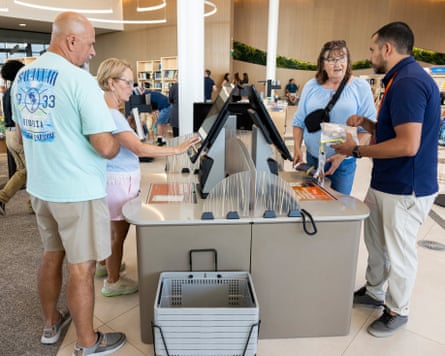
The library offers people in Colorado’s Adams county the opportunity to borrow books and equipment to help them to engage with the natural world – for free.
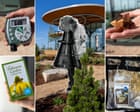
While most of the 40,000 items in the library’s collection are books, members can also check out 850 nature-focused “try it” kits – anything from birdwatching equipment, gardening tools and wildlife cameras to hiking gear, microscopes and hammocks.
“In the US, as more information has come out about climate change and global warming, there’s been a lot of pushback on those scientific studies and their validity,” says Fink. He is executive director of Anythink Libraries, which opened the Nature Library in August and is funded by a local property tax levy.
“We want to let people make up their own minds. We want to provide opportunities for them to learn more about the climate, the human impact on the Earth and how we can help reduce climate change and make our environment more sustainable,” he says, adding that spending even 20 minutes in nature has physical and mental health benefits.In addition, research suggests that people who have more experience with nature are more likely to be inspired to help protect it.
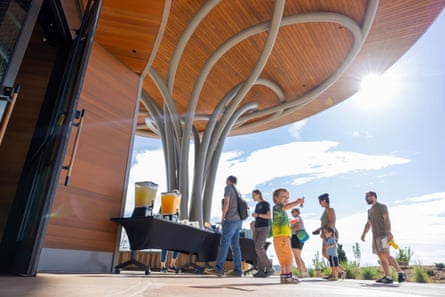
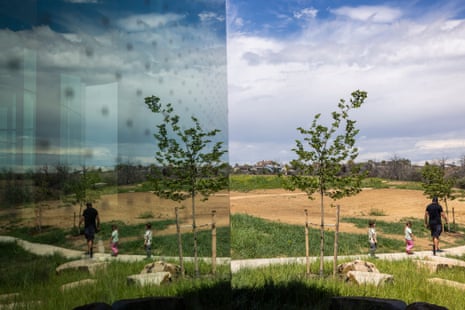
Built using local stone, the library has 370 solar panels on the roof and a sustainable geothermal heating and cooling system. It sits on a 6-hectare (15-acre) site – a former ranch – with a hiking trail and eight different types of garden, including sensory and pollinator gardens, and two focusing on plants that thrive in Colorado and the nearby Rocky Mountains.
Inside, children can play in a boulder field made up of rocks from a local quarry, plus there are free workshops to help people build their confidence in activities such as birdwatching, gardening and hiking.
We asked five of the first people to visit the library what they thought of it.
Paula Jensen, 64, visiting with her mother, Jeanette, 88
I heard about the library on Facebook. I decided to take my mom.
It’s hard for an 88-year-old to go up to the mountains and connect with nature. I work full-time – I’m a pharmaceutical shipping specialist – and although my mom’s pretty independent, she mostly stays home when I’m at work.
There was a peaceful little rock garden outside, and she was able to walk around in there with her walker. At her age, it’s very important to get out of the house and do that.
Then we sat down by the mud pit. That was really cute to see – all these little children running through it and making mudcakes.
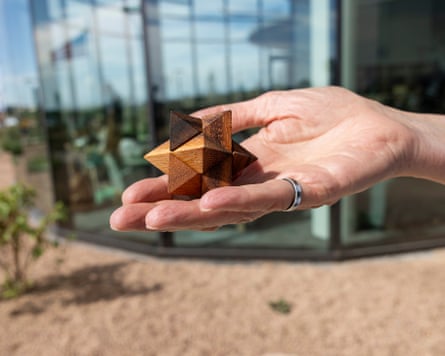
My mom loves reading and doing puzzles, and she was surprised to discover she could borrow a wooden puzzle and a Danielle Steel book. She told me it would be too expensive. I said: “Mom, it’s a library.” It was such an impressive building and she couldn’t quite believe that everything was free. It made her so happy.
We’re having a water shortage in Colorado, so when I go back, I’m planning to borrow a book about how to design a drought-friendly garden, like the one I saw there.
Anna Amici, 36, visited with her husband, Prashant, and daughter Asha, two
I’m a scientist for a science education company – I write curriculum for college students, for labs. I love nature and I love libraries and thought a nature library sounded like a cool place to go, especially with a child.
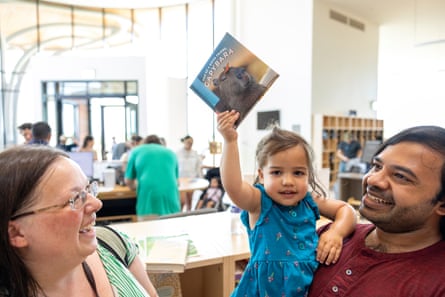
Asha is growing up in a world where we have to care about and protect our environment. And with the current people in power, it feels like we’re going backwards, and that’s scary. I think she’s going to be forced into making tough decisions to protect the natural world – I think we all are – and I would rather she do that from a love of nature than a sense of doom.
What’s exciting about the library is that it makes nature more accessible to her. She can touch it and interact with it in ways that she can’t when we’re out elsewhere. Also, when I’ve had a stressful week, I want to be able to go outside where I can hear birds and touch grass.
We’re thinking of replacing our lawn, which died over the summer, with plants that can support pollinators, so we borrowed a pollinator-garden planning kit and a couple of bird guides from the library. We live near a lake that the birds of the Rocky Mountains visit – if I can learn to identify them, I can teach Asha their names.
The next time we go, I’d like to borrow a stargazing kit so we can take Asha up into the mountains and look at the stars together.
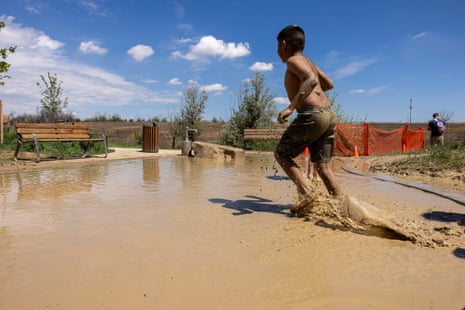
During our visit, Asha had a great time climbing on the boulders and playing in the mud pit. It was such a fun way for her to connect with nature on a very physical, sensory level and it made me realise that she doesn’t get many opportunities to actually touch some dirt in her everyday life.
We’ve since created a little mud patch in our own garden, which she has really enjoyed playing in. Being in the library has made me recognise that this kind of activity is a good experience for her, it’s building the love of the natural world that I want to foster and nurture in her. It’s worth the mess.
Nataliya Zasadko, 40, who visited with her son Marko, seven
I’m a freelance photographer, videographer and content creator, focusing on outdoor family adventures, so the Nature Library sparked my interest. Camping gear can be expensive and a lot of people don’t know if they want to invest in it. Having tents and hammocks available to borrow is a phenomenal idea.
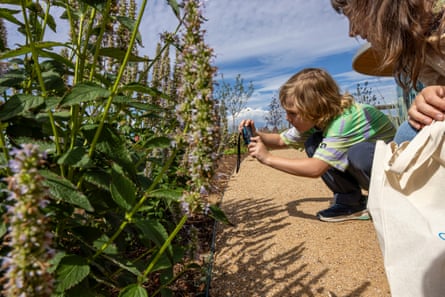
We borrowed an outdoor camera with a macro lens, which encouraged my son to go out in nature and photograph bumblebees and flowers, and a GPS gadget. We used that to go on an adventure along a very scenic alpine trail, Santa Fe Peak. I didn’t have to convince my son to come with me – he was excited to go because of this gadget. He was able to use it to plan our route and guide me. We picked a spot we had never been to before and explored. It was a perfect all-day adventure.
That gadget would have cost me $300 or $400, and the camera $500, so to be able to check them out without buying was brilliant.
We also borrowed a digital wind-speed meter, and talked about that, too. We watched a whole YouTube series about windmills and wind-power plants, and how the energy is produced and stored.
I think visiting a nature library is a good way to teach children about nature and encourage them to care about the environment and wildlife. Whether my son was climbing on the boulders or playing in the mud pit, time flew by. The trail around the library is also very beautiful and I noticed that in the garden, they have hoses so children can water the plants.
We’ve gone back twice because there’s so much to do, and I’m excited for the winter when I’m thinking of borrowing some snowshoes and micro spikes, and going on hikes to test them out.
In this economy, with families struggling, I love that people are able to go to this library for a few hours and share community resources that can help us build a better future and learn to explore the great outdoors.
Alex Bueno, 30, visited with his wife, Monse, and their son Edgar, six
We live in Nebraska and decided to go to the library while we were on a trip to the Rocky Mountains. My wife is an architecture designer, so she wanted to see the building and I love the idea of a nature library.
The countryside in the US is beautiful. But I’m from Cuba and when you go into nature there, there is a feeling that it is wild and untouched. There are so many trees and so much wildlife. Here, by comparison, it is quite built up.
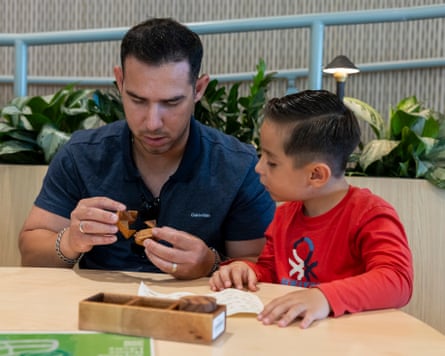
My son and I are interested in books about bugs at the moment and enjoyed reading about insects at the library, what they do, how they live and why they are important.
We get a lot of insects in Nebraska and my son doesn’t always realise they aren’t dangerous, especially if they are big and buzzing around. Like every kid, sometimes he gets scared. I think if he knew more, he would probably just say “oh look at this”.
I grew up much closer to nature in Cuba than he is growing up. I’d like to encourage him to go out and do more. I wish there was a nature library near us in Nebraska.
Ricarose Roque, 42, visited with her son Miles, seven
I’m a professor at the University of Colorado in Boulder – I study kids, learning and technology. I do a lot of community engagement work with libraries and I decided to visit because I was curious about what it meant to have a nature library. I also grew up visiting libraries and want my son to do that.
When we arrived, Miles gravitated towards the “try it” equipment and the natural disasters section – he has been interested in tornadoes, tsunamis, earthquakes and wildfires since he was about three.
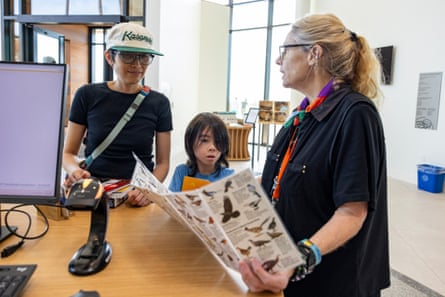
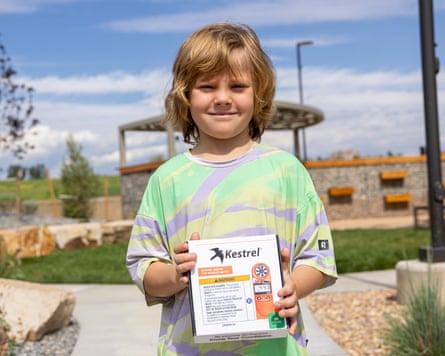
He grabbed a book on wildfires and decided to borrow a fire sensor. He thought it could sense fire, but actually it’s a tool that measures humidity, temperature and wind velocity and direction, so you can understand if there’s a risk of a wildfire nearby. But we decided that next time we will try to borrow night-vision binoculars and hike one of our favourite trails at twilight.
We also borrowed a bird-watching book and a brochure about animals, insects and trees that can be seen here in Colorado.
I was born in the Philippines, and emigrated to Los Angeles when I was young. I don’t know much about the wildlife of Colorado, although I’ve lived here for 10 years. Until we borrowed that book, I didn’t know what a Steller’s jay was. But because of that book, we were talking about it – and today I saw one. I can’t wait to tell Miles.
We’re not a very outdoorsy family and as someone who grew up in a big city, I feel a bit intimidated by the idea of camping in the mountains. But Miles is always asking to go, and being able to borrow camping equipment from the library makes it easier for us to try it.
I hope going to the library can help me and other transplants to Boulder to feel that the wild open spaces of Colorado are ours, too – that they are there for everyone and we all need to take care of them.
Find more age of extinction coverage here, and follow the biodiversity reporters Rebecca Ratcliffe, Phoebe Weston and Patrick Greenfield in the Guardian app for more nature coverage.
KioskNews shows a cleaned-up reading view extracted from the publisher’s page — the original always lives on their site, not ours.