The Ladder Project engages 60 UPSA student leaders on leadership and Ghana’s next chapter
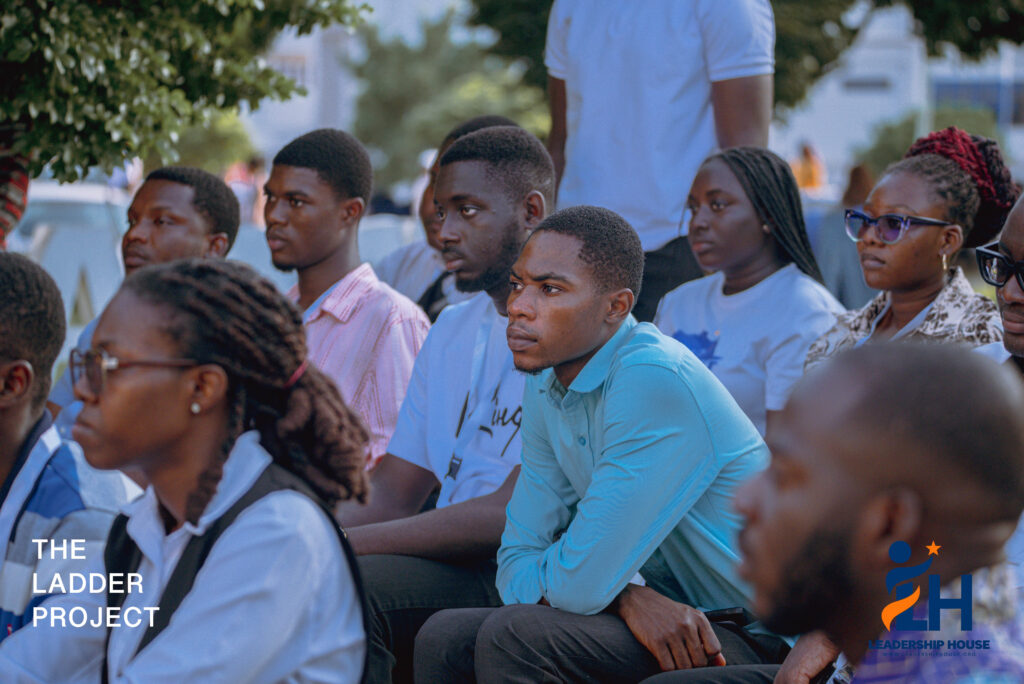
Leadership House, a leadership and civic engagement institution aligned with the New Patriotic Party (NPP), has brought together 60 student leaders at the University of Professional Studies, Accra (UPSA) for discussions on leadership, citizenship and Ghana’s future.
The engagement, held on Thursday, September 24, 2026, was organised in collaboration with the Graduate Students Association of Ghana (GRASAG-UPSA) and the UPSA Students’ Representative Council (SRC).
The event, dubbed The Ladder Project, featured Akuapem North Member of Parliament Sammi Awuku, who was joined by Akosua Asaa Manu, a public policy and communications professional and former Deputy Chief Executive Officer of the National Youth Authority.
It focused on “Leadership, Citizenship and Ghana’s Next Chapter”, combining practical discussions on leadership with conversations about national challenges and the role of young people in public life.
The first session, titled “The Leadership Journey,” focused on the experiences that shape leaders before and after they occupy public office.
Discussions centred on influence before formal positions, critical turning points, failures and lessons from public leadership.
The session was designed to help participants examine leadership as a process that extends beyond holding political or institutional positions.
The second session, “Ghana’s Next Chapter,” shifted the conversation to national issues.
The speakers and student leaders engaged on topics including governance, the economy, employment, education, technology and public trust.
The format allowed participants to examine some of the challenges confronting the country while considering the contribution young people can make to addressing them.
The third segment, “The Student Leaders’ Floor,” gave participants an opportunity to directly question the speakers and share their perspectives.
Students also presented short scenarios for discussion, creating a more interactive session rather than a conventional lecture or political address.
The engagement provided an opportunity for the student leaders to raise issues they consider important to their generation and hear responses from politicians with experience in public office.
The fourth session examined political participation and the expectations of young people.
Discussions focused on political values, party renewal and responsible participation in Ghana’s democratic process.
The organisers said the session was intended to encourage young people to approach politics not only as a contest for political power but also as a means of participating in national development.
The programme concluded with a synthesis session during which participants identified five leadership lessons, five national priorities and individual commitments arising from the day's discussions.
These outcomes are expected to provide a basis for continued engagement beyond the event.
Leadership House says The Ladder Project is intended to create a structured platform through which young people can interact with political and civic leaders on issues affecting their communities and the country.
Leadership House describes itself as a leadership and civic engagement institution focused on developing informed, capable and public-minded young leaders.
Its approach emphasises engagement between political leaders and young people, with attention to leadership development, civic participation and national issues.
The organisers say the initiative recognises the importance of creating meaningful pathways for young people to participate in Ghana’s political and civic life.
Leadership House is expected to continue The Ladder Project as a platform for engagement between political leaders and student leaders.
Follow-up activities are also expected to build on the discussions and commitments made during the UPSA session.
DISCLAIMER: The Views, Comments, Opinions, Contributions and Statements made by Readers and Contributors on this platform do not necessarily represent the views or policy of Multimedia Group Limited.
Tags:
DISCLAIMER: The Views, Comments, Opinions, Contributions and Statements made by Readers and Contributors on this platform do not necessarily represent the views or policy of Multimedia Group Limited.
KioskNews shows a cleaned-up reading view extracted from the publisher’s page — the original always lives on their site, not ours.