Microsoft's president says AI is less regulated than a carton of milk
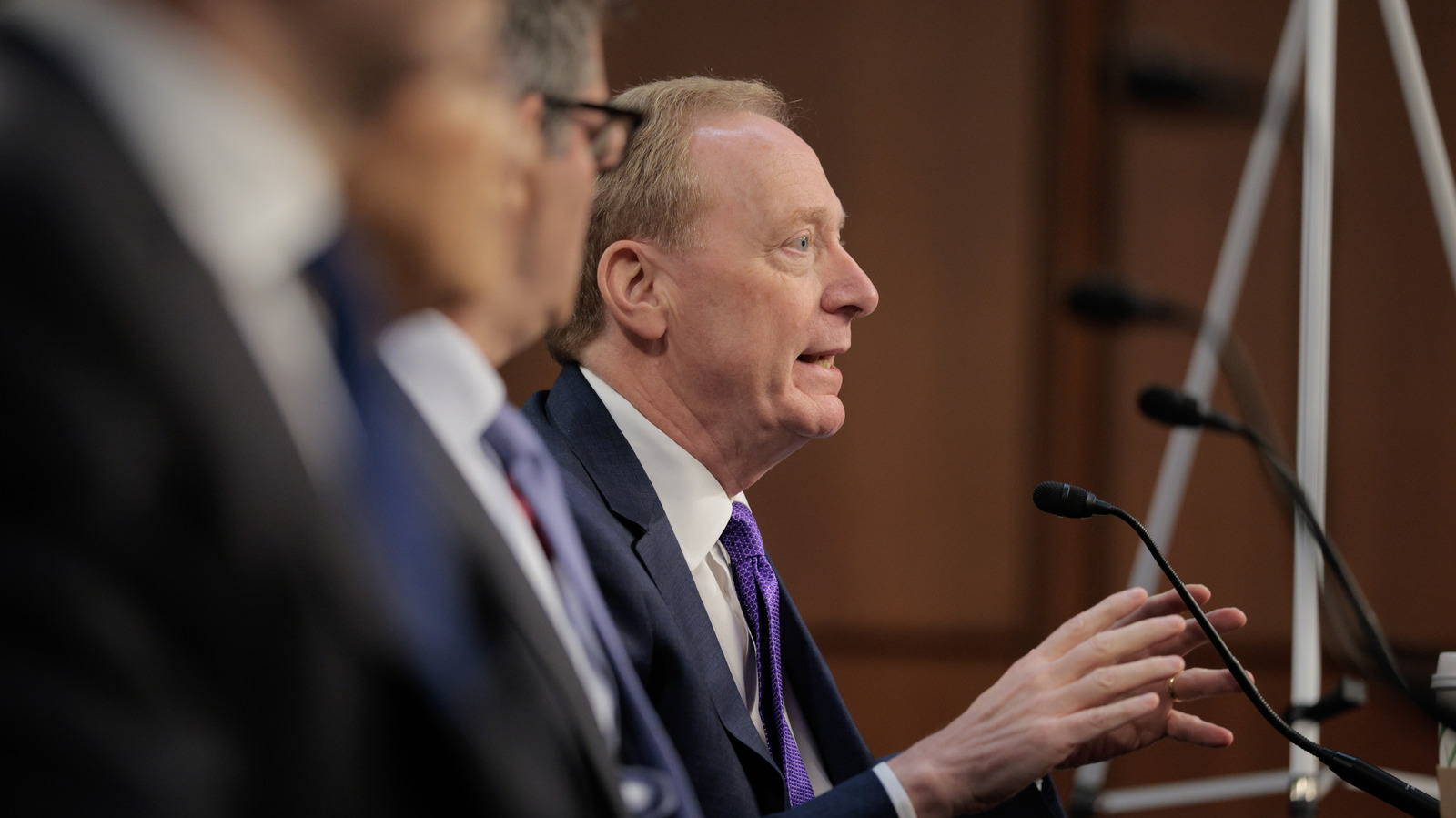
Brad Smith said the lack of US action gives the UK a unique opening to lead in terms of regulating AI.
Chip Somodevilla/Getty Images
Milk can't hack companies and governments like AI definitely can, but it's still subject to more regulation, Microsoft president Brad Smith told ITV on Friday. "Right now, your washing machine is subject to more safety rules than AI," Smith said in the interview. "Every carton of milk that you see in the grocery store is subject to safety rules and inspection."
Major US AI giants like Anthropic, OpenAI and Google's DeepMind have spoken in favor of an AI development slowdown. However, US President Donald Trump has said that, if anything, the US AI industry needs to accelerate to stay ahead of China.
Rather than government, Trump would prefer that AI companies regulate themselves. At his so-called Super Intelligence summit, AI bosses including Google Sundar Pichai, Anthropic's Dario Amodei, Mark Zuckerberg, OpenAI President Greg Brockman, Elon Musk and NVIDIA CEO Jensen Huang signed a pact with several key tenets. Those include implementing self-regulation, safeguards to keep pioneer models from going rogue and using "independent auditors" to assess models.
Critics were unimpressed, though, with one telling the BBC that it allows firms to "define what counts as safety" and another saying that "the accord should be ignored for the distraction it is."
Microsoft's Smith thinks the lack of US action gives the UK a unique opening to lead in terms of regulating AI. "In Washington DC, people don't look at the UK and they don't look at London the way they look at Brussels — that's a strength," he said. "I hope that's the role we can play as a company. I hope that's the role the UK can play as a country. [W]hen you look at models that are so powerful that they're putting the world's cybersecurity at risk, I would say: the moment has arrived."
KioskNews shows a cleaned-up reading view extracted from the publisher’s page — the original always lives on their site, not ours.