‘Sita killed Ravana in Adhbhuta Ramayana’: Amish Tripathi says Sita was a warrior
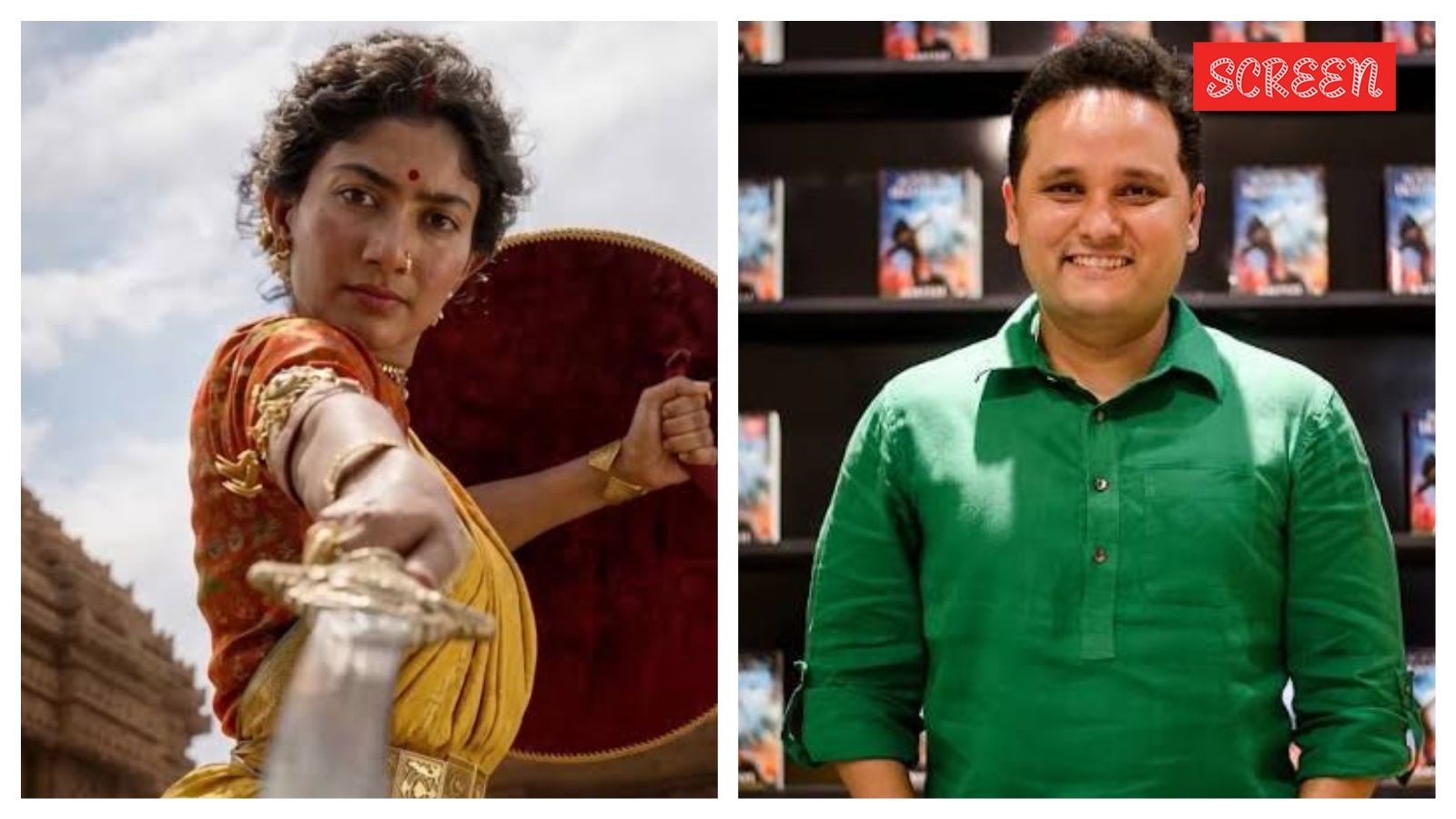
Ever since Nitesh Tiwari’s film adaptation of the Indian epic, Ramayana, has released, there have been certain sections of society, including actor Mukesh Khanna, who flagged the alleged false portrayal of Sita. They claimed that the wife of Rama was never a warrior, but is shown wielding a sword and fighting asuras on the big screen. Amish Tripathi, who famously presented Sita as a warrior princess in his 2017 bestselling book Sita – Warrior of Mithila, cleared the air on such claims in an exclusive interview with SCREEN.
Debunking misconceptions around Ramayana, Amish Tripathi said, “Because we’re not taught the Ramayana and the Mahabharata through our education system, we’re not aware of all the versions. There’s a version called the Adbhuta Ramayana, credited to Valmiki. He wrote three versions — Valmiki Ramayana, Adbhuta Ramayana, and Ananda Ramayana. In Adbhuta Ramayana, the elder, more powerful Ravana was killed by Sita. She was a warrior in that version. It’s not a new version. It’s an ancient version credited to Valmiki.”
Tripathi claimed that while there’s enough evidence out there to suggest the core events of the Ramayana and the Mahabharata actually took place, some elements have been added over the years, as it happens with any ancient text. “There was a time when it was believed Homer’s Odyssey was a pure fantasy. This was a time when the church in Europe was clamping down on any such stories. But then in 19th-century Europe, Troy was discovered. Yes, the core elements of the Trojan War did happen, although there may have been some magic realism added to it,” points out the author.
He reasons that the lines between history and mythology tend to blur when the former is taught in school through a colonised lens. “Even Herodotus, who’s considered the ‘Father of Western History’, wrote elephants in India flew with their ears as wings. I’m sure you don’t believe that, right?” said Tripathi, adding that in the absence of decolonised history, people resort to fantasies. “There’s no historical evidence that flying machines were invented in Asian India which even traveled outside Earth. But there’s more than enough historical evidence that ancient Indians conducted surgery and were great ship builders. Some fantasies emerge in an atmosphere of ignorance. So, the sunlight of knowledge must come in to dispel ignorance,” said Tripathi.
He argued that the perception that India was the wealthiest nation of ancient times also holds true. “We were wealthy because of trading, because of hard work, and not because we discovered oil. Emperor Vespasian tried to ban trade with India because Rome was going bankrupt importing important things from India. And India didn’t want anything from Rome. We just wanted their gold and silver,” said the author, attributing the ignorance to colonisation of history books.
“Much of our history books still privilege the Western lens on our history rather than our own understanding of it. Our history books tell us that Vasco da Gama discovered the sea route to India, which isn’t true. We’re not taught that Indians were the best seafarers and businessmen of the ancient era. They don’t tell us the knowledge and achievements of our ancestors, or even the mistakes, from a decolonised point of view,” said Tripathi, who believes the lack of decolonisation has led to the modern Indian liberal turning to Western ideas of progressive thought.
“Unfortunately, our modern Indian liberals don’t realise that our ancient culture is actually their biggest ally because they’ve read more Western stuff than our own. You don’t have to invent a modern, more progressive version. Our ancient versions are themselves very liberal. They’re not Western liberalism. Western feminism has translated into man-hating, and Western transgenderism has translated into woman-hating. Our ancestors didn’t hate anybody to be more sure of their identity. Men and women being equal isn’t a Western idea. It’s actually being true Indian.”
Story continues below this ad
Amish Tripathi on how to make history great again
Amish Tripathi pointed out that colonisation is only one of the issues with Indian history books today. “Our history books have too much focus on Delhi. Delhi is an important city; don’t get me wrong. But it’s not the only important city in India. If you see our history books, particularly the history of the last 1500 years, the empires coming from any area east of Agra and south of Jaipur is largely ignored. They’ll be just there in a few lines,” said Tripathi.
Dismissing the perception that it’s a “Hindu-Muslim” thing, Tripathi believes the focus of history must be decentralised from Delhi to give a fair airtime to other key areas of India. “The Bijapur sultans were in fact much wealthier than the Delhi sultans. Post the destruction of Vijayanagar, Bijapur was actually the biggest Indian city and the second largest on Earth. If you’d have read our history books, you’d have said it was Delhi or Agra,” he argued.
Also Read — ‘Sai Pallavi miscast as Sita, Ranbir Kapoor is outstanding’: Tanishaa Mukerji on Ramayana
Tripathi also laments the fact that history books are too boring to be relished. Which is why he came up with his first children’s history book — Dhruv and Tara: The Great Indian History Quiz, When Rivals Become Teammates! earlier this year, which has now been adapted into an audiobook on Audible. “I’m more of a storyteller than an author, which means I’m media-agnostic. Stories can be communicated through both the written and the spoken world,” said Tripathi, adding, “Adapting has to be not only with the medium, but also with the structure. The chapters have to be much shorter and quicker. The language has to be different. One can’t set up a gyan session because kids don’t enjoy that. So, I tell a history lesson in the garb of a fun adventure. That’s what made the book succeed, and I’m sure it will also make the audiobook succeed.”
KioskNews shows a cleaned-up reading view extracted from the publisher’s page — the original always lives on their site, not ours.