The Spurs of Prem Rugby: how Harlequins lost their swagger

Speak to anyone who holds Harlequins close to their heart and a word that often comes up is “fragility”. Fragile in defence against Gloucester last weekend but mentally fragile too. The scars of recent seasons are deep and the problems entrenched. A club that is famed for its swagger has, in short, lost its mojo and the more you pull back the curtain, the longer it appears it will take to return.
A caveat. It would be oh so very typical of Harlequins to swashbuckle their way past Sale Sharks on Sunday but in many ways, that feels like part of the problem. During pre-season Harlequins set themselves the target of following in the footsteps of Exeter, who finished ninth two seasons ago before reaching the final last June. As Marcus Smith pointed out, it was not so long ago that Quins were seventh in January with only two wins and champions five months later. But in the eyes of supporters, these former glories, these roadmaps out of their current malaise are doing little but masking the extent of the problems, offering but false hope.
One former player drew a comparison with Tottenham this week. A club with an identity cemented in derring-do who have bottomed out of late. A club that’s spent big in an attempt to solve the problems – on George Furbank in Harlequins’ case – after years of wayward recruitment but largely overlooked areas that most needed strengthening.
There’s a sense that they will turn the corner but a sense too that they are just waiting for it to happen. A club with an eye on commercial exploits – for Spurs’ shiny stadium, see Harlequins’ Big Game pursuits. Even the comments this week by Harlequins’ head coach, Jason Gilmore, that he expected a difficult start to the campaign echoed those by Thomas Frank last season that, “I promise you one thing … we will lose football matches”, which incensed Tottenham supporters. Put it all together and the round-ball comparison rings true.
Quick GuideEdwards joins Argentina for World Cup
Show
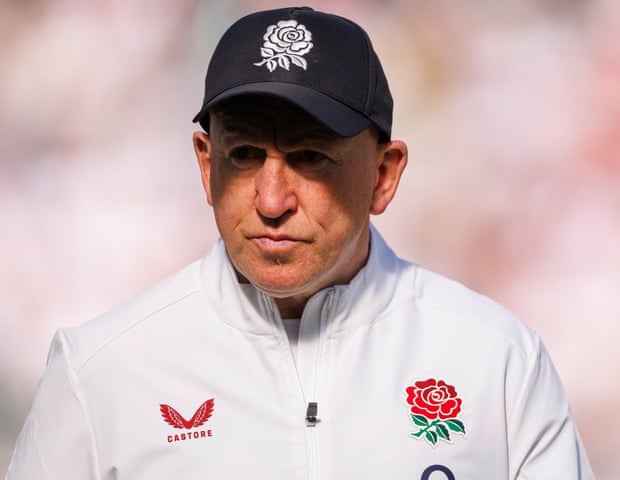
Shaun Edwards has agreed to join Argentina’s coaching staff through to the 2027 World Cup, ending any chance of the defence guru joining Steve Borthwick’s England set-up for next year’s tournament.
The 59-year-old, who is the most decorated coach in rugby history, joined the England women’s coaching staff on a short-term consultancy basis last month, raising the prospect he may potentially transfer to Borthwick’s staff for next year’s tournament. The Rugby Football Union has, however, allowed Edwards to slip through its fingers and Argentina will benefit in Australia.
Wigan-born Edwards has repeatedly expressed his desire to coach the England men’s team but while the RFU chief executive, Bill Sweeney, has admitted to a meeting in the past, a move has never materialised. Earlier this week, the RFU announced that Joe El-Abd will be leaving the men's coaching set-up after the World Cup. In theory, Edwards will also be available again then should England come calling. For now he is headed to Argentina with whom he will coach at his fifth World Cup and with his third different nation after three with Wales and his most recent, in 2023, with France.
The former rugby league great left his role with France earlier this year after seven years with Les Bleus and having helped them to the Six Nations title in March with a thrilling victory over England. It was his third with France, having won four with Wales during his 11-year stint.
Edwards joined John Mitchell’s England women’s set-up before they began their WXV campaign with a victory over New Zealand. He is to join Argentina in time for their November Nations Championship matches against Ireland, Italy and France while Mario Ledesma has also joined Felipe Contepomi’s Pumas’ staff as forwards coach.
“I’m thrilled to be joining Felipe Contepomi, his coaching staff, and the Argentinian team at the end of this month and through to next year’s World Cup in Australia,” said Edwards. “I’ve always admired the skill and quality of Argentinian players, and I look forward to contributing my international experience to the team over the next year.” Gerard Meagher
Photograph: Bob Bradford/CameraSport
Gilmore, in fairness, finds himself in a difficult position. It is not his fault that after Danny Wilson’s abrupt exit, Harlequins promised “an exhaustive global coaching search” and then alighted on an in-house appointment. Gilmore is a popular figure with the squad but he has little previous head coaching experience. Robbie Deans has been appointed as performance director. The 67-year-old former Wallabies coach is vastly experienced but not in the English game and is spending “extended periods in the UK at critical points throughout the season” at the club while otherwise based overseas.
Gilmore’s first season in charge ended with a ninth-placed finish, Harlequins’ worst for eight years. Since the long-serving John Kingston left in 2018, Paul Gustard has occupied the position of head of rugby, then came the collective of Nick Evans, Adam Jones, Jerry Flannery and Charlie Mulchrone, who guided Harlequins to the 2021 title. Tabai Matson followed as senior coach, but he spent the last of his three seasons as performance director. Wilson was head coach between 2023 and 2025 until joining Wales and all the while there was Billy Millard, general manager from 2018 to 2021, director of performance from 2021 to 2023 then director of rugby until his exit in the summer of 2025. To put it kindly, it is a confusing roll call of appointments and job titles.
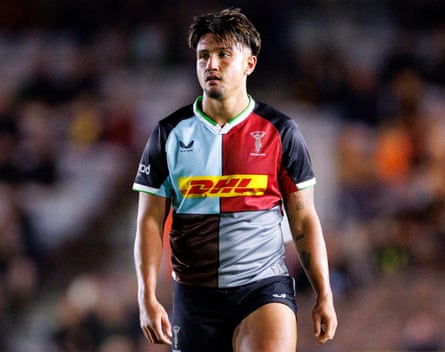
Evans left as attack coach over the summer after 18 years at the club and his replacement, Brad Cooper, is highly rated after joining from the Hurricanes. But Evans’s exit leaves Harlequins short on coaches with long-term associations with the club beyond Adam Jones. Indeed, it feels odd that club legends such as Joe Marler, Mike Brown, Danny Care and Ugo Monye have such little involvement. Freddie Burns may well prove himself to be a kicking coach of repute but there is little doubt he was appointed at Welford Road in part because he knows how it feels to pull on the Leicester Tigers jersey. It is a matter of time before Owen Farrell occupies the Saracens coaching box, George Ford will not be far behind at Sale but Harlequins seem to be missing a trick.
after newsletter promotion
On the field, Harlequins’ front five is underpowered and they are light on quality at centre. The South Africans Wilco Louw and André Esterhuizen left in 2023 and 2024 respectively and have not been replaced by players of the same quality. That Nathan Jibulu and Will Joseph are thriving elsewhere indicates issues with developing young players.
It is true to say that the coaching changes this summer have led to an overhaul in playing systems, hence the point Gilmore was making. “We’ve been learning a brand new attack system and we’ve got a brand new lineout system that we’re putting in place that’s going to take four to six weeks just to bed down,” he said. “We’ve got the international players that have just come back into the building as well that are learning it on the run.” As Smith said before the season started: “It almost felt like we were playing catch-up coming back in from international duty.” But a 48-0 defeat by Gloucester, which leaves Harlequins bottom of the table, points to more grave problems.
For some, as long as Smith remains at the Stoop there is hope. He missed the first two defeats of the season but returns at Sale. He is contracted until 2028 but it remains to be seen if he will stay beyond that. It is said Smith was mightily close to joining Racing 92 a few years ago but was convinced to remain eligible for England’s 2023 World Cup campaign. If a similar offer comes again it may prove too hard to turn down. It says much about Harlequins’ current plight that few supporters would blame him.
KioskNews shows a cleaned-up reading view extracted from the publisher’s page — the original always lives on their site, not ours.