UK official rejects claim London has broadened restrictions on Israel arms exports

A British government source denied on Tuesday a Jewish Chronicle report that the United Kingdom has widened restrictions on military exports to Israel.
The Chronicle’s report came after Middle East minister Stephen Doughty said earlier this month that London had suspended or refused more than 80 export licenses in relation to Gaza.
When restrictions intended to prevent British military equipment from being used in the Gaza war took effect in September 2024, they applied to about 30 licenses.
0:00 / 0:00
Promoted: Nefesh B'Nefesh - Aliyah is Now

The 50 licenses rejected since then reflected new applications submitted under the existing restrictions, rather than an expansion of the original Gaza-related policy, the British official told The Times of Israel.
The denial comes after Doughty, in a debate at the House of Commons, said that Britain had “suspended or refused more than 80 export licences in relation to Gaza.”
Get The Times of Israel's Daily Edition by email and never miss our top stories
By signing up, you agree to the terms
Doughty also said Britain would now refuse applications for arms and other exports deemed to “materially contribute to the occupation,” describing that measure alongside the existing Gaza restrictions as a “double lock” on relevant exports. He said the restriction would remain in place for affected items for as long as Britain considers the occupation to persist.

At the same time, Doughty stressed that the government “reject(s) those who make any attempt to de-legitimize Israel, or to support the so-called BDS — boycott, divestment and sanctions — movement.
“Our disagreements are with the Government of Israel and their actions, not with Israel, and certainly not with the Israeli people.”
The current restrictions date to the start of September 2024, when then-foreign secretary David Lammy announced the suspension of 30 of roughly 350 British arms export licenses to Israel. The affected licenses covered components for aerial systems including fighter jets, helicopters and drones.
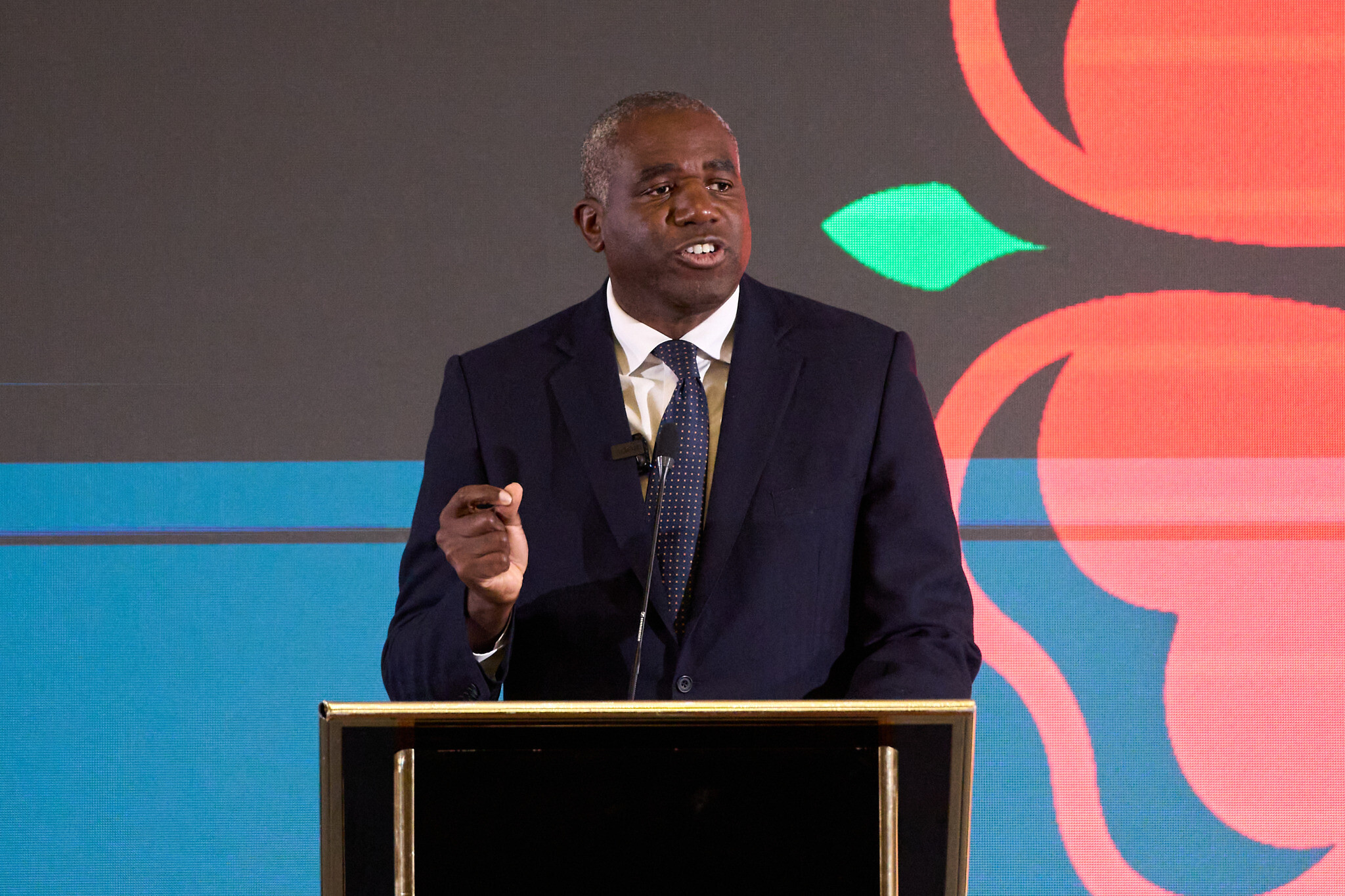
Speaking in the House of Commons, Lammy said then that the decision came in the wake of a review of UK arms export licenses, which found a “clear risk” that some “might be used to commit or facilitate a serious violation of international humanitarian law.”
Lammy stressed that the decision was “not a blanket ban” or an arms embargo, and British officials did not conclude that Israel itself was violating international humanitarian law.
Prime Minister Benjamin Netanyahu condemned the move at the time as “shameful,” arguing that it would embolden Hamas.
Help us report truthfully on social media

As a multimedia journalist, my job is to take the quality, fact-based journalism produced by The Times of Israel newsroom and make it accessible across every platform — from Instagram posts to podcasts to short-form videos.
This is how many, especially young people, consume news these days. But misinformation is rampant on social media. Our team at ToI produces accurate, responsible short-form reporting on Israel and the Jewish world.
If you believe in the importance of factual social media journalism, please consider joining our reader support group, The Times of Israel Community. Your financial support is essential to sustain responsible multimedia reporting.
— Gabriella Jacobs, multimedia journalist
Support our work Support our work Already a member? Sign in to stop seeing this
If you’d like to comment, join
The Times of Israel Community.
KioskNews shows a cleaned-up reading view extracted from the publisher’s page — the original always lives on their site, not ours.