Father-son team in South Africa sets 408mph record with 3D-printed drone
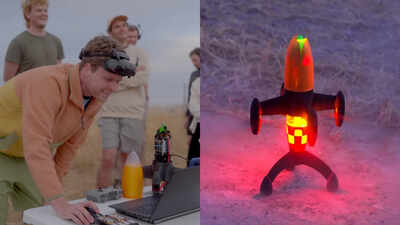
The Bells used aerodynamic simulations and four reliable T-Motor units to optimise the drone's speed and performance.
A father-and-son engineering project started in a workshop in South Africa has reached extraordinary heights, turning a home-built flying machine into a world record-breaking speed machine.
After months of motor tweaking, 3D printing parts and aerodynamic engineering, brothers Mike and Luke Bell have taken their fourth-generation Peregreen quadcopter to an officially recognized average speed of 408.60 mph (657.59 km/h), taking the crown as the world's fastest battery-powered remote-controlled quadcopter. According to Futura Sciences, the achievement was recorded on December 11, 2025 in Cape Town, the latest milestone in the duo's years-long quest for speed records with drones.
From workshop experiment to world record holder
According to the online reports, the Bells have been working with quadcopters for generations, each one more advanced than the last. Their Peregreen 2 hit 298 mph (480 km/h) and was recognized by Guinness World Records in 2024. In October 2025, the father-and-son team set another record with Peregreen 3, achieving an average speed of about 363 mph (585 km/h), the report adds.But it wasn’t long before their success was undone. That record was then taken from the South African builders by the Black Bird quadcopter designed by Australian aerospace engineer Benjamin Biggs, who is known online as Drone Pro Hub, with an average speed of 389 mph (626 km/h).
The Bells were already working on their next generation aircraft, preparing for their return to the top, Cape Town ETC reports.
Upgrade is led by 3D printing and engineering
Peregreen V4 is the result of five months of intensive testing and design enhancements, MyBroadband reports. The team worked to minimize aerodynamic drag, while ensuring the aircraft could withstand the stresses of ultra high speed flight.A larger 3D printer enabled them to build a bigger frame, and sanded surfaces helped improve airflow around the aircraft.A major upgrade was the fitting of aerodynamic streamliners around the propeller bases. These 3D printed parts were designed to reduce turbulence and increase efficiency.The Bells also ran computational fluid dynamics simulations to tweak the drone’s body. After testing various motors they settled on four T-Motor 3120s rated at 900 kV, with a focus on reliability and lower operating temperatures.The new design of the propeller spinners underwent a series of rigorous bench tests, standing up to speeds over 70,000 revolutions per minute.
A second drone to film the record-breaking flight
Another challenge was the recording of the airplane. The speed of the flight was so great that ordinary cameras had trouble taking clear pictures.MyBroadband report adds that the team also built a second drone specifically to film the record attempts. They mounted an Insta360 X5 camera in a custom 3D-printed tail section, which allows them to reframe the footage after the flight.The official record attempt involved four runs in opposite directions to account for wind conditions and get a reliable average speed.
Taking back the crown
As Futura Sciences points out, the Peregreen V4 was able to reach speeds of about 656 km/h in one direction and 659 km/h in the other. The Guinness World Records clocked it at an average speed of 657.59 km/h (408.60 mph).
The achievement was around 31 km/h faster than the previous record, bringing the title back to the South African duo.Getaway stressed the importance of the feat for Cape Town where the home-built aircraft did its record-setting runs.The Bells’ latest achievement adds another chapter to the growing race to build the world’s fastest racing drone, as every generation of the Peregreen demonstrates how independent engineering and 3D printing can challenge the limits of technology.Images Courtesy: New Atlas and Luke Maximo Bell
KioskNews shows a cleaned-up reading view extracted from the publisher’s page — the original always lives on their site, not ours.