Global oil prices hit highest level in 5 months amid attacks on ships, facilities
Global oil prices have climbed more than 55% since the outbreak of the Iran war.
Global oil prices climbed to their highest level in five months on Tuesday after Iran and its Houthi allies claimed attacks on oil infrastructure in the Middle East.
The Brent crude futures price, a benchmark for global trading, topped $111 a barrel for the first time since May before retreating to $110.30 a barrel. The latest reading marks a rise of more than 55% since the Iran war began in late February.
An oil shortage continues to bedevil crude sellers, who typically pass along elevated costs to refiners, leading to higher prices at the pump.
The United Kingdom Maritime Trade Operations Center, or UKMTO, on Tuesday issued an advisory after it received a report of an incident involving a tanker and military forces off the coast of Oman.
Separately, Iranian state-run media reported on Tuesday that the Islamic Revolutionary Guard Corps claimed that two oil tankers hit naval mines south of the Strait of Hormuz.
The reports came a day after Yemen-based Houthi militants claimed a wave of strikes on Saudia Arabia on Monday, including the Shaybah oil field as well as Saudi Aramco facilities in Yanbu, a port city near a key transport corridor on the Red Sea.
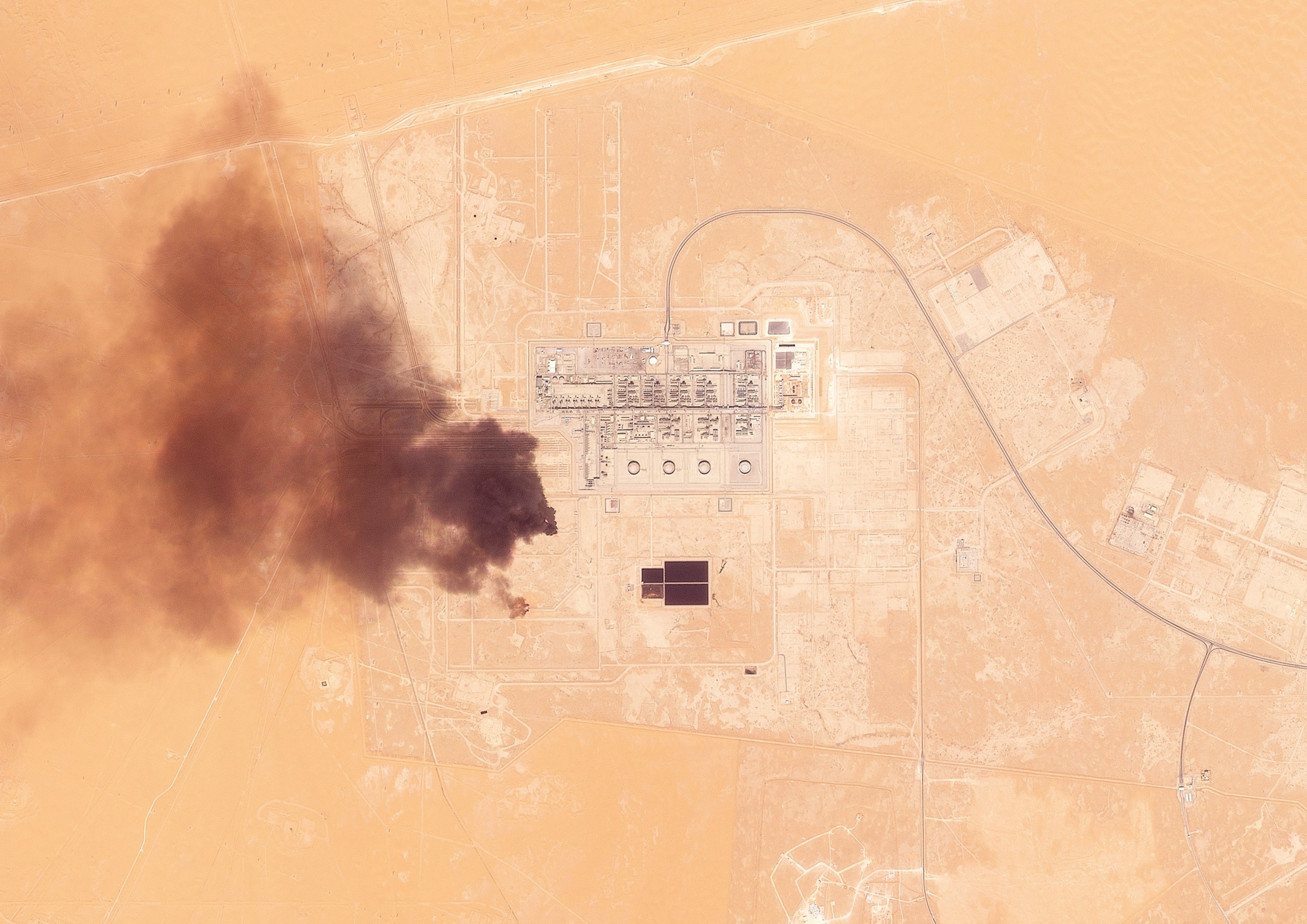
A plume of black smoke rises near the Khurais pumping station of the East-West Pipeline in Saudi Arabia, east of Riyadh, October 4, 2026.
Planet Labs PBC/AFP via Getty Images
The West Texas Intermediate futures price, a benchmark index for U.S. trading, also jumped on Tuesday. The price of U.S. oil prices stands at $105.75, a rise of more than 60% since the outbreak of the war.
The jump in oil prices arrived as affordability marks a top concern for voters ahead of early November's midterm elections.
The average price of a gallon of gas in the U.S. clocked in at $4.27 on Tuesday, according to AAA. That figure amounts to a rise of nearly $1.30 since the start late February.
The Middle East conflict drove up fuel prices and catapulted U.S. inflation to a three-year high in May, but inflation eased slightly over the summer after a preliminary peace agreement established an on-again, off-again pause in fighting.
The tentative accord between the U.S. and Iran expired in August, giving way to continued attacks on oil infrastructure and ships in the region.
The U.S. -- the world's largest oil producer -- imports a small amount of crude from the Middle East. Since oil and gas are sold on a global market, however, the shortage has sent prices rising for everyone, including U.S. drivers.
ABC News' Nasser Atta, Othon Leyva and Desiree Adib contributed to this report.
KioskNews shows a cleaned-up reading view extracted from the publisher’s page — the original always lives on their site, not ours.