5 Perfect Sci-Fi Books Under 100 Pages

At any given moment, Scott Simone has at least three books jockeying for his attention. He’ll never turn down a campus novel with a literary bent, nor will he hesitate to add yet another mystery to his Leaning Tower of Pisa-inspired to-be-read pile — which is built upon the bedrocks of too many short story collections, how-are-these-real true crime books, and classics waiting to be cracked open again. Topics that have him ripping through pages the fastest include closed-circle murders, unhappy professors, life-questioning philosophical deep dives, so long as they feature sharp sentences, a dark sense of humor, and at least a little malice.
He’s spent so much time in book shops over the years he is, to his wife’s chagrin, continuing to build a library that doesn’t quite respect the dimensions of the apartment meant to contain it.
Sign in to your Collider account
When we think of sci-fi books, our imaginations conjure massive epics — doorstop novels that spend an immense amount of time building new worlds and introducing readers to entire civilizations. There are historical conflicts to understand and strange technologies to become acquainted with. Sometimes you're a hundred pages in and still trying to remember who rules which planet. But that's part of the appeal. Some of the best science fiction creates worlds so thoroughly imagined that we can lose ourselves in them.
And then there are those writers who pull off an even more unimaginable feat: They pack all that into a bite-sized read of fewer than 100 pages. Let’s stop just to imagine how some authors have been able to challenge our understanding of humanity — taking us to far-flung times and locales inhabited by extraterrestrial beings — in the space it’s taken others to simply introduce us to it all. There's no time wasted on elaborate histories or lengthy explanations, carrying an unheard-of burden to make every little detail matter. Some take us hundreds of thousands of years into the future; others imagine technologies or alien encounters that turn familiar human behavior on its head. Yet they don’t require you to sketch out family trees or create a running glossary to follow along.
1 'The Time Machine' (1895)

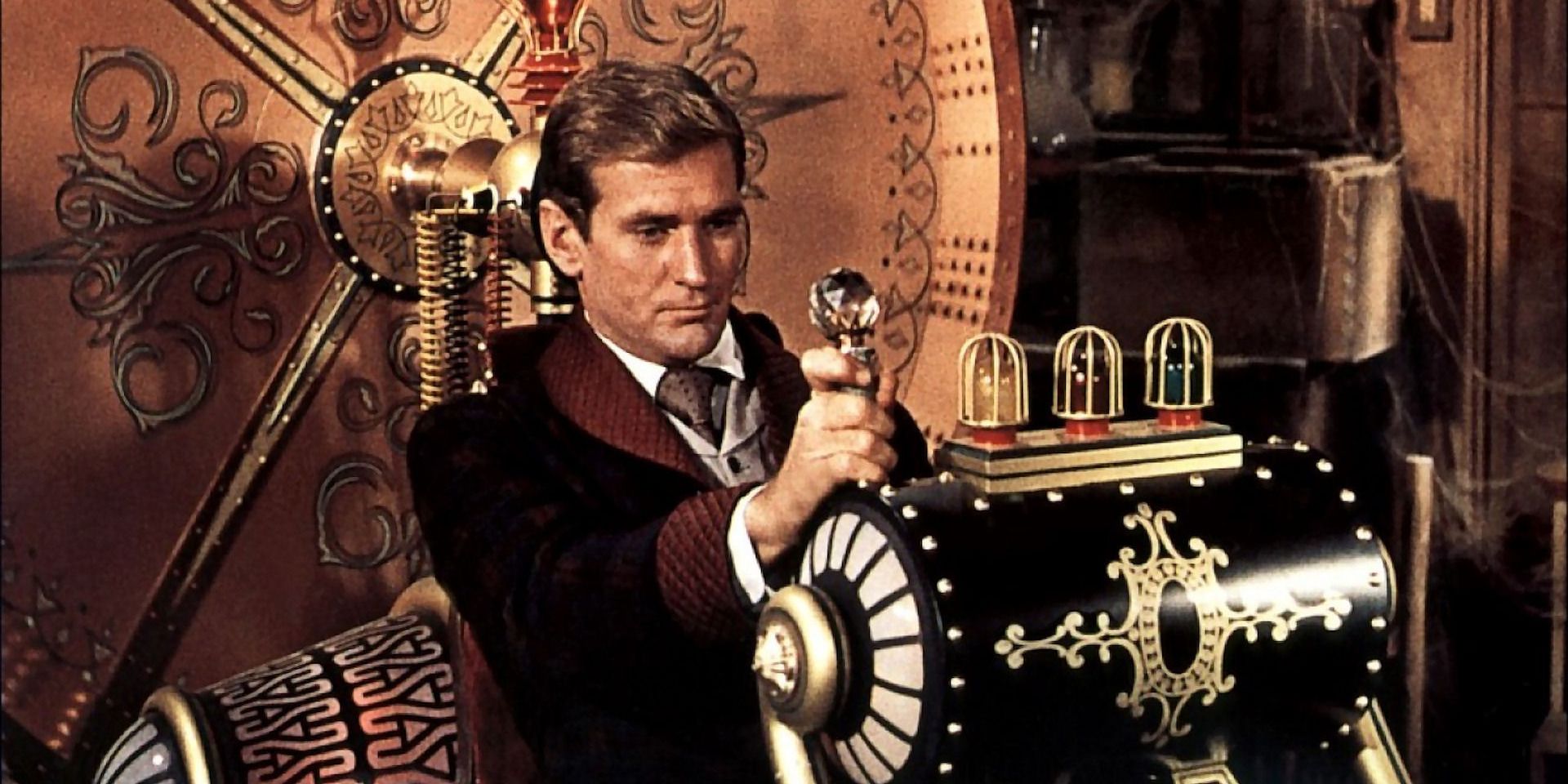
The first surprise in H.G. Wells' The Time Machine isn't the contraption that gives the novel its name — it's the disappointment waiting at the other end. Wells creates a world hundreds of thousands of years in the future, where humanity has presumably enjoyed more than enough time to solve its problems. It should have overcome its limitations and become something truly remarkable. But no: The time traveler enters a civilization that’s accomplished little other than making itself comfortable.
The Eloi have no interest in work. That extends to any intellectual pursuits — or much of anything, really — that requires effort. They're pretty, and they’re pleasant. And they’re utterly helpless. Wells took the Victorian ideal of a life free from labor and made it look pathetic. But the patina of time has morphed the Morlocks into something even uglier. The class divisions of Wells' own era have become so entrenched that humanity has evolved into two separate species, each trapped by the circumstances its ancestors created. It's an unflattering assessment of the society that produced him. And as the Time Traveler ventures still further into the future, Wells begins stripping away whatever comfort we might find in the idea of human progress.
2 'Who Goes There?' (1938)

A person's face is usually a fairly reliable indication of who they are, but John W. Campbell Jr. makes that assumption impossible in Who Goes There? An Antarctic research team discovers an alien capable of perfectly imitating other organisms, and once the men realize the creature could be hiding among them, the most ordinary interactions feel sinister. A colleague asks a question. Someone offers an explanation. A man insists he's telling the truth. But all that is how an impostor would act, so everyday goings-on are no clue to who’s who.
The brilliance of Campbell's novella is in how he dismantles the group's ability to reason. And these are scientists we’re talking about — people who are more than a little accustomed to examining evidence and drawing conclusions. But the thing they're investigating makes any evidence suspect. Within that framing, the reader becomes just as distrustful as the characters, so Campbell doesn't have to rely on his monster parading around to frighten. The possibility of its presence is quite enough. By the time the researchers devise a way to identify the creature, we're so suspicious of everybody that even a promising solution feels shaky at best.
COLLIDERInteractive
Long-range scan active
Movies/Science Fiction/Survival Assessment
Collider Survival Assessment
Which Sci-Fi World
Would You Survive?
8 questions · 5 worlds · one honest verdict
Five of the great screen futures, and not one of them is built for comfort. Answer eight questions about instinct, loyalty and the line you would cross, and the scan will tell you which one you would still be standing in. Worlds in range
▦︎The Matrix
◈︎Mad Max
◑︎Blade Runner
▲︎Dune
✦︎Star Wars
Signal lock01 / 08
Question 01 of 08INSTINCT
The world as you know it ends overnight. What is your first move? No wrong answer. There is a wrong hesitation.
Keys 1 to 5 or A to E · Enter to advance
Signal lock02 / 08
Question 02 of 08RESOURCE
You can stockpile exactly one thing. What is it? Choose carefully. You are not getting a second run.
Keys 1 to 5 or A to E · Enter to advance
Signal lock03 / 08
Question 03 of 08THREAT
Which kind of enemy scares you the most? Be honest about what keeps you up.
Keys 1 to 5 or A to E · Enter to advance
Signal lock04 / 08
Question 04 of 08AUTHORITY
How do you handle the people in charge? Every world has them. Even the ones that pretend otherwise.
Keys 1 to 5 or A to E · Enter to advance
Signal lock05 / 08
Question 05 of 08ENVIRONMENT
Pick the place you would rather wake up in: You will be there a while.
Keys 1 to 5 or A to E · Enter to advance
Signal lock06 / 08
Question 06 of 08ALLIANCE
Who do you want standing next to you? Pick one. You only get one.
Keys 1 to 5 or A to E · Enter to advance
Signal lock07 / 08
Question 07 of 08MORALITY
Which line would you cross to survive? Everybody crosses one.
Keys 1 to 5 or A to E · Enter to advance
Signal lock08 / 08
Question 08 of 08PURPOSE
What are you really fighting for? Last question. Make it count.
Keys 1 to 5 or A to E · Enter to advance
Scan completeYou would survive
▦︎ The Matrix The Resistance, Zion You take the red pill, you stay in Wonderland, and I show you how deep the rabbit hole goes.
You would survive The Matrix because you were never fully sold on the version of reality you were handed. You notice the seams. You ask the second question. In a world built to keep people comfortable and incurious, that instinct is the whole fight, and it is why Morpheus would have found you long before you found him. From the Collider file
- The Wachowskis' 1999 film won four Academy Awards, including Visual Effects and Film Editing.
- Bullet time was shot with a rig of roughly 120 still cameras firing in sequence around the actors.
- Keanu Reeves trained in martial arts for about four months before a frame was shot, recovering from neck surgery the whole time.
- It opened the same year as Fight Club and eXistenZ, in a run of films about not trusting the world in front of you.
Red pill energy Pattern spotter Built to question
◈︎ Mad Max The Wasteland Oh, what a day. What a lovely day.
You would survive the Wasteland because you do not waste energy mourning the world that ended. You move, you improvise, and you are very good with whatever is bolted to the thing in front of you. Furiosa would let you drive. That is not a compliment anybody earns easily. From the Collider file
- Mad Max: Fury Road won six Academy Awards in 2016, more than any other film that year.
- George Miller storyboarded the entire film as roughly 3,500 panels before there was a script.
- The chase was shot almost entirely practical in the Namib Desert, with real vehicles and real stunt performers.
- Anya Taylor-Joy and Chris Hemsworth carried the prequel, Furiosa: A Mad Max Saga, in 2024.
Keeps moving Improviser Good with engines
◑︎ Blade Runner Los Angeles, 2049 All those moments will be lost in time, like tears in rain.
You would survive 2049 because you know how to be small in a very loud city. You keep your head down, you do the job, and you hold onto one private thing that belongs only to you. That quiet stubbornness is exactly what both Deckard and K run on, and it is what keeps either of them going when the case stops making sense. From the Collider file
- Blade Runner 2049 won Roger Deakins his first Oscar for cinematography, on his fourteenth nomination.
- The film also took Best Visual Effects, 35 years after Ridley Scott's 1982 original.
- Villeneuve shot it on large-format film and kept the fog and rain practical on set wherever he could.
- Three short films by Luke Scott and Shinichiro Watanabe bridge the 30-year gap between the two movies.
Keeps her head down Private Noir soul
▲︎ Dune Arrakis Fear is the mind-killer. Fear is the little-death that brings total obliteration.
You would survive Arrakis because you think in decades while everyone around you thinks in weeks. You read the room, you learn the customs, you wait. The desert does not reward speed. It rewards people who understand that patience is a weapon, which is the one lesson the Fremen never had to be taught. From the Collider file
- Denis Villeneuve's Dune won six Academy Awards in 2022, including Cinematography and Original Score.
- Hans Zimmer turned down Christopher Nolan's Tenet so he could score Dune instead.
- Dune: Part Two arrived in 2024 and brought in Austin Butler, Florence Pugh and Christopher Walken.
- David Lynch's 1984 version and Alejandro Jodorowsky's unmade one are both their own legends by now.
Plays the long game Reads the room Patient
✦︎ Star Wars A Galaxy Far, Far Away Rebellions are built on hope.
You would survive the galaxy because you never try to survive it alone. You collect people. You end up in the middle of other folks' problems and you stay anyway. Every version of this story, from the Falcon's crew to the Ghost's, runs on somebody exactly like that holding the group together. From the Collider file
- The 1977 original won six Academy Awards plus a special achievement award for sound effects.
- John Williams' score was recorded by the London Symphony Orchestra and became the best-selling symphonic film soundtrack ever.
- Andor took the galaxy somewhere colder and earned Emmy nominations for drama series in both seasons.
- The saga now runs across eleven feature films and a growing shelf of series on Disney+.
Collects people Shows up Hope merchant
Compatibility readout · top three
1
2
3
Copied to your clipboard
Scan filed byCOLLIDERCollider.com · The Sci-Fi Desk
3 'Binti' (2015)

Nnedi Okorafor's Binti bastardizes the familiar coming-of-age story. It doesn’t ask its heroine to leave home and discover who she'll become — it questions just how much of herself she can take along for the ride. Binti is a gifted young mathematician who's earned a place at a prestigious intergalactic university. It’s an incredible opportunity, though it means leaving her Himba community behind. Binti is eager to make something of herself, but that doesn't mean leaving behind everything that makes her who she is.
And Okorafor shows how uncomfortable it can be when you're surrounded by people who regard your customs and your differences as something to gawk at. Take, for instance, how a fellow passenger feels entitled to touch Binti's hair, treating her appearance as something of a curiosity. Others view the reddish otjize she applies to her skin as strange, even primitive. Then a violent run-in with the alien Meduse threatens the journey. And now those very traditions become indispensable. Binti's knowledge of mathematics and harmonizing allows her to communicate with the creatures, while her otjize possesses properties that even she hadn't fully understood. That’s the central irony here: Okorafor gives us a galaxy filled with astonishing technological achievements, then reminds us how little progress people can make when they refuse to understand anyone unlike themselves.
4 'Forest of Memory' (2016)

Katya Gould knows the value of a good paper trail. In the future imagined by Mary Robinette Kowal, she makes her living selling authenticated objects and experiences to wealthy customers who want something genuinely original. It's an unusual way to make a living in a world where practically everything people do is recorded and stored away. There's little reason to trust your memory when you can pull up a recording of what actually happened, which puts Katya in a difficult position when something happens to her that she has absolutely no way of proving.
Katya has a strange encounter in the woods that leaves her disconnected from the network, and now she must remember what happened herself — no relying on any type of recorded history. Kowal’s prose is presented as a typewritten account. We get Katya’s spelling mistakes and corrections, even the occasional muddled sentence. Those little mistakes become as interesting as the story itself. We find ourselves picking apart Katya's account, wondering whether she's forgotten something important, gotten her facts mixed up, or isn't telling us everything. But there's also something reassuring about all those errors, as it humanizes her — surely none of us can perfectly recount every detail. And that's where Kowal gets us. We've become so accustomed to having proof of everything that we begin treating Katya's perfectly ordinary lapses in memory as reasons to doubt her.
5 'The Necessity of Stars' (2021)

There are many unsettling aspects in E. Catherine Tobler's The Necessity of Stars. There’s a dying Earth, an increasingly unfamiliar garden, an alien creature that seems to belong to neither the animal nor plant kingdom, but the one that lingers most is probably the most ordinary: a lapse of memory. Bréone Hemmerli is a 63-year-old diplomat whose mind has begun to betray her. Names slip away, and familiar experiences become difficult to place. She struggles to make sense of those changes unfolding more so than the world deteriorating outside her Normandy estate thanks to environmental collapse.
Tobler stretches this bit of personal uncertainty. She never gives a clear account of events, only to watch Bréone struggle to understand them. She similarly disorients the reader. Memories are never in sequence, and familiar details are tinged by a certain strangeness. Even the garden Bréone knows so well becomes almost unrecognizable. So when an alien presence shows up among its trees, the reader is hardly in a position of surety. We, too, question what we’re witnessing. And then the story takes on a whole different dimension: Bréone spent decades negotiating disagreements and navigating complicated relationships. It's a history that’s taught her patience and empathy. As humanity confronts a future it scarcely understands, Tobler places its prospects in the hands of someone whose own future has become increasingly uncertain.

- Release Date
- August 17, 1960
- Runtime
- 103 Minutes
- Director
- George Pal
- Writers
- H.G. Wells, David Duncan
-

Rod Taylor
H. George Wells
-
Alan Young
David Filby / James Filby
-
Yvette Mimieux
Weena
-
Sebastian Cabot
Dr. Philip Hilyer
KioskNews shows a cleaned-up reading view extracted from the publisher’s page — the original always lives on their site, not ours.