10 Sci-Fi Books Better Than Most Movie Blockbusters You've Seen

Luc Haasbroek is a writer and videographer from Durban, South Africa. He has been writing professionally about pop culture for eight years. Luc's areas of interest are broad: he's just as passionate about psychology and history as he is about movies and TV. He's especially drawn to the places where these topics overlap.
Luc is also an avid producer of video essays and looks forward to expanding his writing career. When not writing, he can be found hiking, playing Dungeons & Dragons, hanging out with his cats, and doing deep dives on whatever topic happens to have captured his interest that week.
Sign in to your Collider account
Blockbusters can bring ideas to vivid life, but even the best of them are constrained by budgets. By contrast, sci-fi novels have no such limitations, as they are free to explore impossible technologies and grand ideas, like civilizations spanning millennia and consciousness existing beyond physical bodies. The only limitation is the writer's imagination.
With that in mind, this list looks at the most gripping sci-fi books that offer as much excitement and color as any movie, whether it's the witty, fast-paced clonal chaos of We Are Legion or the gritty, explosive warfare of Leviathan Wakes. Movies are great, for sure, but these books are just as ambitious, engaging, and ultimately rewarding, if not more.
'We Are Legion (We Are Bob)' (2016)

"Space is a very big place for one person to explore." We Are Legion takes a wonderfully absurd premise and expands it into an entertaining adventure. In it, software entrepreneur Bob Johansson unexpectedly finds himself resurrected centuries after death as the AI controlling a self-replicating interstellar probe. Capable of creating countless copies of himself, Bob begins exploring the galaxy while each duplicate develops a distinct personality... and priorities. Eventually, these doppelgängers are collaborating (and bickering) across the cosmos.
There are some big-brain speculative ideas here, but author Dennis E. Taylor treats them all with humor and warmth. The plot is fast-paced, never getting bogged down in technical details. Like Andy Weir’s The Martian or Project Hail Mary, it heavily appeals to fans of "competence porn," stories where smart people use logic and savvy engineering to solve seemingly impossible problems.
'Ancillary Justice' (2013)

"Identity is more complicated than a single body." On release, Ancillary Justice injected a ton of fresh energy into the space opera subgenre, pointing out new directions it could go. This comes through most strikingly in the book's unusual main character: Breq was once the distributed consciousness of a colossal warship capable of controlling thousands of human bodies simultaneously, but now she is reduced to a single surviving body.
Breq's quest for vengeance against those who betrayed her drives most of the plot, leading to political intrigue and starship battles. However, along the way, author Ann Leckie also serves up a surprisingly thoughtful exploration of language, imperialism, culture, and the nature of consciousness. Although galactic empires and advanced technologies shape the large-scale background, the emotional core is really Breq's struggle to make sense of her identity after an unimaginable loss.
'Children of Time' (2015)

"Evolution never follows the path we expect." In Children of Time, two storylines run in tandem. In one, the remnants of humanity search desperately for a new home among the stars. In the other, an abandoned terraforming experiment goes awry, causing a species of spiders to rapidly evolve into an advanced civilization. These threads eventually culminate in a surprising, trope-defying climax.
The biggest strength of the book is the way author Adrian Tchaikovsky (who has a background in zoology) treats the spider society. Rather than simply being eight-legged humans, they feel genuinely alien, with social norms and ways of seeing the world that are very, very different to our own, shaped by their biology. Making the spider characters seem otherworldly and yet relatable is an impressive storytelling feat, one that Tchaikovsky would build on wonderfully in subsequent sequels.
'Oryx and Crake' (2003)

"The end of the world often begins with good intentions." Oryx and Crake is a sci-fi/adventure/romance by author Margaret Atwood, best known for penning The Handmaid's Tale. The novel's protagonist is Snowman, who appears to be the last ordinary human survivor after a catastrophic event reshapes civilization. He is starving, grieving, and slowly losing his mind. As the book progresses, Snowman's memories reveal his past identity as Jimmy, an ordinary boy who grew up in the shadow of his cold, brilliant best friend, Crake, and Oryx, the mysterious woman they both loved.
Indeed, the book masterfully balances these two timelines, past and present, as they slowly converge. At the center of it all is Crake's creation of a new post-human species, intended to correct what he views as mankind's flaws. These "Crakers" are non-violent and herbivorous, seemingly lacking all jealousy or hierarchies, making for an interesting foil to our messy, self-sabotaging species.
'Down and Out in the Magic Kingdom' (2003)

"Immortality changes everything except human nature." This one was written by novelist and journalist Cory Doctorow, who has also produced some great nonfiction about digital rights and AI. Down and Out in the Magic Kingdom imagines a post-scarcity society where death has largely been conquered, and traditional money has disappeared. In this world, social reputation has become humanity's primary currency. Protagonist Julius, an engineer working at Disney World, finds himself embroiled in political conflict after a rival attempts to transform one of the park's beloved attractions.
That playful setting allows Doctorow to tackle surprisingly serious philosophical questions about identity, mortality, economics, and technological progress without becoming overly didactic. For instance, he is clear that a world with material abundance may not be a utopia. Indeed, in this imagined future, ambition, rivalry, friendship, and creativity remain just as important as ever.
Collider Exclusive · Sci-Fi Personality Quiz Which Sci-Fi Hero Are You Most Like? Paul Atreides · Captain Kirk · Princess Leia · Ellen Ripley · Max Rockatansky
Five iconic heroes. Five completely different ways of facing an impossible universe. One of them shares your instincts, your values, and your particular way of refusing to back down. Eight questions will tell you which one.
🏜️Paul Atreides
🖖Capt. Kirk
✊Princess Leia
🔦Ellen Ripley
🔥Max Rockatansky
01
How do you lead when the stakes couldn't be higher? The way you lead under pressure is the most honest thing about you.
02
What is your greatest strength in a crisis? The quality that keeps you alive when everything else fails.
03
What is the thing you'd sacrifice everything else for? Your deepest motivation is your truest compass.
04
How do you relate to the people around you? Who you are to others under pressure is who you really are.
05
You're facing a threat that no one else believes is real. What do you do? How you respond when you're the only one who sees it defines everything.
06
What has your heroism cost you personally? Every hero pays. The question is what — and whether they'd pay it again.
07
How do you feel about the rules of the world you're in? Every hero has a relationship with the system. What's yours?
08
When everything is on the line, what keeps you going? The answer is the most honest thing about you.
Your Hero Has Been Identified Your Sci-Fi Hero Is…
Your answers point to the iconic sci-fi hero who shares your instincts, your values, and your particular way of facing the impossible.
Paul Atreides
You carry a weight most people would crumble under — the knowledge of what you're capable of, and the burden of what you might have to become.
- You see further ahead than others and you plan accordingly, even when the vision frightens you.
- You are driven by loyalty to your people and a sense of destiny you didn't ask for but can't escape.
- Paul Atreides is not simply a hero — he is someone who understands the cost of power and chooses to bear it anyway.
- That gravity, that willingness to carry what others won't, is exactly you.
Captain Kirk
You lead with instinct, warmth, and an absolute refusal to accept a no-win scenario — because you've always believed there's a third option nobody else has thought of yet.
- You take the mission seriously without ever taking yourself too seriously.
- Your crew would follow you anywhere, not because you demand it, but because you've earned it.
- Kirk's genius isn't tactical — it's human. He reads people, bends rules with purpose, and wills outcomes into existence through sheer conviction.
- That combination of warmth, audacity, and relentless optimism is unmistakably yours.
Princess Leia
You are the kind of person who holds the line when everyone else is losing faith — not because you're fearless, but because giving up simply isn't something you're capable of.
- You lead through conviction. Your voice carries because your belief is unshakeable.
- You gave up everything ordinary the moment you chose the cause, and you've never looked back.
- Leia is not a supporting character in her own story — she is the moral centre of the entire rebellion.
- That same fierce, principled, unbreakable core is what defines you.
Ellen Ripley
You are not reckless, not grandiose, and not particularly interested in being anyone's hero — you just refuse to stop when it matters.
- You see threats clearly, you document the truth even when no one listens, and when the time comes you handle it yourself.
- Ripley's heroism is earned, not performed. She doesn't have a speech — she has a flamethrower and a plan.
- You share her composure under the worst possible pressure, and her refusal to pretend the monster isn't there.
- When it counts, you don't flinch. That's everything.
Max Rockatansky
You have been through fire that would break most people — and what came out the other side is something the world underestimates at its peril.
- You don't ask for help, don't need validation, and don't wait for anyone to tell you the rules no longer apply.
- Your loyalty, when it finally arrives, is absolute — but it's earned in silence and tested in action, not in words.
- Max is not a nihilist. He is someone who lost everything and found, against his will, that he still has something worth protecting.
- That bruised, stubborn, ultimately human core is exactly yours.
'Rendezvous with Rama' (1973)

"The greatest mysteries are often silent." This is a classic by genre legend Arthur C. Clarke. In Rendezvous with Rama, astronomers discover an enormous cylindrical object entering the Solar System. It turns out to be an immense alien spacecraft unlike anything humanity has ever encountered. It's a labyrinth of chambers, each containing new mysteries that seem too big for human minds to comprehend.
The scientific realism is off the charts here. Clarke, a physicist, grounds every detail of the exploration in real orbital mechanics and physics. Refreshingly, he derives most of the book's tension not from aliens or rayguns but from awe and uncertainty. Indeed, unlike many first-contact stories, Rendezvous with Rama refuses to provide convenient explanations. Its main thesis is that we will never be able to truly understand the universe we inhabit, so we better make peace with that now.
'Perdido Street Station' (2000)

"The impossible is merely another scientific problem." Although not traditional sci-fi, Perdido Street Station is a vivid melting pot of speculative ideas, combining science fiction, fantasy, horror, and steampunk into a singular vision. In the sprawling industrial metropolis of New Crobuzon, eccentric scientist Isaac Dan der Grimnebulin accepts an unusual commission that accidentally unleashes terrifying predators capable of consuming consciousness itself. Along the way, we encounter a host of colorful characters and strange beings.
The worldbuilding here is seemingly inexhaustible, practically bursting at the seams with creativity. The city of New Crobuzon feels genuinely alive, teeming with bizarre species (from demons to cactus people), impossible technologies, political revolutionaries, grotesque biology, and centuries of accumulated history. A masterclass in sci-fi worldbuilding, Perdido Street Station is perhaps the greatest achievement in the "weird fiction" subgenre.
'Leviathan Wakes' (2011)
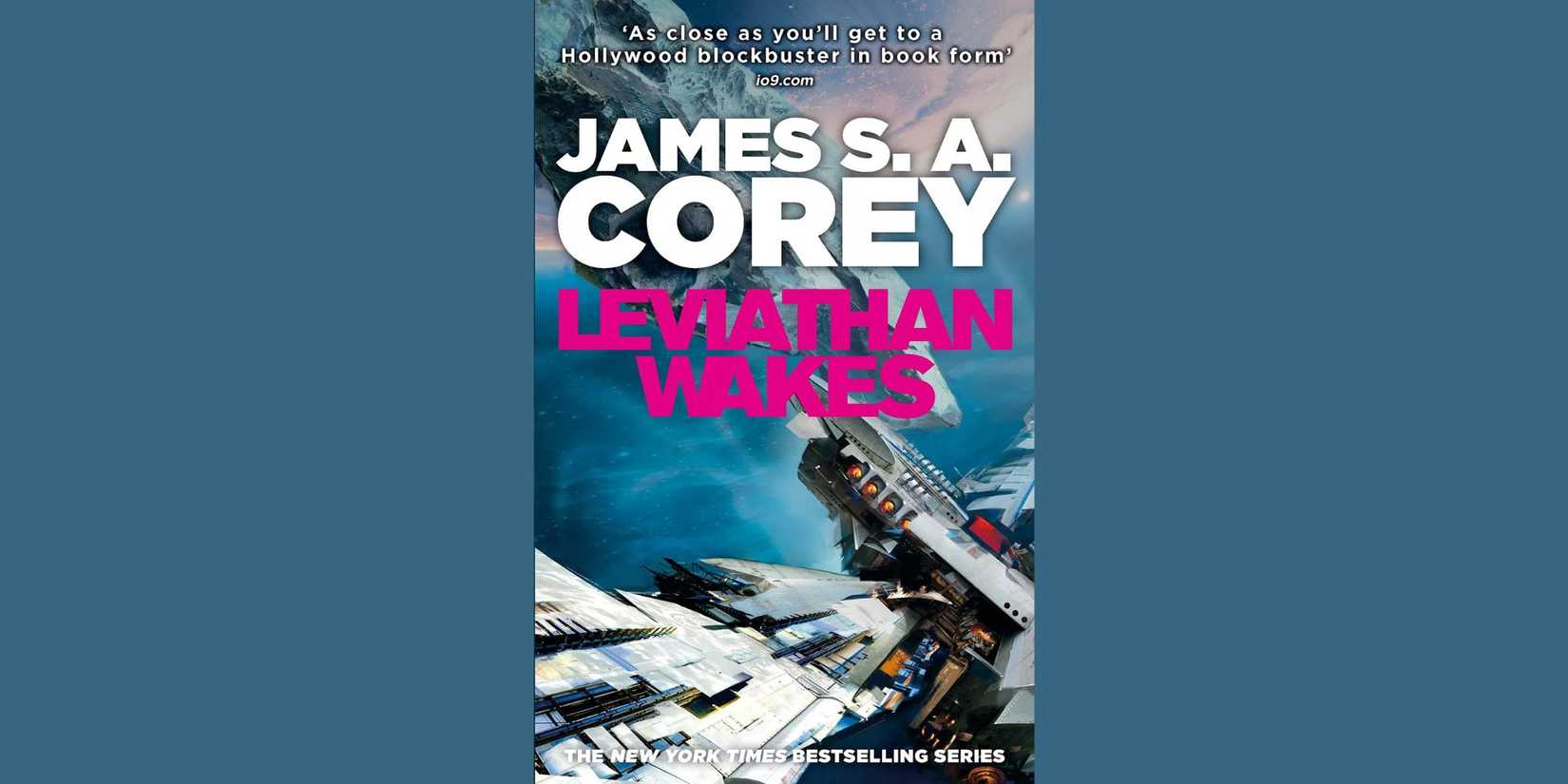
"The future belongs to whoever controls the stars." In this phenomenal space opera, humanity has colonized the Solar System, but political tensions between Earth, Mars, and the asteroid belt threaten open war. Against that backdrop, detective Joe Miller investigates the disappearance of a wealthy young woman while spaceship captain James Holden stumbles upon evidence of a terrifying conspiracy. These two narrative threads gradually intertwine, melding thriller tropes with mind-bending technology and interplanetary warfare.
Leviathan Wakes successfully fuses the very best conventions of space opera with ideas drawn from noir and cosmic horror, giving the sci-fi elements a gritty and relatively realistic treatment. Unlike the sleek, utopian, almost magical technology of, say, Star Trek, the world of this book is dirty and industrial, very much constrained by physics. This unique approach makes the space combat feel a lot more visceral and exciting.
'The Shadow of the Torturer' (1980)

"We understand the past only imperfectly." This is another genre hybrid, combining aspects of sci-fi and fantasy. The plot revolves around Severian, an apprentice in the ancient Guild of Torturers who is exiled after showing mercy to a prisoner. Thus begins his strange journey across the far-future world of Urth, a gothic landscape filled with castles, medieval customs, and strange monsters. It's a place heavy with mysteries, though author Gene Wolfe leaves the reader to puzzle most of them out on their own.
All this was very important for the development of the grimdark subgenre. The plot unfolds in a bleak, decaying world where morality is entirely gray, and the protagonist himself is a complex, contradictory figure. It is challenging material, but Wolfe has the writerly skills to pull it off. Plot aside, his prose here is simply phenomenal, really drawing us in.
'Cryptonomicon' (1999)

"Information changes history." This banger was written by Neal Stephenson, author of bestsellers like Snow Crash and Seveneves. Cryptonomicon alternates between codebreakers during World War II and their descendants navigating the rise of the digital age in the late '90s, gradually revealing the hidden connections linking both eras. Stephenson spins this into an eerily prophetic techno-thriller, touching on everything from cryptography to cryptocurrency.
Crucially, although there are some dense ideas at play here, the book handles them with wit and humor. The writing style is sharp, satirical, and occasionally laugh-out-loud funny, ensuring that concepts like information theory, data havens, and network eavesdropping rarely feel dull. Not to mention, the plotting is strong, keeping the pages turning at a brisk pace, and the cast is populated by some quirky characters, including a socially awkward hacker and a rugged, morphine-addicted US Marine Raider.
KioskNews shows a cleaned-up reading view extracted from the publisher’s page — the original always lives on their site, not ours.