The better angels of democracy have asserted themselves in America
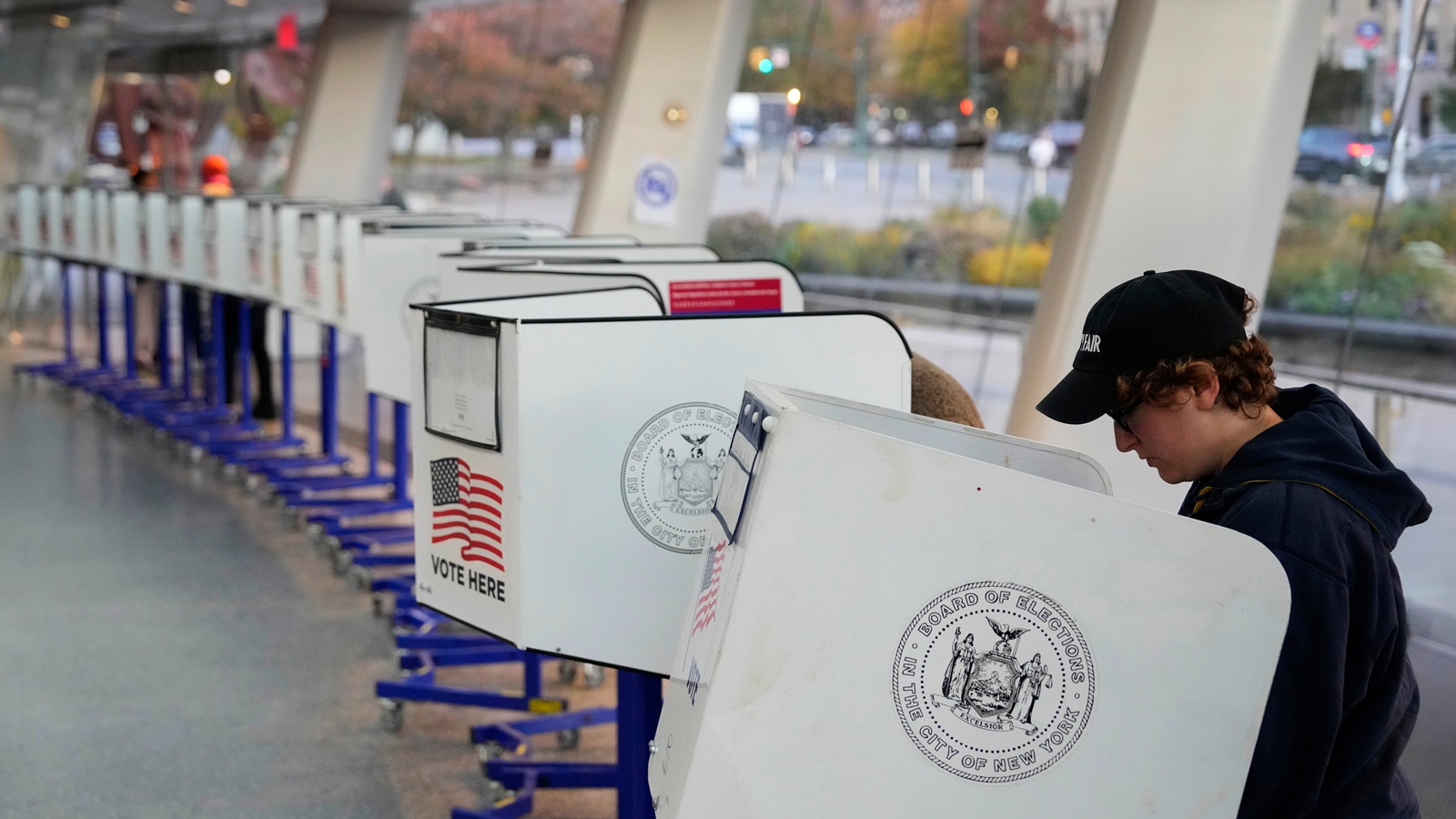
The American midterms of 2026 are not an ordinary reversal for an incumbent president. It announces not just a repudiation of Donald Trump, but possibly of Trumpism as well. Historically, many presidents, including Bill Clinton and Barack Obama, have suffered midterm reversals. But the breadth and depth of the reversal this time is staggering. More nuanced meanings of the results based on local factors will emerge in due course. But for now, there is no doubt that the better angels of democracy have asserted themselves with full force and vigour.
For starters, the repudiation of Trump is massive. It is possible that if the election results were closer, they might have been contested, sending the American electoral process down a spiral of partisan bickering. The Republican Party had become so thoroughly identified with the cult of Trump that it could no longer separate its electoral fortunes from his personal fortunes. The way in which Trump consolidated his control over the party made it vulnerable to his own political liabilities. There is an object lesson here for parties that too closely identify with the cult of a leader.
Third, there was often an incredibly racist and ugly edge to a lot of the discourse around this election. But it is difficult not to take joy in the fact that this election is a poster child for what a non-racist, less ugly, open society might look like. Georgia got its first Black governor; Florida also got a Black governor. The House may get its first Black speaker. A state like Michigan gives the US a Muslim senator in Abdul El-Sayed, and is now represented by a Jewish and a Muslim senator. AIPAC’s influence is at its lowest, even amongst Jewish voters, and fear-mongering around identity politics simply did not work. ICE enforcement and cruelty seem to have generated something of a backlash in states you might think were least susceptible to it, like Texas. Nasty campaigns that weaponised the personal trauma of opponents, as Vivek Ramaswamy despicably did, were roundly rejected.
But the election is also a reminder of at least an indirect popular repudiation of war. We may not quite be in the world of Wolf Hall, where even the ruthless Thomas Cromwell understands that no war can escape accounting, in a literal sense: “No ruler in the history of the world has ever been able to afford a war. They’re not affordable things. No prince ever says, ‘This is my budget, so this is the kind of war I can have.’ You enter into one and it uses up all the money you’ve got, and then it breaks you and bankrupts you.” The mechanisms of bankrupting are now more indirect. They show up as high gas prices that even Trump’s penchant for drilling could not overcome. They showed up in a remarkable fact: Repudiating aid to Israel, which even Trump is now contemplating, is openly on the agenda. A democracy may not always draw up the fullest moral accounting of the wars that it authorises; but at least the literal accounting and bills provide some check and balance. It is not that difficult to imagine Trump being able to pull off his agenda had he not entered the war in Iran; unfortunately for him, the only regime change he produced was in red states.
Finally, it is being said that the core issue in this election was the “affordability” crisis. Joe Biden’s record was done in by war and affordability. So has Trump’s. But in Trump’s case, layers of administrative chaos, corruption and ill-considered imperial policies on tariffs made his responsibility even more palpable. The remarkable thing about this election was that it was also, finally, a more unambiguous repudiation of corruption and oligarchy. In some ways, the fact that so many new candidates won suggests that there is still a strain of anti-elitism at work in this election. Now anti-elitism is not centred so much on populism, but the search for new candidates, not saddled with the baggage of the past. All the money thrown by Silicon Valley oligarchs like Elon Musk could not stem the blue tide even though it was fiercely directed against several candidates. There also seems to be a genuine groundswell against what AI is doing to the economy; data centres seem to be extremely unpopular.
For the Democrats, this was an object lesson in how to channel differences within the party constructively. Most of the candidates who have won seem like what in American parlance are called “moderates”. But the Democratic Socialists have found their voice and presence as effectively. Perhaps in ways too subtle to prove at this moment, the fact that Zohran Mamdani has shown that he can govern has taken the edge off many of the anxieties about Democratic Socialism. In principle, this might be a good thing for the Democratic Party.
It can now embody a genuine contest of ideas that will be much needed in charting an economic world that is radically uncertain. It also has the political talent in people like Jon Ossoff, El-Sayed and others to make this riveting. But whether merely a return to the moderate consensus of the Obama years will suffice is an open question. Everywhere, we see these cycles: Incompetent populists create an opening for the centre and left; but merely restoring status quo gives the populists another fighting chance. These gains will need to be consolidated.
The most immediate prospect is legislative gridlock: A weakened presidency confronting a less pliant Congress, and an opposition newly emboldened to exercise oversight. Whether this translates into meaningful accountability for Trump, or merely produces institutional warfare, is far from clear. Trump’s wounded vanity, and the sheer range of executive powers he still enjoys, can make for a dangerous conjunction, both at home and abroad. For him, the existential stakes of losing power are still high. Will he calmly accept his, and Trumpism’s political mortality, or gamble by setting the world on fire, is an open question.
KioskNews shows a cleaned-up reading view extracted from the publisher’s page — the original always lives on their site, not ours.