Proposed S$15,000 COE surcharge too low to deter luxury car buyers, some dealers say
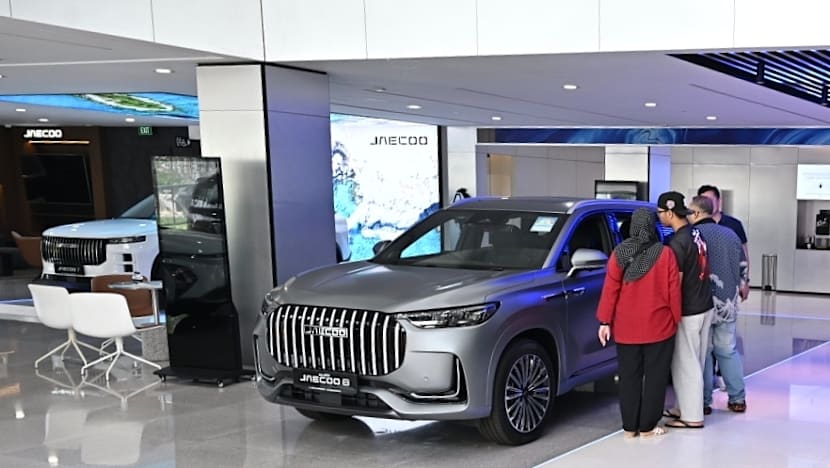
SINGAPORE: A proposed S$15,000 (US$12,000) surcharge on the Certificate of Entitlement (COE) for more expensive cars may be too low to distinguish luxury from mass-market models, some car dealers said.
Well-heeled buyers of luxury cars costing upwards of S$400,000 are unlikely to feel the surcharge, they added, a day after the Land Transport Authority (LTA) mooted the proposal on Thursday (Oct 8).
Car showrooms in Ubi were quiet on Friday afternoon, with some would-be buyers saying they would wait and see before committing to a purchase.
LTA proposed merging categories A and B, which classify cars by engine size and power, into a single COE category, and introducing fees and rebates for different car models based on their open market value.
The aim is to better distinguish high-end and mass-market vehicles as Category A and B prices have been converging. After fees and rebates, the maximum COE price difference between cars on opposite ends of the spectrum would be S$30,000.
Dealers expressed support for merging the categories. The A and B classification had become “meaningless” as larger electric cars competed with smaller, more affordable cars for COEs in the same category, said Mr Raymond Tang, first vice-president of the Singapore Vehicle Traders Association.
Combined with the rebate on lower-value models, the merger could bring relief to buyers of smaller cars, Mr Tang and other dealers said.
LTA’s proposal is open for public consultation until Nov 2. The authority will release its findings and recommendations by the first half of 2027.
EFFECT ON DEMAND AND PRICES
Mr Anson Lee, managing director of Euro Performance Asia, expected COE prices to drop over the next six months as buyers take a wait-and-see approach, before rising again as demand for cars continues.
The dealer, who mostly sells high-end European cars, said a S$15,000 surcharge was not high enough to put off consumers with the spending power for luxury models.
At its current level, the proposed surcharge would therefore not lower the average COE premium and make cars more affordable for families and caregivers who need private transport, he said, suggesting that a S$25,000 surcharge might better achieve this.
LTA has said COE prices will continue to be determined by demand, and that the review does not look at the supply of COEs.
Analysts have said the fees and rebates can guarantee a price gap between luxury and mass-market cars, but not a lower average premium. For example, buyers could put their expected savings from rebates towards their bids.
Mr Tang, managing director of Yong Lee Seng Motor, which mostly sells family cars, similarly said the surcharge had to be higher for consumers to feel the difference between more and less expensive models.
He did not expect the rebate to directly affect appetite for mass-market cars, as most buyers leave the bidding to dealers and may not understand the implications for COE prices.
But CarTimes Group chief operating officer Benjamin Loo expected buyers to gravitate towards mass-market cars. These would become more affordable through the rebate and less competition for COEs from luxury car buyers, he said.
A COE surcharge on top of the new Additional Registration Fee tier for luxury cars, introduced in 2022, would make high-end models much more expensive, he added.
"This would increase demand for high-end pre-owned vehicles for customers who still want to enjoy the luxuries provided by these cars whilst increasing demand for new mass market cars," he said.
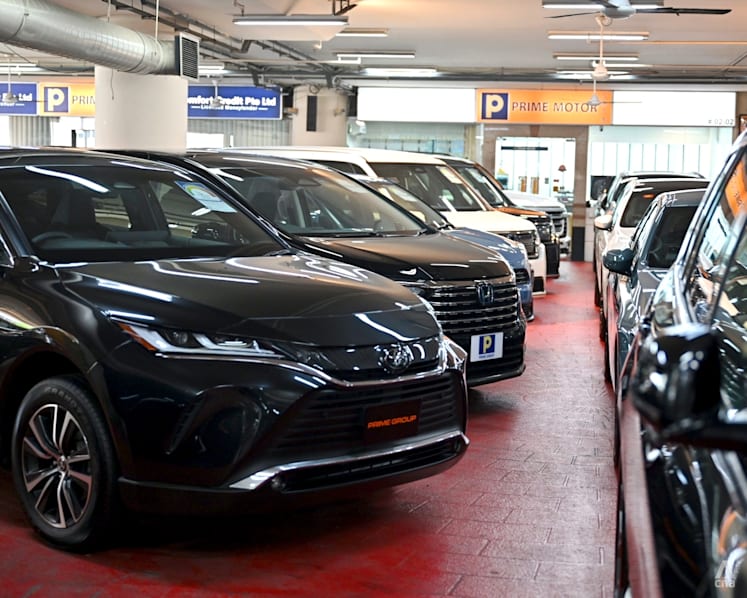
He also expected more demand for mass-market parallel imported cars, which have benefited from low open market values due to the weakening Japanese yen.
IMPACT ON CAR MODEL MIX
Mr Tang said that unlike engine specifications, which manufacturers can adjust to qualify for Category A, a car's open market value is harder to shape to fit a rebate band. It would require lowering the overall cost of production, he said.
One likely consequence is a different mix of car models being brought into Singapore.
Mr Loo said his dealership would look at bringing in different mass-market cars to benefit from the rebate.
Premium cars whose engine power was capped to qualify for Category A would no longer enjoy that category's lower COE, and would face surcharges as high-end models, he noted.
"This might make it more feasible to buy a full specification high-end vehicle as the savings might no longer be as significant as before," he said.
Independent car broker Steven Lim did not expect the proposed system to fundamentally change how consumers choose a car.
Buyers will still look at what they can afford, perhaps paying more attention to the open market value to avoid a surcharge or obtain a rebate, he said.
BUYERS MULL OPTIONS
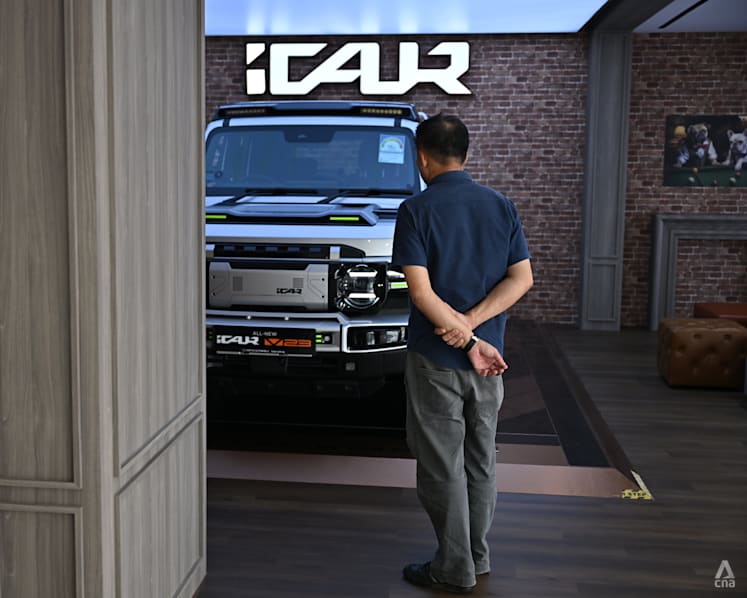
Most showrooms CNA visited in Ubi on Friday afternoon were empty, except for one electric vehicle showroom. Salespeople said weekday afternoons are typically quieter and that the market was currently slow.
Prospective buyer Ng Yong Hua, 39, said his first thought on hearing of the proposal was how COE prices would change.
The finance manager had his eye on a Jaecoo 6, which has both Category A and B variants. Mr Ng said he would have to “rethink his options” if he had to pay a surcharge – but eventually decided to buy the car that day due to other factors.
“The saleslady told me the interest rate for the car financing is going to go up today … So I'm also looking to obviously keep my financing as cheap as possible,” he said.
Retiree Steven Chen, who is looking to buy an electric car, said he would wait and see how the reforms play out if adopted.
His decision depends on the final package a salesperson can offer, and dealers could “absorb” the S$15,000 surcharge in early-bird or year-end sales, for example, the 59-year-old said.
“For us, we can't control anything because the bidding is all by agent. So how much they bid, we don't care. Our thinking is, as long as this is the right price, we'll buy,” he said.
Others, like IT professional Andy Ho, 51, felt the proposed reform was “not exciting” as strong demand for cars means COE prices will remain high.
“It's just a kind of ‘change the soup, but the ingredients are the same’,” he said, adding that he will wait and see how the reforms unfold as his current car has three years left on its COE.
Car owner Roy See bought his Zeekr 7X, a Category B premium EV, for S$236,000 in 2025. He would not make the same purchase today if he faced a S$15,000 surcharge on prevailing COE prices.
Mr See, 47, said he benefited from higher EV adoption rebates and incentives and lower COE prices last year. COE classification was not foremost in his mind then – he liked his car’s premium positioning and was prepared to pay Category B prices.
Since then, EV adoption rebates and incentives have tapered down, while COE prices have generally risen. A S$15,000 surcharge would be felt more keenly now and be enough to sway his decision, he said.
Lecturer Gerard Joseph Lim, 39, also said he would wait to see how the proposal plays out, in case rebates that make cars more affordable drive up demand and COE premiums instead.
Dr Lim, who is in the market for an affordable Japanese-made car, said the rebate may influence his choice of model, but that the deciding factor is whether he needs a car for his family or personal use.
“If it is a necessity, then I would aim for a lower open market value car since that is what I understand the categorisation is going to be based on,” he said.
KioskNews shows a cleaned-up reading view extracted from the publisher’s page — the original always lives on their site, not ours.