UPI fee: Small hit for some, bigger worry for traders on thin margins
New Delhi Traders Association president Atul Bhargava said that while smaller shopkeepers operating on thin margins could be affected, the impact would be limited for bigger traders.
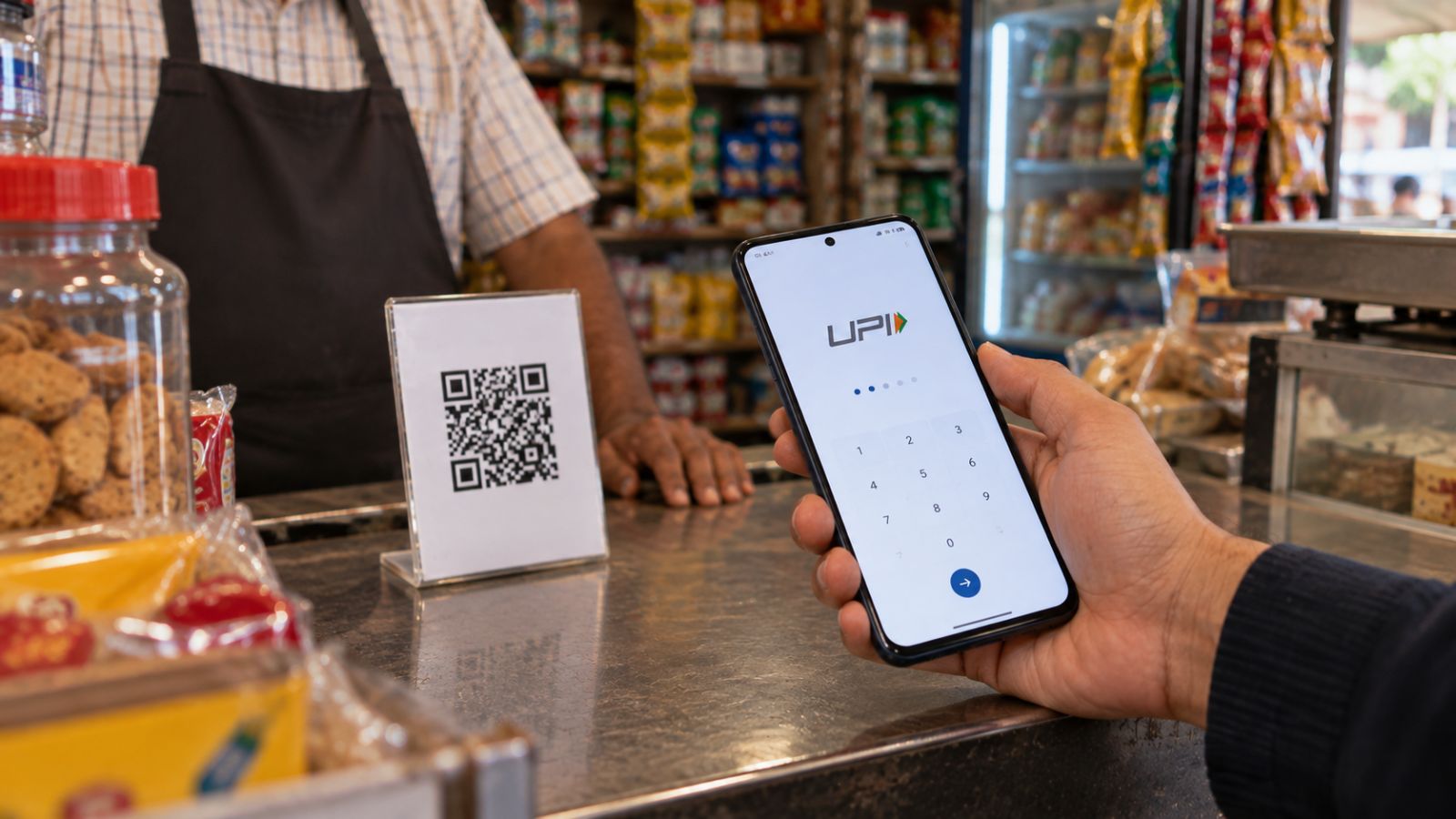
At a shop in Sadar Bazaar, the next time a customer flashes a phone to pay a bill of more than Rs 2,000, the trader may have to do a quick calculation: absorb the newly-imposed UPI fee or try to recover the cost from the customer.
The National Payments Corporation of India (NPCI) on Tuesday announced that UPI transactions over Rs 2,000 will attract a fee of 0.4% from October 15. Under the new system, it is the merchant who pays the 0.4% fee, not the customer directly. On a Rs 10,000 payment, the merchant would pay Rs 40.
This has left Delhi’s traders divided. While some said the charge is too small to make much difference to their business, those operating on thin margins worry that even a small deduction could add up.
An e-commerce website, grocery shop or a shopkeeper, receiving more than Rs 1 lakh per month from customers paying through UPI are categorised as merchants.
Mukesh Jain, general secretary of the Main Sadar Bazaar Traders Association, said the impact could be felt by both customers and shopkeepers. “Shopkeepers are already operating on such tight margins nowadays, this will eat into that also. As a result, they might increase prices and pass it on to the customer,” said Jain, who owns a shop selling festive goods.
“When making a UPI payment above Rs 2,000, the shopkeeper will either automatically increase the price by 0.4% or even more or tell the customer to pay the amount above the bill,” Jain added.
The Finance Ministry, however, has said banks have been “advised” to ensure that merchants do not pass on the cost to customers.
Story continues below this ad
Further, he pointed out that due to UPI, more transactions were being recorded and kept on the books. “This might change that,” he said.
But not every trader expects the fee to make much difference.
New Delhi Traders Association president Atul Bhargava said that while smaller shopkeepers operating on thin margins could be affected, the impact would be limited for bigger traders.
“For bigger traders and shopkeepers who are operating at say, a 20% margin, this is a very minimal cost and they won’t be much impacted,” he said, adding that credit cards, which carry higher charges, are already used by traders.
Story continues below this ad
Bhargava said payment infrastructure would have to be paid for at some point and that this was a relatively small cost. He, however, added, “Everything is so costly today that very few things are available under Rs 2,000. The government should increase the threshold for applying the fee to around Rs 7,000-10,000.”
Sanjay Bhargava, president of the Chandni Chowk Sarv Vyapar Mandal, also does not expect a major impact on sales. “This will not have a big impact on sales, but the government should have given some warning or informed traders in advance,” he said.
As for customers trying to avoid the charge, Bhargava said, “People are also very smart, they will find their way around this, like splitting the bill into two.”
© The Indian Express Pvt Ltd

Devansh Mittal is a Correspondent at The Indian Express, based in the New Delhi City bureau. He reports on urban policy, civic governance, and infrastructure in the National Capital Region, with a growing focus on housing, land policy, transport, and the disruption economy and its social implications. Professional Background Education: He studied Political Science at Ashoka University. Core Beats: His reporting focuses on policy and governance in the National Capital Region, one of the largest urban agglomerations in the world. He covers housing and land policy, municipal governance, urban transport, and the interface between infrastructure, regulation, and everyday life in the city. Recent Notable Work His recent reporting includes in-depth examinations of urban policy and its on-ground consequences: An investigation into subvention-linked home loans that documented how homebuyers were drawn into under-construction projects through a “builder–bank” nexus, often leaving them financially exposed when delivery stalled. A detailed report on why Delhi’s land-pooling policy has remained stalled since 2007, tracing how fragmented land ownership, policy design flaws, and mistrust among stakeholders have kept one of the capital’s flagship urban reforms in limbo. A reported piece examining the collapse of an electric mobility startup and what it meant for women drivers dependent on the platform for livelihoods. Reporting Approach Devansh’s work combines on-ground reporting with analysis of government data, court records, and academic research. He regularly reports from neighbourhoods, government offices, and courtrooms to explain how decisions on housing, transport, and the disruption economy shape everyday life in the city. Contact X (Twitter): @devanshmittal_ Email: devansh.mittal@expressindia.com ... Read More
Stay updated with the latest - Click here to follow us on Instagram
KioskNews shows a cleaned-up reading view extracted from the publisher’s page — the original always lives on their site, not ours.