Oil falls 1% after reports suggest Iran could reopen Hormuz within seven days
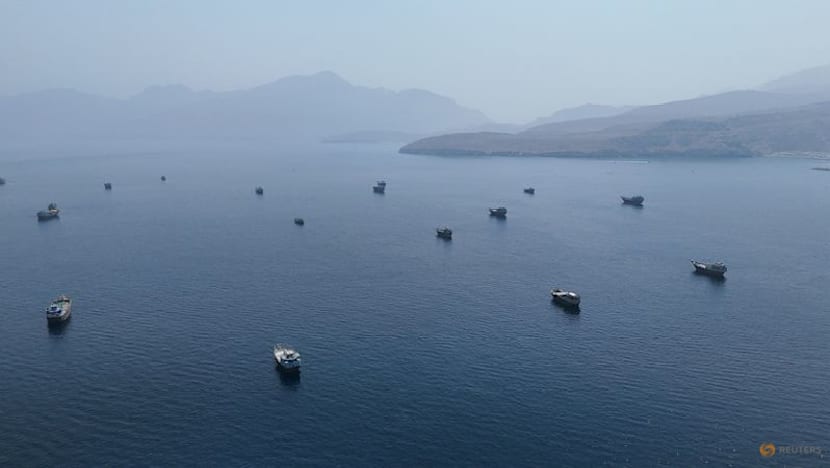
LONDON, Sept 22 : Oil prices fell on Tuesday after reports that Iran said it could reopen the Strait of Hormuz within seven days if the US takes initial steps to ease military pressure, easing concerns over disruptions to a key global oil shipping route.
The Brent crude futures November contract fell 89 cents, or 0.89 per cent, to $99.45 a barrel at 0932 GMT. The WTI October contract, which expires on Tuesday, lost $1.09, or 1.14 per cent, to $94.69 a barrel.
The more actively traded November contract was down $1.31, or 1.42 per cent, at $91.06 a barrel.
Iran has offered to reopen the Strait of Hormuz within seven days if the US takes initial steps toward easing military pressure, a senior Iranian government official told Kyodo News on Tuesday, as part of Tehran's ramped-up efforts to revive negotiations with Washington.
Oil prices appear to be falling on the back of media reports that Iran may be willing to reopen the Strait of Hormuz within seven days. This could be a positive sign that diplomacy efforts may be working, said Hamad Hussain, senior climate and commodities economist at Capital Economics.
Before US-Israeli attacks on Iran began in late February, the strait handled about one-fifth of global oil and liquefied natural gas supplies.
"There may also be other obstacles, such as the issue of tolls and fees, to overcome before a lasting solution can be achieved," Hussain added.
Market focus is also on US President Donald Trump's meetings with world leaders at the UN General Assembly this week, against the backdrop of an unstable Middle East and a four-and-a-half-year-old war in Ukraine that shows no signs of abating.
Tehran and Washington exchanged threats on Sunday, although Trump said he would be open to meeting Iranian President Masoud Pezeshkian, who is expected to be in New York this week for the UN meeting.
Over the weekend, Iran also conveyed its conditions to mediators for re-engaging in negotiations, Al Jazeera reported, citing Iran's security chief, Mohsen Rezaei.
Meanwhile, Saudi Aramco has increased exports through the Strait of Hormuz after attacks on its East-West Pipeline forced it to halt some shipments through Yanbu. Around 14 million barrels of its crude oil were loaded on seven supertankers inside the Gulf on Sunday, tanker tracking data showed.
Separately, an armed group closed valve seven on Libya's Sharara crude pipeline to Zawiya port on Monday, resulting in a significant decline in production at the Sharara oilfield, Libya's National Oil Corporation said in a statement.
Production at the field has fallen by around 200,000 barrels per day and is currently between 100,000 and 105,000 bpd, two engineers at the field told Reuters.
Ole Hansen, head of commodity strategy at Saxo Bank said he does not see much further downside in oil prices until there is increased supply through the Strait of Hormuz, particularly refined products, where the real crunch remains.
Diesel prices have rallied in Europe and the United States to record highs as wars in Iran and Ukraine sharply cut exports from some of the biggest producers such as Russia, Saudi Arabia and the United Arab Emirates.
KioskNews shows a cleaned-up reading view extracted from the publisher’s page — the original always lives on their site, not ours.