Commentary: Asia is rearming fast - but counting the wrong kind of military power

What decides how long wars can be fought is regenerative capacity, with Asia not yet paying for it, says an analyst.
20 Aug 2026 05:59AM
BEIJING: For six decades, Nissan’s Oppama plant south of Tokyo built cars - some 18 million, including the Leaf, the world’s first mass-market electric car.
The plant is due to close in 2028. Its next life may be building military drones: Anduril, the US defence technology firm, is in talks to take over the site - next door to the Yokosuka naval base - and retrain its workers.
Whether or not the deal closes, the talks put the sharpest question in Asian defence on a factory floor. The region’s militaries need more than weapons - they need ways of turning civilian factories into sustained military production.
Money is not the constraint. Military spending in Asia and Oceania reached US$681 billion in 2025, according to figures from the Stockholm International Peace Research Institute, the fastest annual rise since 2009; Japan’s outlays grew 9.7 per cent, India’s 8.9 per cent. Yet governments still measure strength the old way - by fleets of aircraft, ships and missiles that can be counted, paraded and funded.
Ukraine has exposed what that count misses. Fleets still decide how a military enters a war. What decides how long it can keep fighting is how fast lost drones and munitions are replaced, damaged aircraft and ships repaired, and broken communications restored. Call this regenerative capacity. Stockpiles determine how wars begin; regenerative capacity determines how long they can be fought.
WHERE THE PROBLEMS ARE
That turns defence into a capital-allocation problem. Once drones, radios and software need constant replenishment, the factories, repair shops and component suppliers behind them are part of the fighting system.
But defence ministries - in Asia as everywhere - are set up to sign multi-year contracts for a few expensive platforms, not to pay for factory lines that sit idle in peacetime, spare-parts stockpiles and repair networks. Budgets buy more weapons without necessarily buying recovery.
Oppama shows Japan’s version of the problem.
Japan has precision manufacturing and skilled workers, but its defence business is hemmed in by high costs - and by being run as a low-margin sideline of conglomerates. Japan’s arms imports rose 76 per cent over 2021 to 2025, 95 per cent of them American.
Anduril would still need steady orders from Japan’s Self-Defence Forces to justify the purchase. A car plant can learn to make drones, but the harder question is who pays to keep idle lines, skilled workers and surge capacity alive in peacetime.
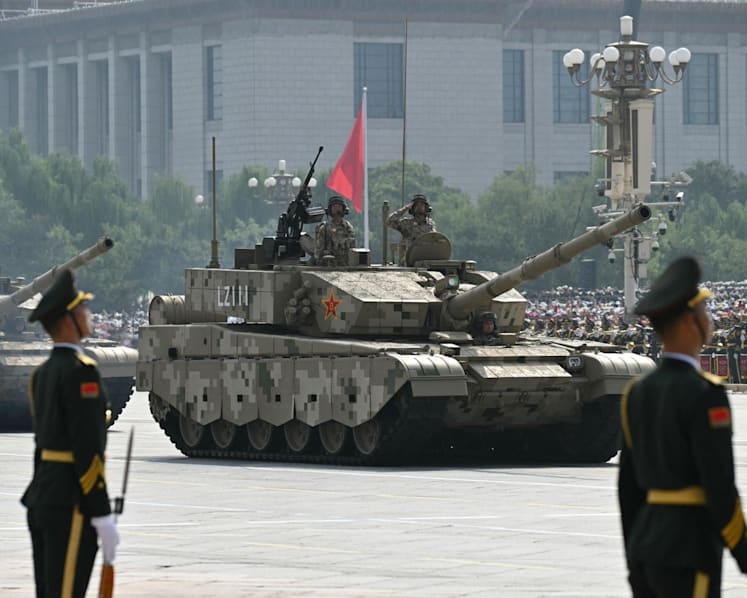
China faces the opposite constraint.
Its output of civilian drones grew 37.3 per cent last year, while its arms imports fell 72 per cent, dropping out of the top 10 recipients for the first time since the early 1990s. Its advantage is a manufacturing base with thousands of drone and component makers, fierce price competition, and product cycles measured in months - built for churning out and replacing cheap drones at speed.
But factory output does not equal military power. Whether Chinese forces could keep communications running under jamming, coordinate across services and match their hardware with training has never been tested in combat, and cannot be verified from outside.
India shows a third type of bottleneck. Still the world’s second-largest arms importer, it has cut Russia’s share of its purchases from 70 per cent a decade ago to 40 per cent. Buying from more suppliers increases autonomy, but it moves the integration bill - making French jets, Russian missiles and Israeli sensors work together - inside the armed forces.
In last May’s air battle with Pakistan, at least one Indian Rafale went down - a loss a French commander acknowledged while crediting Pakistan’s handling of the battle rather than its Chinese-made jets.
Subsequent reporting described Pakistani fighters taking targeting data by data link from a surveillance aircraft, and firing from a range Indian pilots did not expect. However advanced, a plane that cannot share information is an island.
No published figures compare how fast China, Japan and India could replace losses, repair damage or restore networks, so the new yardstick cannot - and should not - rank the three militaries.
What it exposes is what each is missing: China a conversion mechanism tested in combat, Japan a commercially sustainable scale, India affordable integration.
The money in defence is moving the same way - from delivering big platforms to replenishing, upgrading and repairing them, work that flows to electronics, communications, automation and maintenance firms beyond the household-name weapons makers.
Oppama may never build a drone. But the question it raises will outlast the deal: Having voted for bigger budgets, will Asia’s governments pay for what is invisible in peacetime and scarcest in war?
The next Asian crisis may still be decided by quantity - of drones, munitions and ships. Yet the quantity that matters will not be sitting in ports, hangars and depots - it will be regenerating on factory floors like Oppama’s.
David Zhang is an analyst at policy research consultancy Trivium China. This commentary first appeared on the Lowy Institute's blog, Interpreter.
KioskNews shows a cleaned-up reading view extracted from the publisher’s page — the original always lives on their site, not ours.