French jihadists clashes with Syrian authorities show Al-Sharaa's struggle for control - analysis
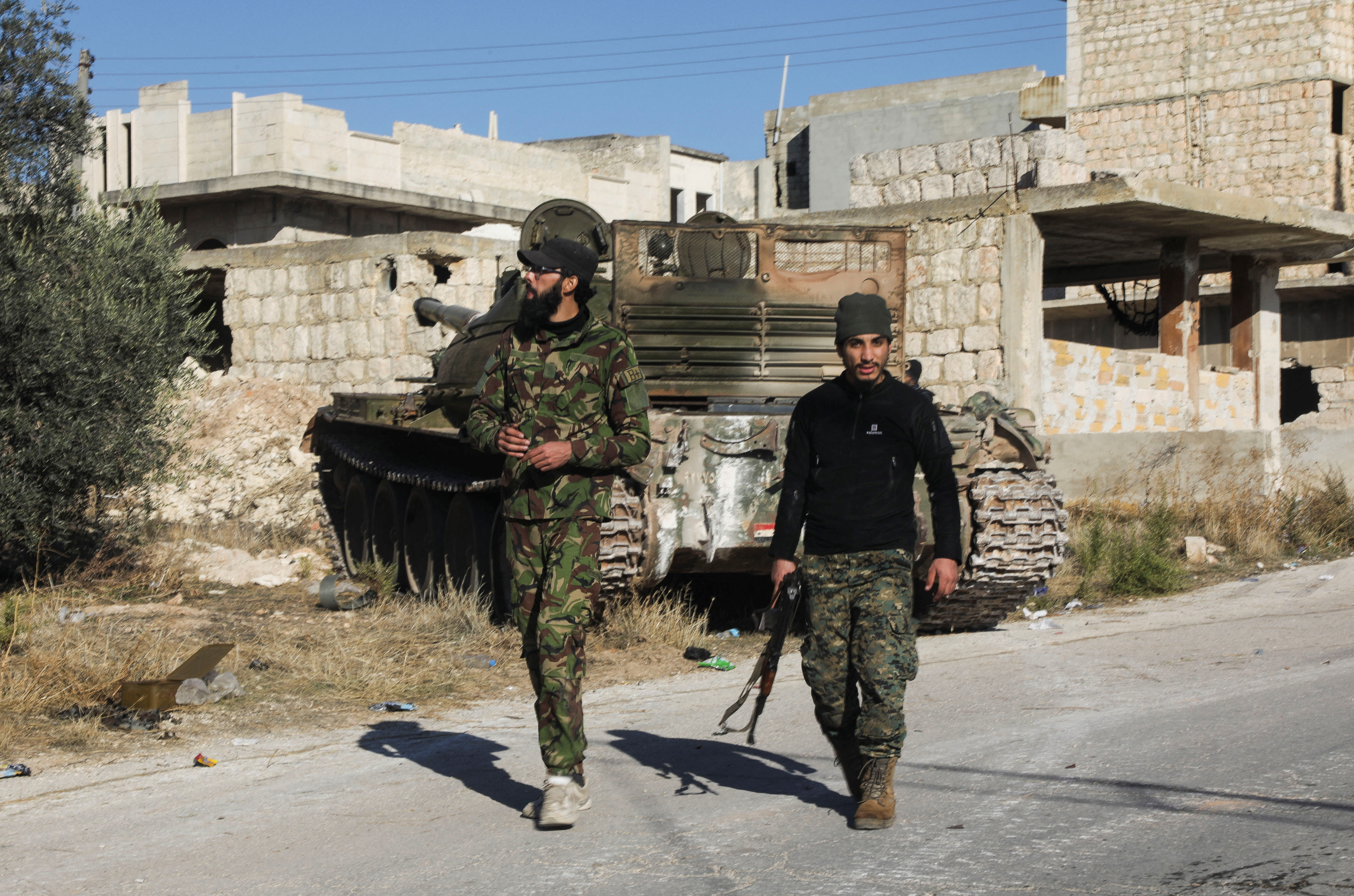
Clashes involving French jihadists in Syria's Idlib province highlight the continuing challenges facing Damascus as it seeks to consolidate control over the country and address the legacy of Syria's civil war. The challenge for Syria is that after the civil war ended with the fall of the Assad regime, there were still a number of extremists in Syria who did not want to lay down their arms. These are primarily foreign fighters who arrived in Syria after the civil war began in 2012. They came to fight the Assad regime, but many were also involved in global Jihadist activities and other types of extremism.
Most of these fighters refuse to go home. They are also not easily integrated into the new Syrian security forces. The camp of “French jihadists,” as it is known in media accounts, is only one example. It is in Idlib, which was the heartland of the rebel group Hayat Tahrir al-Sham (HTS), until HTS toppled the Assad regime in 2024.
According to The New Region, a “French jihadist” was killed and a civilian injured on Wednesday when Syrian security forces confronted armed members of a group based at a camp housing French foreign fighters near Harem, close to the Turkish border.
“An internal security patrol observed an armed group leaving the French camp and heading toward the Harem area in Idlib,” the provincial internal security command told Syrian state broadcaster al-Ikhbariya, according to The New Region. Authorities said the fighters violated an agreement prohibiting them from leaving the camp while armed.
However, Kurdish media outlet Rudaw reported a slightly different account of the incident, citing Rami Abdulrahman, director of the Syrian Observatory for Human Rights (SOHR). He said masked gunmen opened fire on a vehicle carrying a French commander known as Abu Ayman al-Faransi and several other people on the road between the camp and Harem.

The identity of the attackers has not been independently established.
Syrian authorities struggle to handle foreign jihadists
Rudaw also cited testimony from a French fighter who accused Syrian security authorities of staging an ambush and confiscating surveillance equipment to conceal evidence. These allegations have not been independently verified.
The camp, according to the accounts, is associated with Firqat al-Ghuraba, also known as the Strangers Division or Muhajirun, a group led by Omar Omsen, also known as Omar Diaby, a French jihadist of Senegalese origin. The Jamestown Foundation once noted he had been called the “Spielberg of French Islamism.” It said that in France, an “unassimilated Muslim community” had Islamist “produced scores of jihadists from the Nice region.” Le Monde in France said “Syrian authorities struggle with foreign jihadists…Clashes between Syrian authorities and French jihadists entrenched in the Harem camp demonstrate the challenges the new [government].”
According to Rudaw, the fortified camp houses approximately 100 foreign fighters, as well as 25 women, 25 teenagers and 75 children. Omsen was placed on a United Nations sanctions list in 2014 over his role in facilitating the movement of foreign jihadists to Syria. He was also designated a terrorist by the United States. The group accused Syrian authorities of imposing restrictions on its movement and access to food supplies.
“For three months now, you have besieged us, imposing an embargo and stepping up surveillance. We have committed no act to justify such hostility,” the group said in a statement on Telegram quoted by Rudaw.
The group also accused Damascus of acting on instructions from France, an allegation for which no evidence was provided.
Clashes between the camp, Syrian authorities are a persistent issue
Tensions between the camp and Syrian authorities are not new. In October 2025, security forces surrounded the compound following allegations that fighters linked to Omsen had kidnapped an 11-year-old girl. The confrontation led to clashes and an agreement intended to regulate the group's activities.
The latest incident illustrates the difficulties facing President Ahmed al-Sharaa's government in dealing with foreign jihadists who established themselves in Syria during the civil war.
The foreign fighters have kept their arms and operate as their own unit and seek to run their own small area. Attempts to restrict their activities have led to clashes.
Rudaw also reported that a leader of Hurras al-Din, an al-Qaeda-linked organization, was killed in a separate airstrike earlier in the week. The group of French jihadists attributed that strike to the United States, although the account did not establish independent confirmation of responsibility.
The incidents demonstrate that the toxic legacy of foreign jihadist networks remains a significant challenge for Syria's new authorities. Damascus is attempting to rebuild international relations and demonstrate that it can control armed groups operating on its territory. However, the presence of foreign fighters, some wanted by European governments, continues to complicate those efforts.
The story is not only unfolding in Syria. In Iran the government recently sentenced a number of French ISIS members to long prison terms. This illustrates how the foreign extremist threat affected both countries.
KioskNews shows a cleaned-up reading view extracted from the publisher’s page — the original always lives on their site, not ours.