Talks With US Will Succeed Only Without 'Pressure, Threat': Iran's Pezeshkian
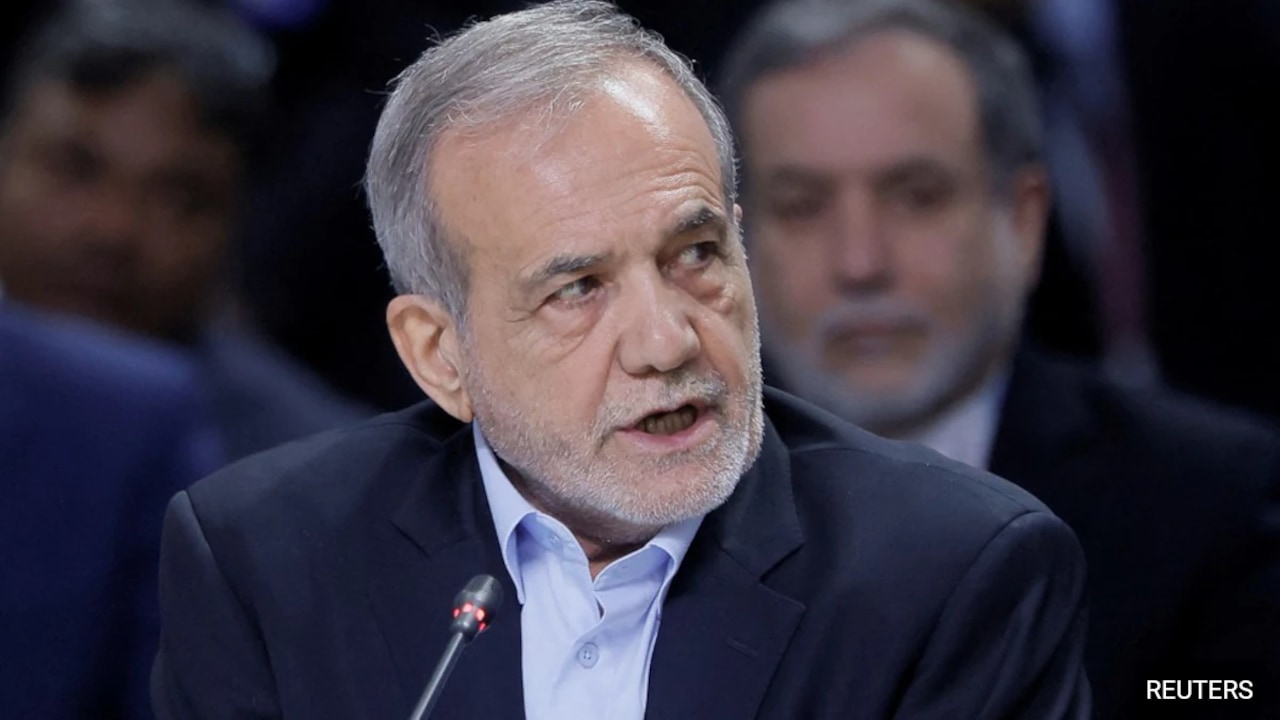
Iranian President Masoud Pezeshkian said Friday at a regional summit in Turkmenistan that peace negotiations will only succeed without "pressure and threats", with the months-long Middle East war locked in a stalemate.
"Dialogue holds meaning and a chance of success only when based on mutual respect and mutual commitments, and when devoid of pressure and threat," he said during his speech at the Commonwealth of Independent States (CIS) summit.
"Negotiation conducted in the shadow of force is not negotiation, it is imposition and coercion," he said, warning that sanctions on Iran would affect "regional trade, connectivity, energy, and order."
The comments came as Pezeshkian on Monday said talks with the United States to end the war that began in late February were worthless and only resulted in renewed attacks.
"With an enemy that everyday resorts to assassination, sanctions, pressure and threats, and that breaks its commitments, negotiations are meaningless," he noted.
The war started with US and Israeli attacks on Iran, while Washington and Tehran were locked in negotiations on Iran's nuclear programme.
The warring parties agreed a memorandum of understanding in June that spelled out a framework for a permanent resolution to the conflict, but Iranian attacks on vessels in the Strait of Hormuz prompted a resumption of US military operations.
Negotiations have effectively been at an impasse since then, and recent indirect talks between the US and Iran on the sidelines of the UN General Assembly failed to produce a breakthrough.
Washington in recent weeks has dialled back military operations in favour of economic pressure and has not struck Iran since September 1.
The United States and Israel have said the war is necessary to prevent Iran from acquiring nuclear weapons -- a goal Tehran has long denied pursuing.
The focus shifted to reopening the Strait of Hormuz after its closure sent shockwaves through global energy markets.
Iran has sought to impose its control over the vital shipping lane since the start of the war, striking vessels that attempt to transit without its authorisation.
The US has imposed its own counterblockade of Iranian ports and has also struck vessels it accuses of violating it.
(Except for the headline, this story has not been edited by NDTV staff and is published from a syndicated feed.)
KioskNews shows a cleaned-up reading view extracted from the publisher’s page — the original always lives on their site, not ours.