Designer Anand Kabra on his journey, latest collection, and designing for Aditi Rao Hydari: ‘Her connection to Deccan…’
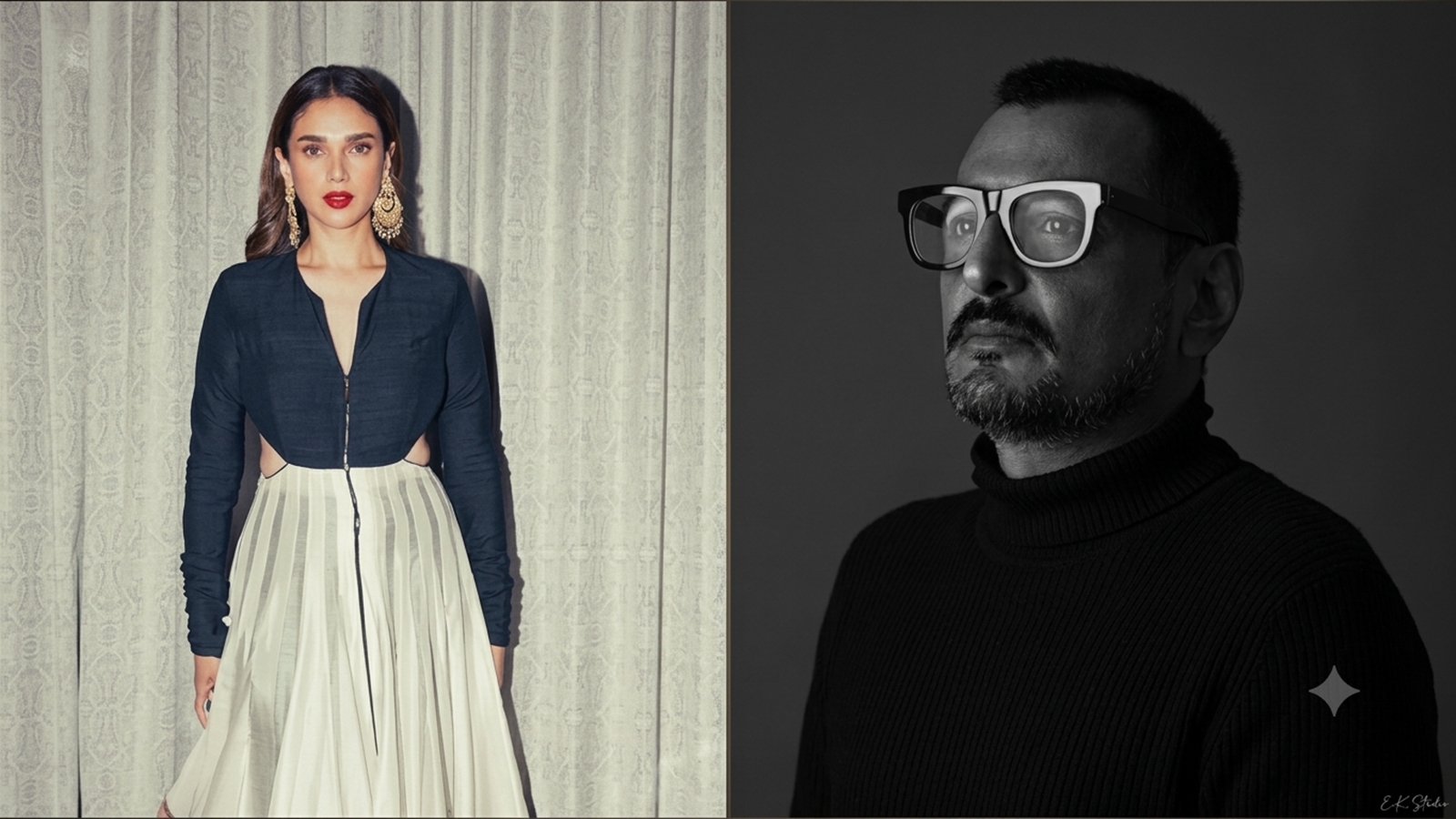
“I have just never wanted the label to be built around celebrity dressing or films,” says Anand Kabra when asked why he prefers to stay away from designing for stars, films, and the world of glamour.
That said, he seems to have a special connection with Aditi Rao Hydari because of “her own connection to Hyderabad and the Deccan”, for whom he reimagined an archival piece from his collection for her wedding.
In an exclusive email interview, Anand Kabra tells indianexpress.com about his two-decade-long journey, his on-and-off stint on fashion weeks, his evolution as a designer, and much more.
Read the edited excerpts below:
Q. You made your debut in 2006. Twenty years later, how do you describe the journey??
Anand Kabra: It has been quite a journey. Twenty years is a long time, and both the industry and I have changed a lot.
There have been highs and lows, periods of being very active and periods of stepping back. But through it all, I think the most important thing has been finding my own voice and understanding what I want the label to stand for. I probably have much more clarity about that today than I did when I started.
Today, it is also a more mindful and holistic approach to Anand Kabra — the person as well as the profession. It is about understanding what matters to me, what is worth pursuing, and what isn’t, without rebelling. I think with time, you learn to question things, but you also learn when something doesn’t need questioning.
Q. Over the past two decades, you have often taken breaks from fashion weeks and showcases. What is the reason behind this?
Anand Kabra: When I started, the attention came early and very fast, and it was bound to affect the young me. I was finding my feet while, at the same time, there was a lot of attention and expectation around the work.
Story continues below this ad
Over time, I realised I needed to step back occasionally to understand what I was doing and, more importantly, why. The breaks gave me the space to reassess, experiment, and come back with greater clarity.
I have never felt the need to show simply because there was a fashion week or a showcase. For me, there has to be a reason and something meaningful to say. The pauses have been as much a part of my journey as the collections themselves.
Q. Throughout your career, despite being worn by many celebrities, you have maintained a distance from mainstream stars, designing for films, etc. Is this a conscious decision, and how has it benefited you/the label?
Anand Kabra: It was never really a conscious decision to stay away. I have just never wanted the label to be built around celebrity dressing or films. I am very happy when someone I admire wears my clothes, but the celebrity has never been the focus.
I have always wanted the clothes and the design to speak for themselves. I give every woman I dress the same care and attention to detail. For me, it is about the individual — how she feels in the clothes and how they work for her — and never about the reach or profile of a star.
I think that has allowed the label to develop its own identity without being tied to a particular celebrity or moment.
Story continues below this ad
Q. Tell us about Taramati II, and how it differs from Taramati, the archival collection?
Anand Kabra: Taramati II is not a recreation of the 2013 collection. It continues a conversation I began then.
The original Taramati explored the Deccan, its history, architecture, costume, and the story of Taramati. It was an emotional exploration. Thirteen years later, I look at those same references with a very different understanding of design and myself.
The silhouettes are more considered, and the craft has been reinterpreted with a greater emphasis on structure, form, and technique. The conversation also continues with the requirements of today’s lifestyle — freedom, comfort and lightness.
The starting point may be familiar, but the expression belongs very much to today.
Q. You also reimagined a piece from the SS 2013 collection for Aditi Rao Hydari. Tell us about that.
Anand Kabra: It was lovely to revisit something from the original Taramati and see it in a completely different context.
Story continues below this ad
We didn’t want to simply reproduce the garment. We looked at it again and reinterpreted it with the sensibility of the brand and the muse. And Aditi wearing it felt particularly appropriate because of her own connection to Hyderabad and the Deccan.
For me, it also reinforces the idea that good design doesn’t really have an expiry date. You can come back to something years later, look at it differently, and find a new way to bring it to life.
Q. Why ‘Taramati’? What about the royal courtesan inspired you to base elements of the collection on her?
Anand Kabra: Taramati is intriguing because her story exists between history and legend. Her story evokes love, longing, freedom, and confinement, while the Baradari brings in its arches, repetition, symmetry, and negative spaces.
I wasn’t interested in literally translating her story into clothes. Instead, I imagined Taramati as a woman — what she may have felt and experienced. The collection interprets those emotions: anger, lust, peace, and longing.
Story continues below this ad
The challenge was to express them in a contemporary way, creating clothes that feel relevant and wearable for today’s woman while retaining the emotional depth of Taramati’s story.
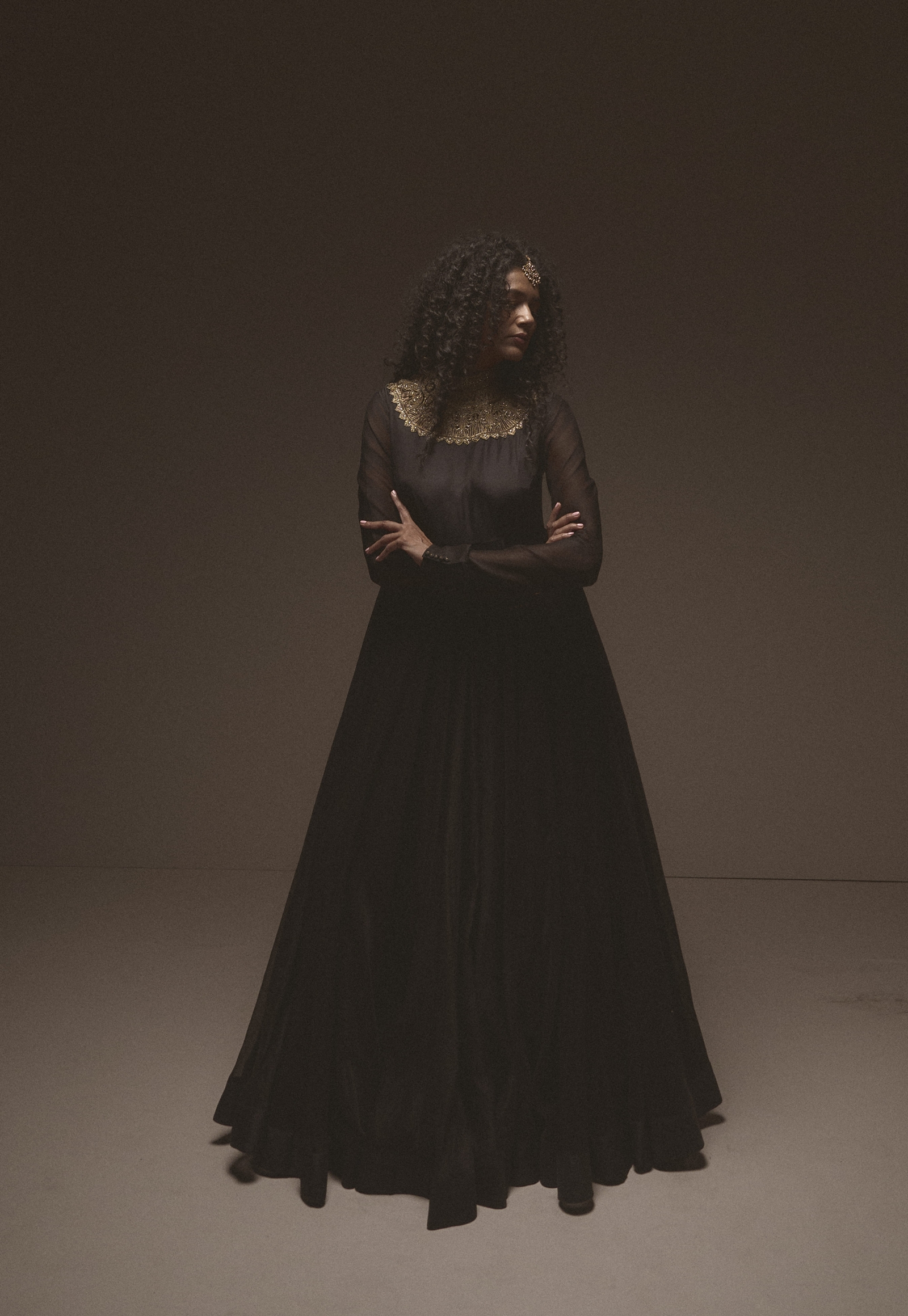 A look from the Taramati II collection by Anand Kabra. (PR handout)
Q. How different is this collection from the previous one?
Anand Kabra: It is quite different simply because I am a different designer today.
The original collection was a more direct interpretation of the references. With Taramati II, I have taken those references apart a little more and looked at what is relevant today.
I’ve given much more thought to form, silhouette, textile, and craft, while keeping everything contemporary and relevant to today’s needs and lifestyle. I am more interested in the idea behind a silhouette than in simply reproducing it.
Story continues below this ad
The collection also offers more versatility in the collection —pieces can be worn, mixed, and interpreted in different ways. The idea is to create clothes with a strong sense of identity, but also with the ease and practicality women need today.
Q. The note says that the collection looks at the Deccan through its “themes of longing and belonging”. How do you translate such strong human emotions into designs and fabrics?
Anand Kabra: It is purely my imagination of Taramati’s emotions. I wanted to imagine what she might have felt, then find ways to translate those emotions into the clothes.
I interpret the emotions through silhouette and form. Volume represents freedom and a lightness of being, while structure suggests restraint. I have also borrowed from menswear to evoke the lover’s presence, and from traditional garments to express oneself with a sense of occasion and beauty.
Colour also plays an important role. Motiya represents purity, Kumkum suggests seduction and desire, Mehndi brings in celebration, and Surma speaks of intensity.
Story continues below this ad
So the emotions are not literally illustrated; they are expressed through the way the clothes move, hold the body, and come together.
Q. Talk to us about your collaboration with Collage, and what role it has played in your journey?
Anand Kabra: Collage and I go back many years, so there is a certain understanding that comes with that. They have always understood the label beyond just the clothes. They understand the design language, their customer and the fact that the work needs to retain its individuality.
It’s special to have a relationship that has grown over many years, particularly in an industry where things can become very transactional. We share trust and understanding, and I think that allows the work to evolve while still staying true to what the label stands for.
Q. Ahead of the upcoming wedding season, what design trends do you anticipate becoming big?
Anand Kabra: I think people are looking for things that feel more individual and that they can actually wear in different ways.
There is still a great appetite for dressing up, of course, but I think people are becoming more conscious of how often they can wear something and how they can make it their own.
Story continues below this ad
I see separates, layering and versatile pieces becoming more relevant. There is also a growing appreciation for good textiles, craft and construction, rather than simply adding more embellishment. I think the idea of buying something beautiful and being able to live with it, wear it differently and make it your own is becoming increasingly important.
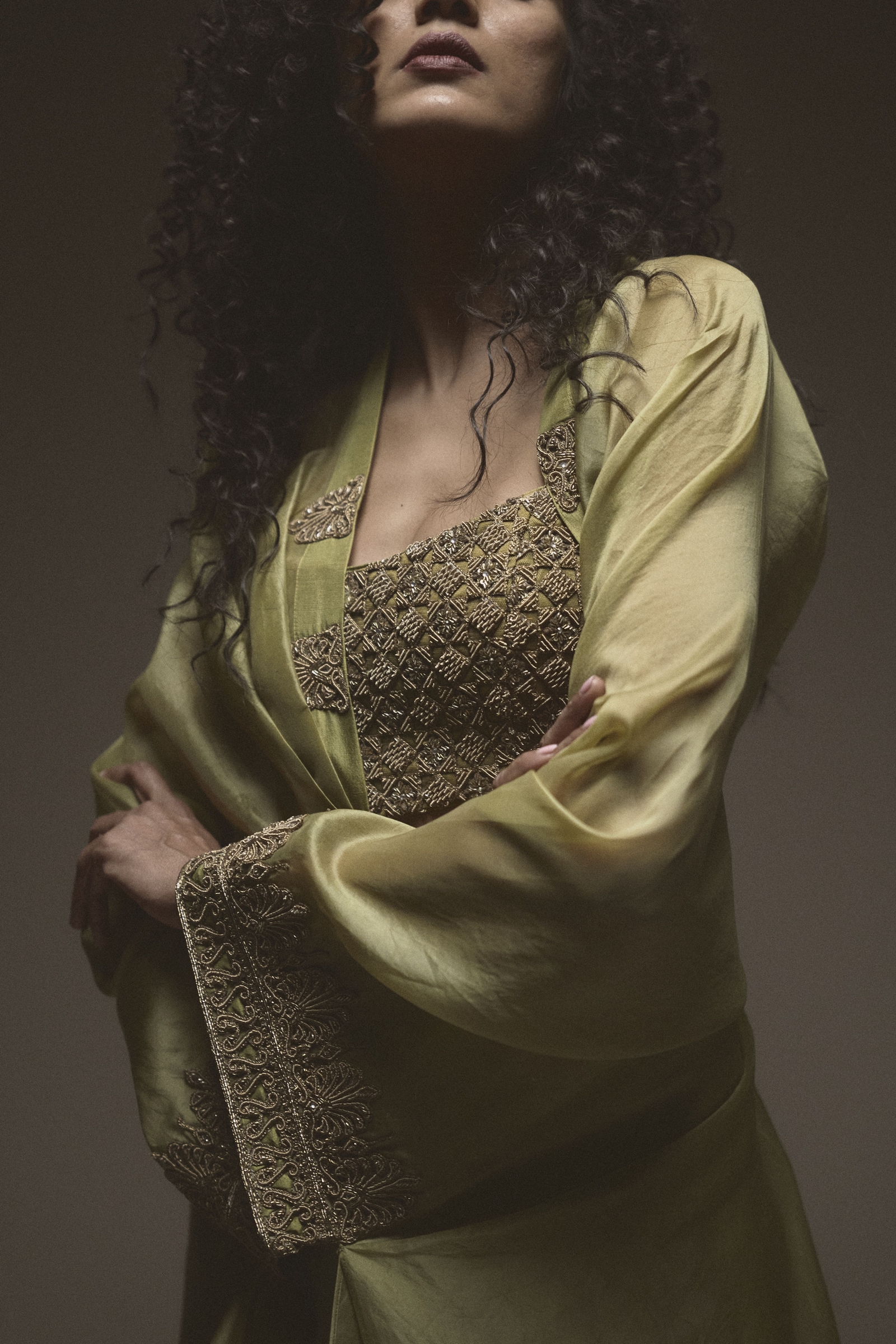 A look from the Taramati II collection by Anand Kabra. (PR handout)
Q. How has the industry evolved in the last 20 years?
Anand Kabra: It has changed enormously. The industry has grown in scale, the customer has changed, and access to fashion has completely changed.
Today, information travels instantly. The Indian customer is much more aware of what is happening globally and has access to international brands, trends and ideas in a way that simply wasn’t possible when I started.
At the same time, I think there is a much greater appreciation of our own textiles, crafts and design vocabulary. Fashion also has a much larger and more diverse audience today.
The biggest difference, perhaps, is how fast everything happens. Trends come and go quickly, and customers are constantly exposed to new information. The challenge for a designer is knowing what to absorb, what to question and what to leave behind.
Q. What does it take to be a designer in India today?
Anand Kabra: I think you need to have a point of view. So much is happening in fashion today that it is important to be clear about what you want to say and how you want your work to be seen. At the same time, being a designer is not just about the creative process. You have to understand your customer, the business, production, pricing and retail.
For me, it is about balancing creativity with the realities of the world you are designing for—staying relevant without losing what makes your work your own.
Q. In a fashion landscape dominated by the visual signatures of Sabyasachi, Manish Malhotra, Abu Jani–Sandeep Khosla, and Tarun Tahiliani, what makes Anand Kabra’s design language distinctive?
Anand Kabra: I think it is difficult to describe your own work objectively. I would rather let the work speak for itself.
But if I had to put it simply, my work comes from a deep engagement with India — its heritage, costume and craft — but I am always looking at how they can be understood and worn today.
I am interested in taking something familiar and changing its proportions, construction or context. The clothes also carry a certain tension — between structure and softness, detail and space, the familiar and the unexpected.
Ultimately, I aim to create clothes with their own identity, without being confined by what Indian fashion is expected to look like.
KioskNews shows a cleaned-up reading view extracted from the publisher’s page — the original always lives on their site, not ours.