Bridget Phillipson: ‘I’m a spiteful class warrior — and I’m proud’
Bridget Phillipson has been given the job by Andy Burnham of chairing the Labour Party and getting it match-fit to fight the next general election.
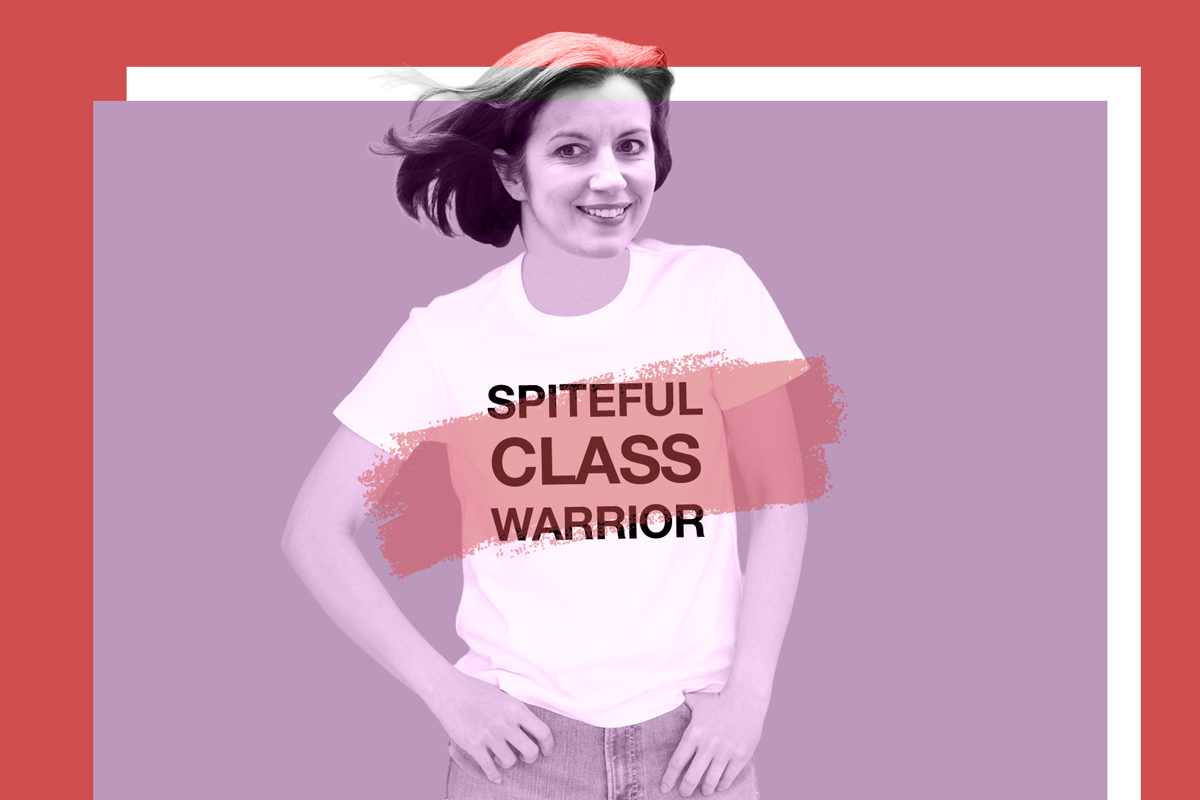
There are few MPs, though, who have had to endure the brutal nature of political discourse more than she has – and she even has several T-shirts to prove it.
It was in June that Tory leader Kemi Badenoch, caught up in the heat of another weekly Prime Minister’s Questions, singled out Ms Phillipson – then the education secretary – in an exchange that was shocking even by the standards of the bearpit of the Commons chamber.
Blasting her policy to slap VAT on private school fees, Ms Badenoch said: “It turns out that appointing a spiteful class warrior as education secretary was a disaster.” The Conservative leader faced demands to apologise but refused.
When Ms Phillipson, now the women’s and equalities secretary, spoke to The Independent ahead of Labour’s conference in Liverpool, which takes place on Saturday, she was able to laugh about it.
The Labour frontbencher revealed that, now only has she embraced the insult, but it has encouraged her to put class inequality at the heart of her work.
Supporters even started sending her T-shirts with “spiteful class warrior” emblazoned on them – which she has no plans to throw out.
“I remain a proud spiteful class warrior addressing the long standing inequalities,” she told The Independent. “I got sent lots of T-shirts from members of the public, and I still have them.
“And that's why I've brought a new focus in this expanded role. I brought a new focus on class because, whilst I think it is absolutely right that we continue to tackle prejudice and discrimination on the basis of sex, on the basis of race and disability, I do think we need a sharper focus on class too – because it's often family background and family circumstance and where you're born in this country that determine what you want to achieve in life.”
She added: “I think it just says more about Kemi Badenoch than anybody else that she chooses to really reduce the debate to the level of name-calling. I don't think that advances a political argument.
“I don't think the British people like it, and if that's how she'll continue to conduct herself, including in the run-up to the general election, I don't think it will be a popular approach that resonates with the British people, who I think just have a sense of fairness about these things.”
Ms Phillipson has also highlighted the plight of working class girls caught up in the grooming gang scandal who she feels were ignored because of their class background.
Many of these incidents happened in areas with Labour run councils and Sir Keir Starmer’s government came under severe criticism for dragging its feet on having a national inquiry.
The issue was used to bolster support for Reform UK, the Tories and Restore Britain with criticism that the authorities had ignored victims because of fears of being described as racist because it involved gangs of men of mostly Pakistani heritage preying on white girls.
But Ms Phillipson has said it is “right that there is going to be a national inquiry” into what happened and drew a wider class lesson as to why many of the victims were ignored.
“A lot of what happened in that period was that there was a total failure to listen to women, to believe women – especially working class girls who were reporting unimaginable abuse but weren't taken seriously – and that's the kind of culture that we have to shift in our country.”
For Ms Phillipson, this issue of class inequality is personal. As a child in Tyne and Wear she grew up in poverty but was inspired by her mother Clare, who set up a centre for women suffering from domestic abuse, and a teacher named Ms Huq.
She overcame her challenges, going on to attend Oxford University, only to later return to the North East as MP for Houghton and Sunderland South.
As a child her mother sent her to drama classes at a local community centre to try to improve her future chances which led to her being an extra on the TV show Byker Grove with Ant and Dec.
She never knew her father and saw the effects of Margaret Thatcher’s harsh economic policies on former mining and industrial communities.
Reflecting back on her early life, she told The Independent: “I feel very fortunate, and I'm now in a position to to make a difference for the next generation of young people who are coming through who shouldn't be constrained because of where they happen to grow up or the family that they happen to be born into.
“It should be their hard work and their talent that takes them where they need to be. But many parts of our society and many industries are increasingly becoming the preserve of the better off and getting into some of those jobs and roots – whether it's music or law or or the media.
“It's becoming harder for many working-class young people who don't have connections and don't have money and can't carry out unpaid internships because they've got to earn to survive.”
KioskNews shows a cleaned-up reading view extracted from the publisher’s page — the original always lives on their site, not ours.