The 8 Most Universally Acclaimed Detective Books of All Time, Ranked


Luc Haasbroek is a writer and videographer from Durban, South Africa. He has been writing professionally about pop culture for eight years. Luc's areas of interest are broad: he's just as passionate about psychology and history as he is about movies and TV. He's especially drawn to the places where these topics overlap.
Luc is also an avid producer of video essays and looks forward to expanding his writing career. When not writing, he can be found hiking, playing Dungeons & Dragons, hanging out with his cats, and doing deep dives on whatever topic happens to have captured his interest that week.
Sign in to your Collider account
When handled properly, a good old-fashioned detective story can be incredibly satisfying. At their best, they serve up suspenseful plots and brain-teasing puzzles, challenging us to solve the crime alongside the investigator, all while charming with enduring (and often eccentric) characters.
With that in mind, this list looks at some of the most acclaimed detective stories ever. These are the classics and critical darlings, the crowd-pleasers and influential genre cornerstones. All are worth checking out if you're a fan of juicy mysteries and clever protagonists.
8 'The Moonstone' (1868)

“I am an average good Christian, when you don't push my Christianity too far.” The Moonstone is generally regarded as one of the earliest detective stories, helping to establish many of the conventions that later became fundamental to the genre. The mystery here centers on an enormous Indian diamond that disappears from an English country house shortly after being presented to a young woman named Rachel Verinder.
The theft sets off an investigation involving suspicious servants, family secrets, competing motives, and a collection of characters whose accounts of events rarely align perfectly. From here, author Wilkie Collins charms us with archetypal figures like eccentric investigator Sergeant Cuff and gentleman detective Franklin Blake, as well as a stream of juicy red herrings. Not for nothing, several famous authors have lavished high praise on the novel, including the likes of G.K. Chesterton and T.S. Eliot.
7 'The Daughter of Time' (1951)

“Truth is the daughter of time, not of authority.” This is a highly unusual detective story, not least because its central investigator spends almost the entire story confined to a hospital bed. Our protagonist, Inspector Alan Grant, becomes fascinated by a portrait of King Richard III while recovering from an injury. Convinced that the king's face doesn't resemble that of a ruthless murderer, he begins reconsidering one of English history's most notorious mysteries.
The question concerns the disappearance of the Princes in the Tower, two young princes traditionally believed to have been murdered on Richard's orders. Grant begins examining historical documents, competing accounts, and the political circumstances surrounding the alleged crime. However, author Josephine Tey transforms what might sound like a dry academic exercise into a surprisingly gripping mystery, holding out attention without car chases or bloody murder scenes.
6 'The Murders in the Rue Morgue' (1841)

“The analytical power should not be confounded with simple ingenuity.” Before Sherlock Holmes or Hercule Poirot, there was C. Auguste Dupin. Penned by the legendary Edgar Allan Poe, The Murders in the Rue Morgue is another pioneering detective story, arriving several decades before The Moonstone even. This characteristically dark story begins with the horrifying murders of two women inside a locked room in Paris. The police are left scratching their heads, so Dupin steps in, applying deductive reasoning to the problem.
In this sense, the character planted the seeds of the 'super-rational' investigator, a blueprint that has since become part and parcel of crime fiction. Likewise, by creating a locked-room crime that appears utterly impossible to solve, Poe established the classic "puzzle-box" formula that later authors like Agatha Christie and John Dickson Carr would spend entire careers perfecting.
5 'The Maltese Falcon' (1930)

“When you're slapped, you'll take it and like it.” Many readers will be familiar with the classic film adaptation starring Humphrey Bogart, but the original novel was also a landmark in its own right. Where earlier detective stories presented crime-solving as an elegant intellectual exercise, The Maltese Falcon dragged the genre into a much darker, grittier world. Here, we meet protagonist Sam Spade, a San Francisco private eye whose latest case rapidly develops into a dangerous conspiracy involving murder, deception, and a legendary jeweled statuette.
Spade is a very different detective from the gentlemanly investigators who dominated much of the genre before him. He's cynical, morally ambiguous, and perfectly comfortable manipulating people who are attempting to manipulate him, although he does operate according to an unyielding set of personal rules. The hard-boiled dialogue, unsentimental prose, femmes fatales, and central macGuffin were all influential, massively shaping American noir.
4 'The Big Sleep' (1939)

“Dead men are heavier than broken hearts.” Another noir classic, The Big Sleep introduced one of the all-time great literary detectives: Philip Marlowe, the wisecracking private investigator whose cynicism conceals a surprisingly stubborn moral code. He's hired by the wealthy General Sternwood to look into a blackmail scheme involving one of his daughters. Naturally, what initially appears to be a relatively straightforward assignment becomes considerably more complicated. The investigation leads Marlowe through a tangled network of pornography, gambling, corruption, blackmail, and murder.
The plot is famously convoluted (so much so that author Raymond Chandler has admitted to not knowing the solution to one of the storylines), yet that complexity is almost beside the point. The real attraction is Marlowe himself, whose sardonic observations and refusal to surrender his principles make him a fantastic narrator. Finally, the prose itself is punchy and vivid, poetic but retaining a hard-boiled edge.
3 'The Murder of Roger Ackroyd' (1926)

“The truth, however ugly in itself, is always curious and beautiful to seekers after it.” Agatha Christie was already an established author when she published this ingenious Hercule Poirot mystery, but its audacious solution helped cement her reputation as one of the genre's greatest innovators. The plot machinations begin with a businessman being murdered shortly after receiving a letter containing potentially explosive information, with a retired Hercule Poirot persuaded to investigate.
The story is narrated by Dr. James Sheppard, a local physician who becomes Poirot's companion. Christie fills the novel with suspicious characters, concealed relationships, financial motives, and carefully planted clues, constructing a mystery that appears to follow the familiar conventions of Golden Age detective fiction. Then comes the twist. Without revealing the central trick, the book totally pulls the rug out from under the reader, in the process opening up huge new possibilities for mystery writing.
2 'The Nine Tailors' (1934)

“The bells are the voice of the church.” The Nine Tailors is the very best book about aristocratic amateur sleuth Lord Peter Wimsey, who appears shallow and frivolous on the surface but is, in truth, fiercely intelligent. The plot kicks into gear after Wimsey becomes stranded in a small Fenland village on New Year's Eve and helps the local church ringers perform an elaborate sequence of bell changes.
Months later, the discovery of an unidentified body in a grave sets off an investigation involving a long-ago jewel theft and more than a few buried secrets. Author Dorothy L. Sayers builds that premise into a richly textured story about community and guilt. A central image here is the parish bells, which become a crucial plot point, linking directly to the murder method (one of the most bizarre and intriguing in the whole genre).
1 'The Hound of the Baskervilles' (1902)
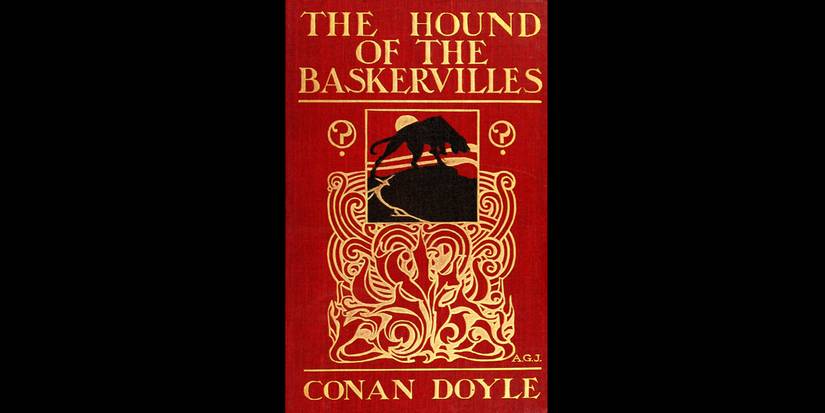
“Mr. Holmes, they were the footprints of a gigantic hound!” Sherlock Holmes is the quintessential fictional detective, and The Hound of the Baskervilles is the quintessential Sherlock Holmes story, throwing the investigator's rationality into direct conflict with superstition. In it, Holmes and Dr. Watson dig into the death of Sir Charles Baskerville, whose family is supposedly haunted by an enormous demonic hound. It's an immersive, atmospheric tale with a delectably Gothic mood.
Much of this is due to the setting. Most of the action takes place on the desolate moors of Devonshire, a landscape defined by isolated houses, ghostly fog, and treacherous bogs. In addition, a big reason why people love the book is because it gives Watson a chance to shine. For a large portion of the story, Holmes remains in London (or so it seems), leaving Watson alone at Baskerville Hall, where he proves himself to be brave and capable.
Collider Exclusive · Villain Personality Quiz Which Criminal Mastermind Would Be Your Nemesis? Lecter · Joker · Moriarty · Chigurh
Four of the finest criminal minds ever put on screen. One of them would look at you and see something worth their time. Eight questions decide which one comes for you, why they picked you, and what they would want when they arrived.
🍷Lecter
🃏Joker
♟️Moriarty
🪙Chigurh
01
What would a criminal mastermind notice about you first? Great villains choose their opponents carefully. Something about you got their attention.
02
How do they make first contact? The introduction tells you everything about what is coming next.
03
What do you actually believe about right and wrong? Every nemesis is really an argument about the thing you believe most.
04
What finally gets under your skin? Everybody has a pressure point. Finding yours is the whole plan.
05
They have made their move. How do you fight back? This is the part of the film where the audience finds out who you are.
06
What would they use against you? A good villain never brings a weapon you have not already handed them.
07
What do they actually want from you? The money is never the point. Something else always is.
08
How does it end between the two of you? Eight questions in, this is the one that decides who comes for you.
The Case File Is Complete Your Nemesis Is…
Four criminal masterminds. One of them was always going to be yours. Here is who comes for you, why they picked you out of everyone available, and what they want from the encounter.
Hannibal Lecter
Your nemesis does not want to beat you. He wants to know you completely, and he is patient enough to wait for it. The frightening part is how good the conversation is.
- Lecter is the most dangerous kind of opponent: the one who finds you interesting. He never raises his voice, because he has never needed to.
- You keep a great deal to yourself and you are careful about what you show. That reserve is exactly the door he would knock on.
- The films understood something other thrillers missed. The horror is not the violence. It is being perfectly understood by the wrong person.
- He would be unfailingly polite about all of it. That is the worst part.
The Joker
Your nemesis is not after money, territory or revenge. He is after a demonstration, and you are the person he has chosen to prove his point on.
- The Joker only picks opponents who believe in something. Your decency is not a defence against him. It is the entire reason he showed up.
- He has no plan you can predict and nothing you can take away, which removes every tool you would normally reach for.
- His whole argument is that you are one bad day away from being him, and you would spend the rest of your life proving him wrong.
- He would call it a magic trick. You would call it the worst night of your life.
Moriarty
Your nemesis respects you, which sounds flattering until you work out what it means. He chose you because nobody else was worth his time.
- Moriarty is the original criminal mastermind, the template every later one borrows from: a mind the equal of the hero's, pointed the wrong way.
- You enjoy being the cleverest person in the room. He is counting on exactly that, and he has already built the room.
- This is the rare nemesis who would be genuinely disappointed if you lost badly. He needs the game to be worth playing.
- It ends the way these things always end. Two people, one problem, and only one way down.
Anton Chigurh
Your nemesis has no personal interest in you whatsoever, and that is precisely what makes him unsurvivable. You are not a rival. You are a stop on the way.
- Chigurh does not negotiate, gloat or explain. He arrives, he asks one question, and the answer was decided long before you opened your mouth.
- You trust yourself to handle things. He is the one problem in the world that has no interest in how capable you are.
- No Country for Old Men rewrote the screen villain by removing the thing audiences quietly rely on: the sense that talking might work.
- Call it. He will wait.
KioskNews shows a cleaned-up reading view extracted from the publisher’s page — the original always lives on their site, not ours.