Before ‘Dune: Part Three,’ Paul Atreides’ Best Line Is Still the Most Powerful Moment in the Saga


Rotten Tomatoes | Letterboxd | Metacritic
Carolyn Jenkins is a voracious consumer of film and television. She graduated from Long Island University with an MFA in Screenwriting and Producing where she learned the art of character, plot, and structure. The best teacher is absorbing media and she spends her time reading about different worlds from teen angst to the universe of Stephen King.
Sign in to your Collider account
Denis Villeneuve accomplished what many tried but few accomplished. Paul “Muad’Dib” Atreides is officially a monster. The messianic figure in Dune: Part One and Dune: Part Two, played by the masterful Timothée Chalamet, starts as a young man full of promise and ends as a genocidal dictator manipulating an indigenous culture for his own use. Frank Herbert’s Dune was always a warning about charismatic leaders, and that is what Paul has become going into Dune: Part Three.
Villeneuve has put the right message across, but that doesn’t diminish the fact that the story of Dune is actually a tragedy. Paul eradicating 60 billion lives puts him out of the realm of redemption, though there is nuance to his arc. The tragedy of Paul Atreides is demonstrated in a subtle scene toward the climax of Dune: Part Two. After the Kwisatz Haderach takes the Water of Life, he becomes a person he never had any intention of being.
It Is Too Late For Paul By the Time He Takes the Water of Life
Simplistic readings of Paul Atreides tend to mischaracterize the future Emperor during the infamous Water of Life scene. Paul knows that going south will lead to war, and even with that knowledge, he does so anyway. This sequence is a lot more complicated than Paul simply changing his mind.
COLLIDERInteractive
Long-range scan active
Movies/Science Fiction/Survival Assessment
Collider Survival Assessment
Which Sci-Fi World
Would You Survive?
8 questions · 5 worlds · one honest verdict
Five of the great screen futures, and not one of them is built for comfort. Answer eight questions about instinct, loyalty and the line you would cross, and the scan will tell you which one you would still be standing in. Worlds in range
▦︎The Matrix
◈︎Mad Max
◑︎Blade Runner
▲︎Dune
✦︎Star Wars
Signal lock01 / 08
Question 01 of 08INSTINCT
The world as you know it ends overnight. What is your first move? No wrong answer. There is a wrong hesitation.
Keys 1 to 5 or A to E · Enter to advance
Signal lock02 / 08
Question 02 of 08RESOURCE
You can stockpile exactly one thing. What is it? Choose carefully. You are not getting a second run.
Keys 1 to 5 or A to E · Enter to advance
Signal lock03 / 08
Question 03 of 08THREAT
Which kind of enemy scares you the most? Be honest about what keeps you up.
Keys 1 to 5 or A to E · Enter to advance
Signal lock04 / 08
Question 04 of 08AUTHORITY
How do you handle the people in charge? Every world has them. Even the ones that pretend otherwise.
Keys 1 to 5 or A to E · Enter to advance
Signal lock05 / 08
Question 05 of 08ENVIRONMENT
Pick the place you would rather wake up in: You will be there a while.
Keys 1 to 5 or A to E · Enter to advance
Signal lock06 / 08
Question 06 of 08ALLIANCE
Who do you want standing next to you? Pick one. You only get one.
Keys 1 to 5 or A to E · Enter to advance
Signal lock07 / 08
Question 07 of 08MORALITY
Which line would you cross to survive? Everybody crosses one.
Keys 1 to 5 or A to E · Enter to advance
Signal lock08 / 08
Question 08 of 08PURPOSE
What are you really fighting for? Last question. Make it count.
Keys 1 to 5 or A to E · Enter to advance
Scan completeYou would survive
▦︎ The Matrix The Resistance, Zion You take the red pill, you stay in Wonderland, and I show you how deep the rabbit hole goes.
You would survive The Matrix because you were never fully sold on the version of reality you were handed. You notice the seams. You ask the second question. In a world built to keep people comfortable and incurious, that instinct is the whole fight, and it is why Morpheus would have found you long before you found him. From the Collider file
- The Wachowskis' 1999 film won four Academy Awards, including Visual Effects and Film Editing.
- Bullet time was shot with a rig of roughly 120 still cameras firing in sequence around the actors.
- Keanu Reeves trained in martial arts for about four months before a frame was shot, recovering from neck surgery the whole time.
- It opened the same year as Fight Club and eXistenZ, in a run of films about not trusting the world in front of you.
Red pill energy Pattern spotter Built to question
◈︎ Mad Max The Wasteland Oh, what a day. What a lovely day.
You would survive the Wasteland because you do not waste energy mourning the world that ended. You move, you improvise, and you are very good with whatever is bolted to the thing in front of you. Furiosa would let you drive. That is not a compliment anybody earns easily. From the Collider file
- Mad Max: Fury Road won six Academy Awards in 2016, more than any other film that year.
- George Miller storyboarded the entire film as roughly 3,500 panels before there was a script.
- The chase was shot almost entirely practical in the Namib Desert, with real vehicles and real stunt performers.
- Anya Taylor-Joy and Chris Hemsworth carried the prequel, Furiosa: A Mad Max Saga, in 2024.
Keeps moving Improviser Good with engines
◑︎ Blade Runner Los Angeles, 2049 All those moments will be lost in time, like tears in rain.
You would survive 2049 because you know how to be small in a very loud city. You keep your head down, you do the job, and you hold onto one private thing that belongs only to you. That quiet stubbornness is exactly what both Deckard and K run on, and it is what keeps either of them going when the case stops making sense. From the Collider file
- Blade Runner 2049 won Roger Deakins his first Oscar for cinematography, on his fourteenth nomination.
- The film also took Best Visual Effects, 35 years after Ridley Scott's 1982 original.
- Villeneuve shot it on large-format film and kept the fog and rain practical on set wherever he could.
- Three short films by Luke Scott and Shinichiro Watanabe bridge the 30-year gap between the two movies.
Keeps her head down Private Noir soul
▲︎ Dune Arrakis Fear is the mind-killer. Fear is the little-death that brings total obliteration.
You would survive Arrakis because you think in decades while everyone around you thinks in weeks. You read the room, you learn the customs, you wait. The desert does not reward speed. It rewards people who understand that patience is a weapon, which is the one lesson the Fremen never had to be taught. From the Collider file
- Denis Villeneuve's Dune won six Academy Awards in 2022, including Cinematography and Original Score.
- Hans Zimmer turned down Christopher Nolan's Tenet so he could score Dune instead.
- Dune: Part Two arrived in 2024 and brought in Austin Butler, Florence Pugh and Christopher Walken.
- David Lynch's 1984 version and Alejandro Jodorowsky's unmade one are both their own legends by now.
Plays the long game Reads the room Patient
✦︎ Star Wars A Galaxy Far, Far Away Rebellions are built on hope.
You would survive the galaxy because you never try to survive it alone. You collect people. You end up in the middle of other folks' problems and you stay anyway. Every version of this story, from the Falcon's crew to the Ghost's, runs on somebody exactly like that holding the group together. From the Collider file
- The 1977 original won six Academy Awards plus a special achievement award for sound effects.
- John Williams' score was recorded by the London Symphony Orchestra and became the best-selling symphonic film soundtrack ever.
- Andor took the galaxy somewhere colder and earned Emmy nominations for drama series in both seasons.
- The saga now runs across eleven feature films and a growing shelf of series on Disney+.
Collects people Shows up Hope merchant
Compatibility readout · top three
1
2
3
Copied to your clipboard
Scan filed byCOLLIDERCollider.com · The Sci-Fi Desk
He believes that he needs to see the entire picture to understand how to proceed. The real tragedy is that by the time he takes the Water of Life to see all the paths he can take, it is too late. Paul explains this to Lady Jessica (Rebecca Ferguson) when he tells her that there are enemies all around him.
“The visions are clear now,” Paul says. “I see possible futures, all at once. Our enemies are all around us, and in so many futures they prevail. But I do see a way. There is a narrow way through.” This moment is overshadowed by the revelation that Baron Harkonnen is his grandfather, but it has subtle implications expanded upon in the book.
When Paul states that in possible futures their enemies prevail, this means the deaths of his mother, sister, and the destruction of the Fremen. This is not an eventuality he is willing to accept. There is only one option available to him, and even though he knows it will start a Holy War, he does so anyway.
He trades the safety of his family and his new community for the lives of billions. This seems like a drastic decision to make, but by the time he takes the Water of Life, it is too late to make any other choice. Established further in Frank Herbert’s book, Paul’s visions show that this Holy War is the least egregious future that could happen. While he will destroy countless worlds and demoralize others, it is the best-case scenario.
Paul is such a tragic character because he was forced into this persona. His mother decided for him that she could birth the Kwisatz Haderach with no consideration of the complications. From the moment he was born, he was destined for this horrible fate. This doesn’t take away accountability for the character, however. Paul is completely responsible for his actions. Perhaps even more so, because he knows he will lose the most important thing to him.
Paul Sacrifices What He Loves Most So the Fremen Can Survive
Paul achieving complete prescience comes with many downsides. His visions stop being abstract and he can see the entire picture. He learns that Jessica is the secret daughter of Baron Harkonnen just as he sees that his decisions will start a Holy War. This is especially bleak because that means he also understands the consequences his actions will have on Chani (Zendaya).
As the Lisan al Gaib, Paul sees every possible future but only one where his loved ones don’t die excruciating deaths. He understands that taking on this mantle and climbing his way to the Emperor’s throne is drastic, and it will mean losing the love of his life. Chani represents how the Bene Gesserit have manipulated an entire culture so they will fall in line and cannot accept Paul taking power in his own name.
Chani rejects prophecy and wants Arrakis to be self-governing and not under the thumb of an outsider. Paul knows all of this and takes power anyway. Dreams of Chani’s death haunt him, and losing her is the price he is willing to pay so that she and the Fremen can survive. This decision demonstrates even further the tragedy of Paul Atreides in a way that the books did not. Paul sacrifices the person he loves most to ensure victory, which did not occur in the first Dune book.
This will be a decision that weighs heavily on him, especially going into Dune: Part Three when the Holy War has razed religions and planets. This doesn’t absolve Paul of anything but instead makes him an incredibly multifaceted character who was caught in a web woven thousands of years before he was born.
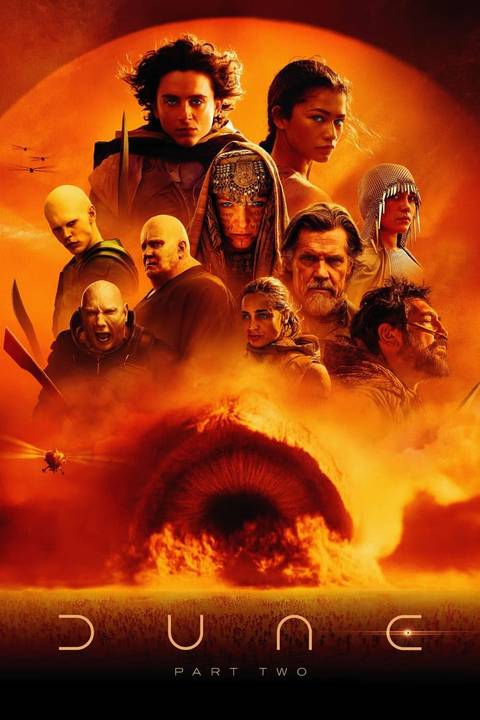
- Release Date
- February 27, 2024
- Runtime
- 167 minutes
- Director
- Denis Villeneuve
- Writers
- Denis Villeneuve, Jon Spaihts, Frank Herbert
- Producers
- Herb Gains, John Harrison, Mary Parent, Patrick McCormick, Richard P. Rubinstein, Cale Boyter, Thomas Tull, Brian Herbert, Byron Merritt, Kim Herbert, Joshua Grode, Tanya Lapointe
KioskNews shows a cleaned-up reading view extracted from the publisher’s page — the original always lives on their site, not ours.