Meet the Democrats trying to flip the script on gun rights: From the Politics Desk
Welcome to From the Politics Desk, a daily newsletter that brings you the NBC News Politics team’s latest reporting and analysis from the White House, Capitol Hill and the campaign trail.
In today’s edition, Frank Thorp V and Ryan Nobles speak with Democratic candidates who are touting their gun credentials. Plus, Andrea Mitchell digs into President Donald Trump’s potential next moves on Iran.
— Adam Wollner
Meet the Democrats trying to flip the script on gun rights
By Frank Thorp V and Ryan Nobles
A group of Democratic candidates on the ballot next week are hoping to start a new conversation around guns as part of a strategy to win back rural voters in red-leaning areas.
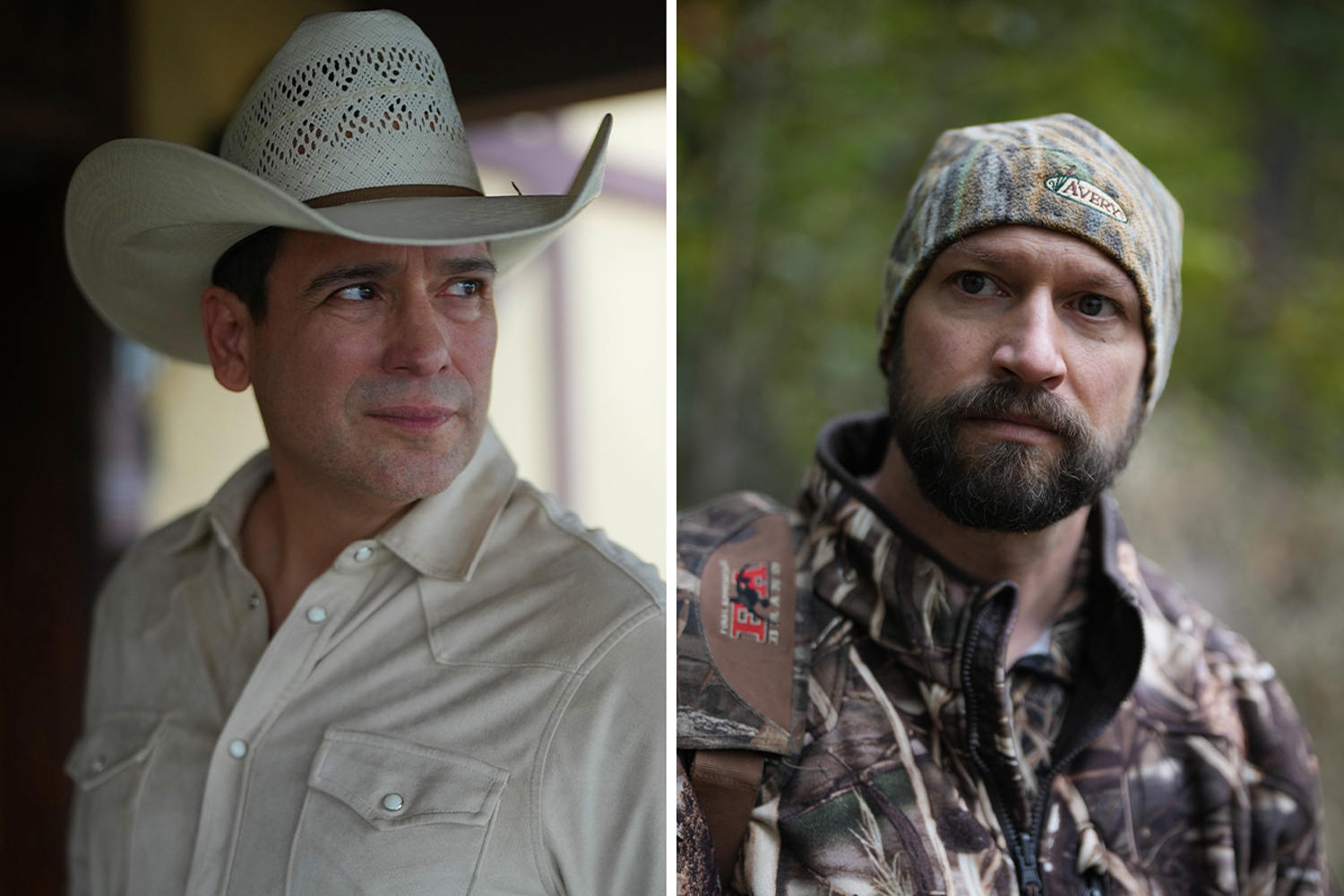
Wisconsin’s 1st District: Democrat Mitchell Berman’s ads have portrayed him as a proud gun owner and hunter. One shows him fishing while wearing a handgun in a holster; another shows him skeet-shooting with clay pigeons labeled “Data Centers.” After the target explodes in the air, his 6-year-old daughter yells, “Great shot, Dad!”
“That’s who I am,” Berman told NBC News. “When I go fishing up north — where I’m from we have wolves. We have — in spring trout season, we have bears that are coming out of their dens with cubs. We’ve even had a mountain lion on our trail camera. So, you know, when I go out into the woods, I carry a sidearm with me for protection.”
His race against GOP Rep. Bryan Steil was not expected to be close. President Donald Trump carried the district in 2020 and 2024, and Steil won re-election two years ago by 10 points. But polling has shown the race is within reach for Democrats.
Texas’ 15th District: Bobby Pulido, a Tejano singer turned Democratic congressional candidate, is not shy about his love for guns and hunting. He’s posted videos of him shooting a target a mile away, and his rec room is lined with the trophies he’s gathered on hunts. He even named his oldest son Remington.
“Listen, in the rural areas, firearms are a way of life,” Pulido told NBC News, saying that fundraisers in the Rio Grande Valley are more common at skeet shooting events than at golf courses.
Pulido is also running in an area that Trump won in the last two presidential elections. The district was redrawn earlier this year to make it more favorable for Republicans, but a shift in the Latino vote away from Trump mixed with a struggling economy has put Republican Rep. Monica De La Cruz at risk of losing her bid for re-election.
The big decision awaiting Trump after the midterms
Analysis by Andrea Mitchell
On the campaign trail, President Donald Trump has been confidently promising that oil prices will drop like a rock after the midterms — especially skyrocketing diesel fuel critical in farm states that could decide which party wins the Senate. Implicit is that he will attempt to do something decisive after next week to end the war against Iran and fully reopen the Strait of Hormuz.
His not-so-subtle hints are backed up by new reporting in The Wall Street Journal and other publications that the U.S. has told Gulf partners it will resume intense, brief strikes against Iran after the midterms. And Israel’s hawkish Trump ally Benjamin Netanyahu has at least temporarily retained a caretaker role as prime minister while he and his rival, former Army Chief of Staff Gadi Eisenkot, jockey for a majority. In Israel’s complex parliamentary system, a decisive outcome could take weeks or months, or even lead to another election.
That places Netanyahu in control of a potential resumption of the war, a position he had advocated for before Israelis went to the polls, according to The New York Times and other outlets. According to those reports, Israel’s military and intelligence leaders effectively vetoed that option, saying it would politicize their decision-making.
As flawed as Israel’s democracy has been in many respects, according to many of its own citizens and even many longtime U.S. supporters, it still has the virtue of a largely independent military. But in the U.S., critics fear that may not be the case with the civilian leadership of the military in the second Trump administration.
In past administrations in both political parties, secretaries of defense and their top deputies were usually experienced foreign policy or former military leaders, willing to offer independent opinions to the presidents they served in a formalized National Security Council inter-agency system. Conflicting options were debated in a deliberative process before they were presented to the commander in chief.
Yes, on occasion, chief executives were misled by false narratives, like those delivered during the Vietnam War by Defense Secretary Robert McNamara. Or, during the Iraq quagmire, when the chain of command was short-circuited by a powerful personality like President George W. Bush’s defense secretary, Donald Rumsfeld. Notably, Rumsfeld was forced out of his role the morning after Bush’s party got hammered in the 2006 midterms.
Now, whether his party wins or loses in next week’s midterms, Trump faces what could be the most consequential decision of his second term: Whether to “finish the job” and resume attacking Iran.
Such a decision would fly in the face of European leaders who counsel that renewed strikes would lead to higher oil prices, a potential economic downturn, and not produce a more compliant regime in Tehran. At the same time, there is now a growing consensus in Riyadh and other Gulf capitals that they need to find some accommodation with Iran in order to get the regime to try to restrain its Houthi proxies, who threaten to become an existential threat to their economies.
The question for Trump is whether to follow the advice of Defense Secretary Pete Hegseth, the former Fox News personality who has purged many of the Pentagon’s most experienced top generals and has privately advocated for resuming military action against Iran.
The hawks could be right that a weakened Iran could be felled by a decisive blow, though skeptics note that such a strategy has not yet proved successful. The U.S. and global economy — to say nothing of Trump’s legacy — may well depend on what he decides in the next few weeks.
🗞️ Today's other top stories
- 🤠 Deep in the heart: Natasha Korecki explains why Tarrant County could swing which party wins the Texas Senate race. Read more →
- 🔀 Crossing the aisle: Republican Sen. Lisa Murkowski endorsed the Democratic candidate for Alaska governor, Jonathan Kreiss-Tomkins. Read more →
- 🎤 On Wisconsin: Democratic gubernatorial nominee David Crowley has brought in a series of high-profile Black political figures — including former Vice President Kamala Harris — to boost turnout among a critical slice of the swing-state electorate. Read more →
- 🗳️ Going independent: More than half of voters who turned 18 since the 2024 presidential election didn’t affiliate with a major party when registering. Read more →
- ⚖️ Breaking precedent: The Justice Department has been highly active in cases around voting and Trump’s political enemies ahead of Election Day, during what’s typically a quiet period for federal prosecutors. Read more →
- ☑️ Fact check: Election experts and officials are reassuring voters this month that electronic equipment isn’t deliberately changing their votes, despite claims that have circulated online. Read more →
- 🏦 Fed watch: The Federal Reserve voted to keep interest rates unchanged, its final monetary policy decision before the midterms. Read more →
That’s all From the Politics Desk for now. Today’s newsletter was compiled by Adam Wollner and Lauren Zola.
If you have feedback — likes or dislikes — email us at politicsnewsletter@nbcuni.com
And if you’re a fan, please share with everyone and anyone. They can sign up here.
KioskNews shows a cleaned-up reading view extracted from the publisher’s page — the original always lives on their site, not ours.