EXPLAINER: What motorists need to know as NCAP returns to parts of Metro Manila on October 5, 2026
Make this your preferred source to get more updates from this publisher on Google.
The No Contact Apprehension Policy (NCAP) is set to return to parts of Metro Manila on Monday, October 5, 2026, as announced by concerned local government units (LGUs).
This is months after the Supreme Court lifted the temporary restraining order (TRO) against the system and dismissed consolidated petitions questioning its implementation on July 9.
At least six local government units have announced the resumption of NCAP including Manila, Quezon City, Valenzuela, Parañaque, Muntinlupa, and San Juan.
What is NCAP?
NCAP is a traffic enforcement system that uses closed-circuit television (CCTV) cameras, digital cameras and other technology to detect and record traffic violations.
Unlike traditional traffic apprehension, motorists do not necessarily have to be stopped by a traffic enforcer on the ground at the time of the violation.
The recorded images or videos are reviewed and processed, and then a notice of violation may be issued to the vehicle owner.
NCAP is tied to the Metro Manila Traffic Code of 2023 (MMTC 2023), which provides standardized traffic rules, fines, and procedures among LGUs.
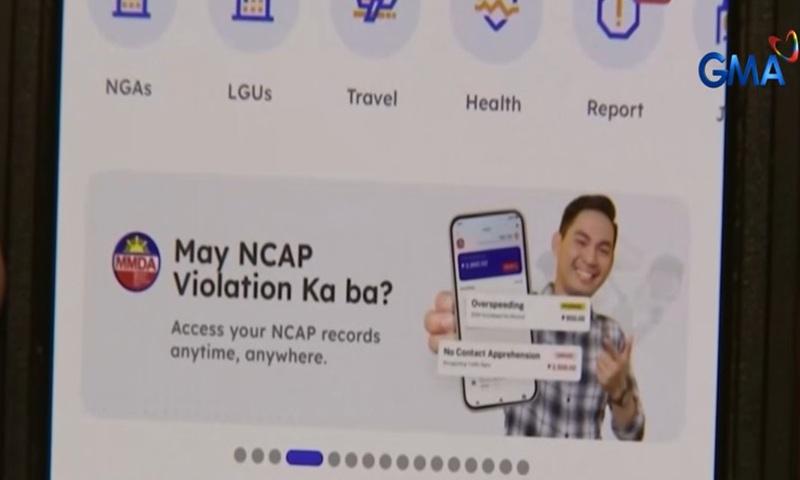
The system also allows motorists to check recorded violations through online platforms provided by the LGUs. For MMDA-related NCAP violations, motorists can also check through the government's eGovPH app and the MMDA's online NCAP services.
Motorists who believe they were wrongly apprehended may contest or protest the violation through the designated procedures of the concerned LGU.
Supreme Court decision
On July 9, the Supreme Court dismissed the consolidated petitions against NCAP being implemented in Manila, Quezon City, Valenzuela, Parañaque, and Muntinlupa.
It also lifted the temporary restraining order it issued on August 30, 2022 against the Land Transportation Office (LTO) and the five cities.
San Juan was still preparing to roll out NCAP when the TRO was issued against the five Metro Manila LGUs in 2022.
The SC said the issues raised in the petitions had become moot because of subsequent developments, particularly the adoption of the Metro Manila Traffic Code of 2023 (MMTC 2023).
To recall, the petitions only challenged the constitutionality of old ordinances in five Metro Manila cities implementing the MMDA's NCAP.
“Since neither MMTC 2023 nor the new ordinances were being challenged before the Court, any ruling on the validity of the old ordinances would have no practical or legal effect,” the SC said.
But the SC clarified that dismissing the petitions doesn't mean they are officially declaring the contested NCAP rules to be valid.
“Our dismissal of the Petitions is confined to the determination that petitioners failed to overcome threshold issues, and that the supervening adoption of a uniform regulatory framework has rendered the Petitions moot,” the high court said. — RSJ, GMA News
KioskNews shows a cleaned-up reading view extracted from the publisher’s page — the original always lives on their site, not ours.