5 tree species, including eucalyptus, exempted from tree felling permission in Delhi
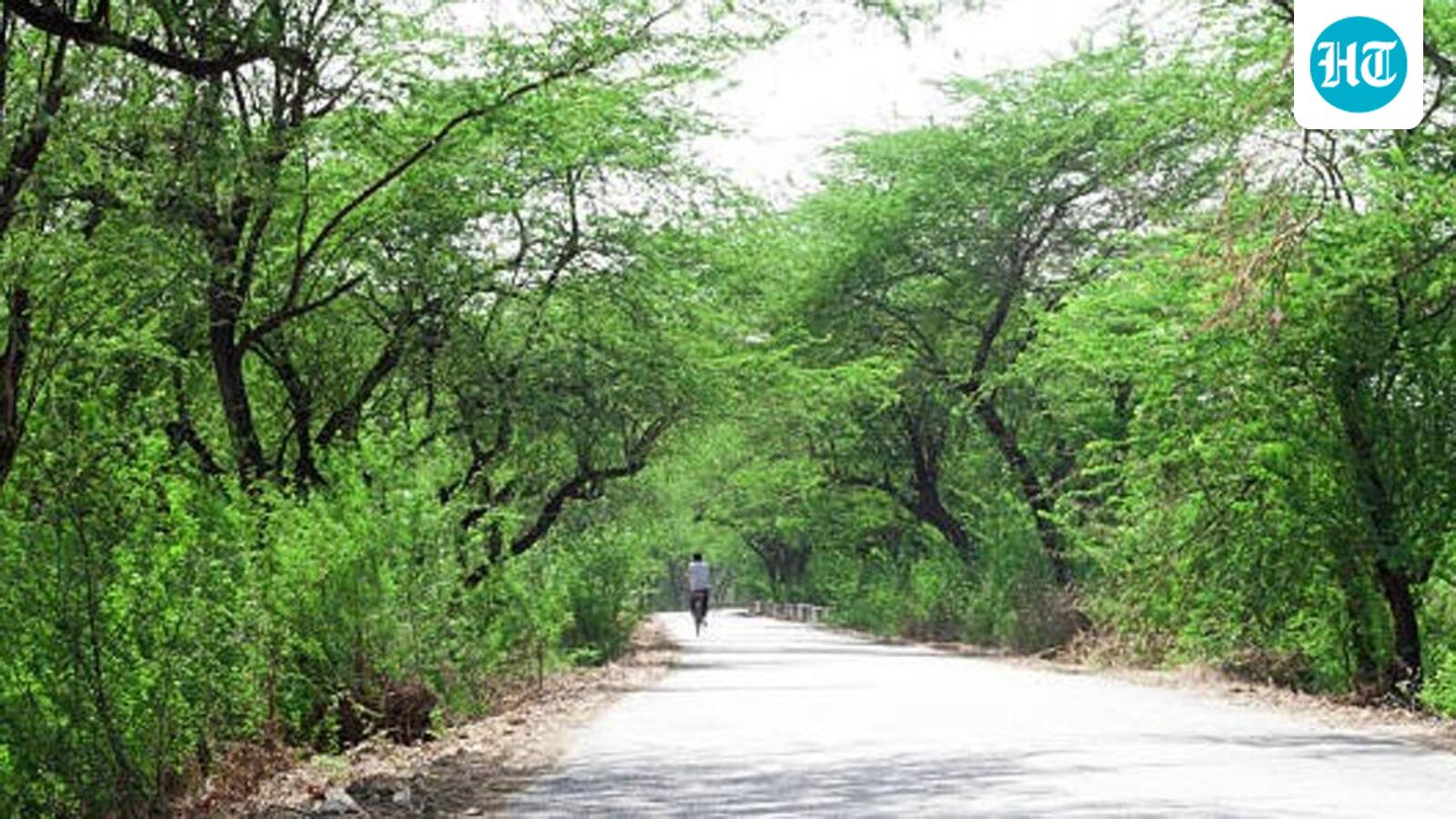
The Delhi government has exempted five fast-growing tree species, including eucalyptus (safeda) and poplar, from the requirement of prior permission for felling, under newly notified rules by the forest department.
The five species covered under the Delhi Preservation of Trees (Agro-forestry and Exempted Plantation Species) Rules, 2026, are Poplar (Populus deltoides), Safeda (Eucalyptus species), Sejhana (Moringa oleifera), Gamari (Gmelina arborea) and Malabar Neem (Melia dubia).
The rules were notified through a gazette notification dated November 18.
Under the new provisions, owners of private agricultural land will no longer need prior permission under Sections 5 and 6 of the Delhi Preservation of Trees Act, 1994, to fell, remove or dispose of these five species, subject to conditions specified in the rules. The exemption, however, does not extend to forests, Ridge areas, deemed forests or land where tree felling is prohibited or restricted by law or court orders.
Also Read:BMC starts axing 184 trees at Versova’s Nana Nani Park for Coastal Road
A government official explained that the landowners will still have to register plantations of these species on the forest department’s e-Forest portal by submitting ownership documents, geo-tagged photographs, details of the land, and details of the species and number of trees. The portal will automatically generate a plantation registration certificate.
For felling up to ten trees, owners will have to upload the plantation registration certificate and geo-tagged photographs of the trees proposed to be cut. If no objection is recorded, the tree officer will issue permission within seven working days. For more than ten trees, the owner will have to submit an intimation on the portal, following which the tree officer will conduct a site inspection within 14 working days. If no objection is recorded, permission will be issued within three weeks.
The rules also exempt timber and other produce obtained from these species from the requirement of a separate transit permit for transportation within or outside Delhi. The felling permission issued by the tree officer will serve as a valid transport document. Such trees will also not attract compensatory plantation under Section 8 of the Act, the official added.
Also Read: Document listing 200 trees for felling in Noida raises concerns
Earlier, the forest department had proposed the changes in draft rules issued in July, arguing that procedural requirements for felling and transporting commercially cultivated, fast-growing species had discouraged private landowners from undertaking plantations. It said simplifying the regulatory framework would encourage agro-forestry, increase green cover, enhance carbon sequestration, supplement timber and biomass supplies, support livelihoods and reduce pressure on natural forests.
The rules also provide for random verification to prevent misuse and clarify that existing legal protections for forests, the Ridge and trees covered by court or tribunal orders will remain unaffected.
ABOUT THE AUTHOR
Paras Singh is a New Delhi-based journalist with Hindustan Times, where he serves as Deputy Metro Editor. He reports on urban governance, the Delhi government, the Delhi BJP, water management, the environment, communities and city life. He joined Hindustan Times in 2021 after beginning his journalism career at The Times of India in 2016, where he covered civic bodies, the water and power sectors, and urban infrastructure. Over the last decade, some of his reporting has led to significant public impact, with investigations into environmental violations, corruption and illegal industrial activity contributing to multiple judicial interventions by the National Green Tribunal and the Delhi High Court. A graduate of St. Stephen's College, University of Delhi, Paras studied journalism from the Indian Institute of Mass Communication (IIMC), New Delhi. Having extensively covered the capital's evolving civic and governance landscape, his recent work increasingly explores Delhi's history, built heritage, urban evolution and the relationship between people and place, alongside continuing to report on governance and public policy.
KioskNews shows a cleaned-up reading view extracted from the publisher’s page — the original always lives on their site, not ours.