Delhi AQI today: National Capital's air quality worsens to 273 on Friday, hovers in 'severe' category | Details inside
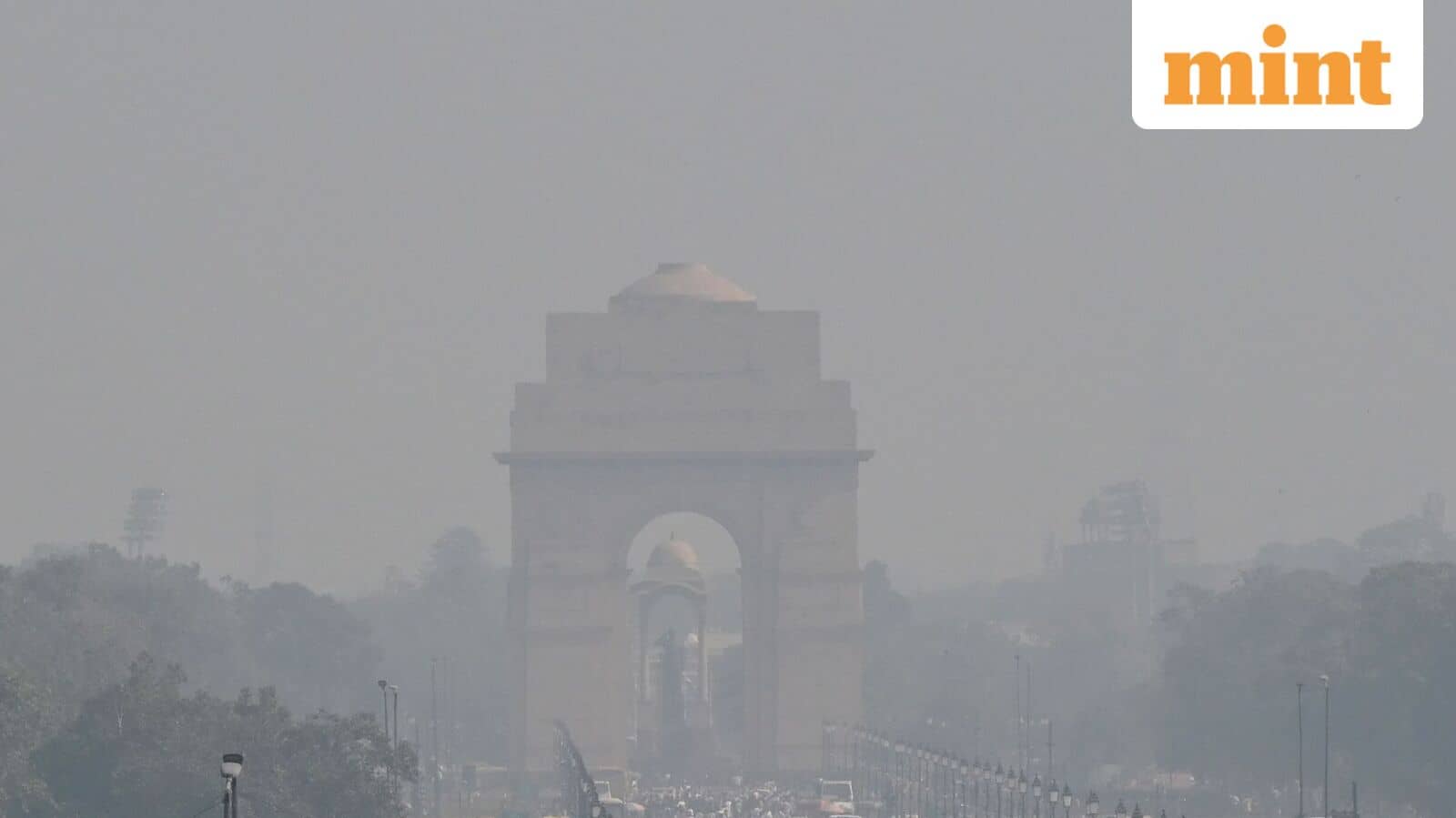
Delhi AQI today: A smoky haze covered the national capital on Friday, November 27, as the air quality index (AQI) hovered in the 'severe' category at 273 at 6:11 AM. It fell nearly 120 points from the overnight peak of 393, recorded at 2:00 AM. As of Friday, New Delhi ranked 46th among the world's most polluted cities.
Delhi's air quality improved through Thursday afternoon before worsening again in the evening. The AQI fell to 121 at 5:01 PM, its lowest reading in the previous 24 hours. It rose above 300 around 8:00 PM and reached 393 at 2:01 AM on the intervening night of Thursday and Friday. Readings remained above 300 until after 5 AM before easing later in the morning, according to AQI.in.
Delhi's seven-day AQI peaked at 465 at 6 AM on November 20. The seven-day period ended on November 26. The lowest reading in that series was 170 at noon on November 26. Early morning readings generally hovered between 350 and 450 on several days during that period.
At 6:11 AM on Friday, Delhi's PM10 level stood at 274 micrograms per cubic metre, compared with the World Health Organization's guideline of 45 micrograms per cubic metre. Carbon monoxide was reported at 2,208 parts per billion (ppb), while nitrogen dioxide measured 23 parts per billion and sulphur dioxide nine parts per billion. Ozone was recorded at two parts per billion. The temperature was 14 degrees Celsius, humidity stood at 57%, wind speed was 3.6 km/h, and the UV index was zero.
According to PTI, citing data from the Central Pollution Control Board (CPCB), Delhi's air quality was in the 'poor' category on Thursday, extending its streak of poor air quality days, with the AQI settling at 224. Of the 55 monitoring stations across the capital, at least 40 were in the 'poor' category, 14 in the 'moderate' category, and one in the 'very poor' category. The monitoring station at ITO recorded 'very poor' air quality.
The CPCB data also showed that Thursday was the 12th consecutive day when the national capital recorded 'poor' air quality. On Tuesday, Delhi's AQI was 227. It later declined to 220 on Wednesday before rising to 224 on Thursday.
PTI, citing real-time source apportionment estimates for Delhi on Thursday, noted that secondary organic aerosols were the largest contributors to PM2.5 pollution, accounting for roughly 24.8% of the estimated load. These aerosols form in the atmosphere when gases released by sources such as vehicles, industries and other combustion activities react with other compounds in the air to produce fine particles.
Vehicular emissions accounted for 20.6% of the total. Biomass burning contributed 19.7%, while secondary inorganic pollutants made up 12.5%. Other sources included waste burning (11.4%), road dust, soil and minerals (4.5%), industrial activity (2.7%), coal burning (1.6%), firecrackers (1.4%), and mixed combustion (0.6%).
Between October 1 and November 25, Delhi ranked first among the 10 most polluted cities in the National Capital Region (NCR) in terms of both PM2.5 and PM10 levels. It reportedly moved up from third and fourth positions, respectively, during the corresponding period last year.
An analysis of the India Air Quality Portal by EnviroCatalysts found that Delhi recorded the highest average PM2.5 concentration at 113 micrograms per cubic metre during the period under review. Gurugram followed with 109 micrograms per cubic metre, while Noida and Ghaziabad recorded 105 and 103, respectively. Meerut reported 96, Baghpat and Greater Noida 95 each, Panipat 90, Bulandshahr 82 and Faridabad 69 micrograms per cubic metre.
CPCB AQI classification
The Central Pollution Control Board (CPCB) classifies an Air Quality Index (AQI) reading of 0-50 as 'good', 51-100 as 'satisfactory', 101-200 as 'moderate', 201-300 as 'poor', 301-400 as 'very poor' and 401-500 as 'severe'.
AQI.in classification
AQI.in follows the US AQI scale, under which readings of 0-50 are classified as 'good', 51-100 as 'moderate', 101-150 as 'poor', 151-200 as 'unhealthy', 201-300 as 'severe ', and 301 and above as 'hazardous'.
KioskNews shows a cleaned-up reading view extracted from the publisher’s page — the original always lives on their site, not ours.