Tyson Fury looks back: ‘Once the Anthony Joshua fight is over, what will I do next? Walking the dog ain’t gonna cut it’

Born in Manchester in 1988, Tyson Fury – known as the Gypsy King – is a former unified heavyweight world champion. He turned professional in 2008 and in 2015 defeated the long-reigning champion, Wladimir Klitschko, to claim the WBA, IBF, WBO and Ring magazine heavyweight titles. He made a comeback in 2020, and his long-awaited final fight is on 11 December against Anthony Joshua. He appears with his wife, Paris, and seven children in the docuseries At Home With the Furys. A documentary charting his life, Fury, is out on Netflix on 27 November.
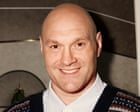
This was taken when I was nine, back when I was cute, shy and poorly dressed. The jumper would have been knitted by my grandma. The hairstyle isn’t great but a lot better than what I have now. I loved boxing and I loved singing.
I come from a travelling background, but we never moved anywhere. We lived in a house in a village outside Manchester called Wilmslow that had a farm. Me and my three brothers would ride quads, build treehouses and make dens. Roaming around the countryside was a dream life for a young boy. Nobody knew where we were or what we were doing – there were times we could have died – but there were no worries about perverts getting us or anything like that.
Growing up, masculinity meant showing no emotion. We never discussed feelings or love. My dad was a big influence on me. I inherited his ability to talk, his size and aggression. But I was soft, too. I inherited that from my mother – a gentle, kind nature. I remember the first time I felt anxiety. I was six and hiding in the wardrobe. I had this awful feeling something bad was about to happen. I didn’t tell anyone and have no idea what triggered it.
I started going to the gym when I was six, just to mess around. By the time I was 14, I was taking it more seriously. I was always confident in boxing, but over time, I realised that it is not just raw aggression and violence, it’s an art form.
My family were not as enthusiastic about my ambitions as I was. Dad was a professional and bare-knuckle boxer. He tried to encourage me to get a normal job – to have a stable existence instead. Mum was the same. I didn’t listen. There was no other option for me.
All I did was box and train – so in many ways I was the world’s best kid. I didn’t go out partying, didn’t have any idiot friends. When I met Paris I knew she was the one straight away. She was 15. I was 16. We were children, really, but I told her: “I’m going to marry you.” She went: “What? I don’t even know you.” I replied: “I’m going to make you fall in love with me. I’m going to be world champion and we’re going to have all these kids.” I was right. I signed my first professional contract on the first day of our honeymoon. We were meant to have two weeks away. We left four days later as I had to come back to fight.
From as far back as I can remember, Wladimir Klitschko was the guy I wanted to beat. He was the world heavyweight champion when I was a kid. He was my target, but when I told people I would win, everyone laughed at me, as they always did. In 2015, I finally got my chance to prove them wrong. There was a lot going on in my life at the time – we’d had a miscarriage and a very close uncle had died. I was grieving, but I tried to push it to the back of my mind so I could focus on Wlad.
Then the fight came, and I beat him. That’s when the problems started. Almost immediately, I felt like I was spiralling out of control. I had no purpose. I didn’t want to be at the press conference, or celebrating. Me and the family went on holiday. “Enjoy this,” I said to Paris, “because it’s downhill from here.”
For that whole period I was screaming out for help, but everyone around me wanted to put me in a rematch. It was like I was a demon possessed and I needed a hospital rather than a ring. I was hearing voices – horrible, scary voices. At night my head was full of terrifying screams, to the extent I thought someone was in the room. Alcohol and drugs played a part, and I was also comfort eating – mainly sugar. It gave me joy, a short term sensation of happiness. But it wasn’t real. I was hurling myself into oblivion. If I left the house for more than an hour, Paris would call everyone we knew, as she thought I had gone to kill myself.
Two years later, everything changed. It was Halloween and I was dressed as a 400lb skeleton. I was drunk. But I had a moment of clarity. I watched these young people at the bar – kids at the beginning of their lives. I thought: “What am I doing here? I’ve been offered everything a person could want, and I’ve blown it all.”
after newsletter promotion
Back at home, I took off the costume, got on my knees and started praying to God. I thought: “If I can get better, then I’ll be happy. I’d rather have nothing, live in a tent and be on benefits than go back to how I feel right now.” It seemed like I was on my knees for an eternity, but it was probably only 10 minutes, when suddenly I felt a change. I screamed out to Paris – she thought I was drunk – saying: “I’m going to make a comeback in the morning.” She’d heard it all before, but I was serious this time.
That was the start of the return mission. I went to a leading specialist and was diagnosed with schizophrenia and bipolar. I learned that you can never truly get away from mental health. You can only learn to manage and maintain. I started training with Ben Davison and working with promoter Frank Warren. Within a few months, I was back in the ring. Now I’m gearing up for the final hurrah. I’m 38 years old, at the end of my boxing life. What better way to go out with a bang, putting on a fight that people have been waiting a decade for?
Once that fight is over I have to decide: what will I do next? I need to find a job. Waking up in the morning and doing normal stuff ain’t going to cut it. Walking the dog or taking the kids to school is fantastic, but it’s not enough of a purpose to get up for. Once the kids are done with school, then what? It does play on my mind, but I can’t think about it as I have to focus on the fight.
Sometimes I forget the long distance I’ve travelled and everything I’ve had to overcome. That nine-year-old boy was just a nobody – an unknown person from wherever. But he knew he could be a boxer. That I would become a world champion is one thing, but to transcend the sport and do TV shows, publish bestselling books, sing with Robbie Williams, is another level. I am truly blessed – not only with the ability to work hard, but to keep the faith all the way.
KioskNews shows a cleaned-up reading view extracted from the publisher’s page — the original always lives on their site, not ours.