Maiden flight of privately built PSLV-N1 delayed again, likely early next year
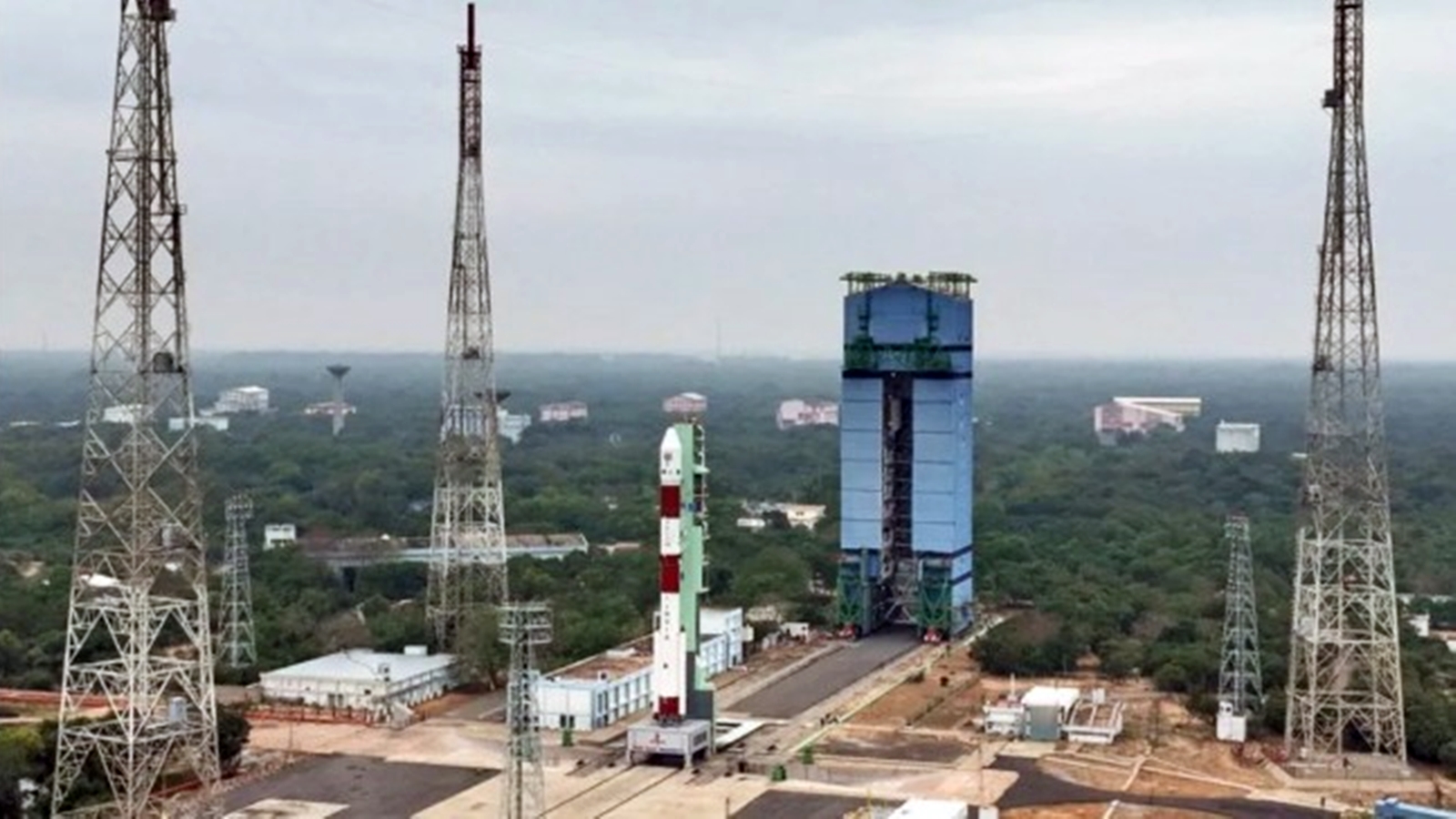
THE MAIDEN flight of India’s privately built PSLV-N1 is likely to be pushed to early 2027, further extending the timeline for the programme under which at least two launches were planned this year. The rocket was to carry ISRO’s earth observation satellite EOS-10.
This is not the first delay in the launch of PSLV-N1, being built by a consortium led by Hindustan Aeronautics Limited (HAL) and Larsen & Toubro Limited (L&T). The contract to manufacture five PSLV rockets was awarded to the consortium in 2022. As part of the contract, the first vehicle was to be manufactured within two years, and the others were to be delivered every six months. Going by that timeline, the first delivery should have happened in 2024, and all five should have been delivered by 2026.
The delays are a result of various issues such as coordination with the payload and the available launch window, said A T Ramchandani, Senior Vice-President and Head, L&T Precision Engineering & Systems, at the ongoing India International Space Conclave.
While the launch vehicle is ready, the current delay stems from the space agency being spooked after two back-to-back failures of its workhorse PSLV. ISRO will likely give a go-ahead to the launch of the privately developed vehicle only after its own successful launch, according to sources. “After the setbacks, the providers of certain components were changed on recommendation of the failure assessment committee. The changes have already been made to the PSLVs,” the source said.
The PSLV has been ISRO’s most successful launch vehicle, having powered 65 of its 107 launches so far. Only four of these, including the first one in 1993, have failed. The other failure was in 2017 when the heat shield protecting the payload did not open, resulting in a failure to deploy.
The two successive failures within a span of six months — PSLV-C61 on May 18, 2025 and PSLV-C62 on January 12, 2026 — raised questions over the reliability of the PSLV. Both the rockets developed “anomalies” in the third stage leading to the failure. While the space agency maintains that the reasons for the two failures were different, sources said those “problems have now been fixed”.
The problem with “components” that was faced by the PSLV underscores another point raised by Ramchandani at the conclave — the need for a Space Components Mission. “A launcher or a satellite is only as sovereign as the components inside it. If we integrate in India but import radiation-hardened electronics, alloys and sensors, we remain exposed. Atmanirbharta in space should not be measured by the percentage of indigenous content but by our ability to design, build, operate and continuously upgrade space systems in India. We suggest a Space Components Mission for space-grade electronics, sensors, propulsion, materials and mechanism…”
Story continues below this ad
‘Industry needs to make a consortium to undertake human space mission’
New Delhi: Indian astronaut designate Air Commodore Prasanth Balakrishnan Nair called for Indian industries with deep pockets to come together as a consortium and undertake complex space missions, including a human space mission. “We should enable our entire industry — the Ambanis, Adanis, Mahindras and Tatas… I would love for everyone to come together and make a consortium to undertake even private human space endeavours like Crew Dragon,” he said on the sidelines of the India International Space Conclave.
Nair wished India to become the second country after the United States to be able to do so.
He said the first uncrewed flight under the Gaganyaan Mission would be a proof of concept of all the systems and procedures. “A successful uncrewed mission will see the entire process right from the launch to descent into the ocean.”
Story continues below this ad
The first uncrewed flight under the Gaganyaan mission is likely to take place later this year, with at least two more flights likely before a human spaceflight. Anonna Dutt
KioskNews shows a cleaned-up reading view extracted from the publisher’s page — the original always lives on their site, not ours.