Philippine forum frank on Asean’s limits – ‘asking a cow to run in a horse race?’
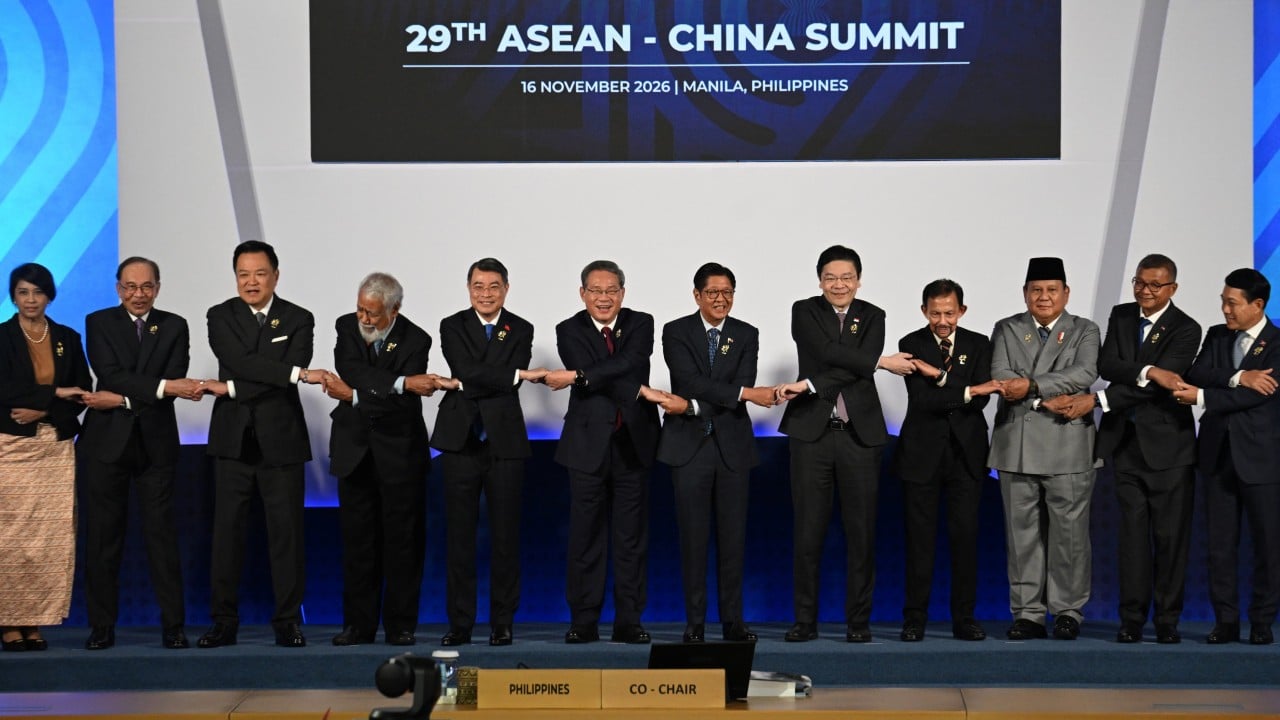
A long-delayed South China Sea code of conduct (COC) may be within reach, but regional experts at a forum held alongside the Asean summit in Manila have cautioned against unrealistic expectations over an agreement designed to manage tensions rather than to resolve the maritime row.
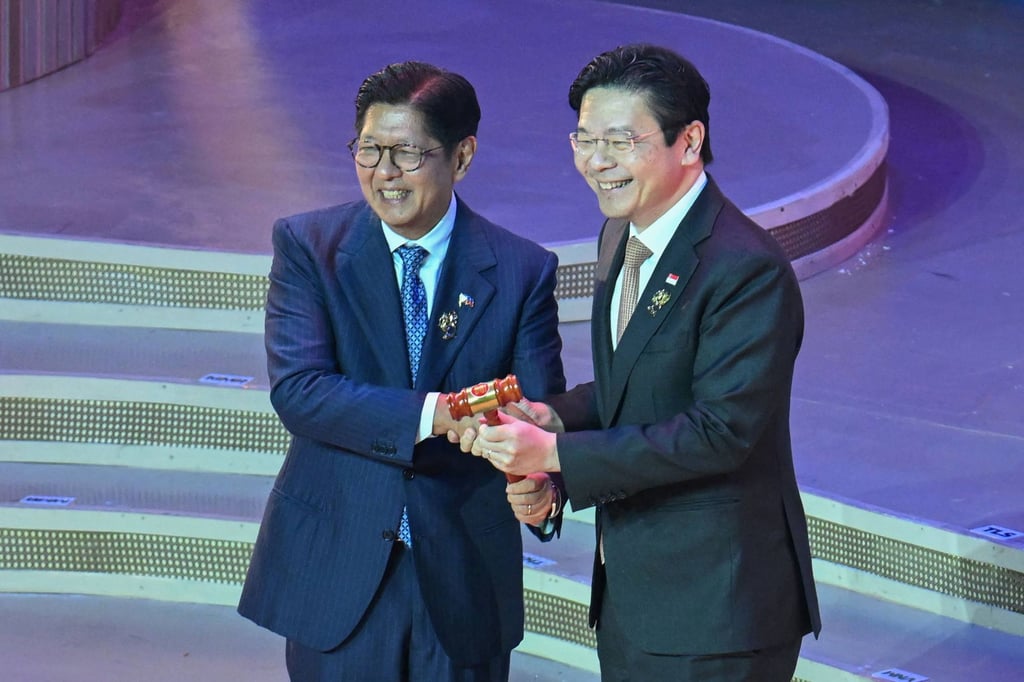
On Tuesday, the Philippines handed the rotating chairmanship gavel to Singapore at the closing of the Association of Southeast Asian Nations summit in Manila, with the city state expected to lead the bloc in tackling the maritime issue next year.
Several of the participants at the Manila Dialogue on the South China Sea on Monday also spoke about the limits of Asean’s consensus-driven approach on regional security.
The forum organised by the Philippine-based We Protect Our Seas Foundation brought together senior government officials, diplomats, military representatives and regional security experts – including independent participants from China and Southeast Asia – to discuss maritime disputes, international law and regional stability.
Philippine President Ferdinand Marcos Jnr on Tuesday said that “85-90 per cent of it [COC] has actually been done”.
Philippine Foreign Secretary Maria Theresa Lazaro defended the progress made in negotiations between Asean and China despite a failure to seal the agreement during Manila’s chairmanship. She told reporters that she was “happy”, rather than “frustrated”, that much of the code had been provisionally agreed upon.
“We were happy to come up with almost 80 per cent or more,” she said on Monday. “So I don’t think it’s a failure.”
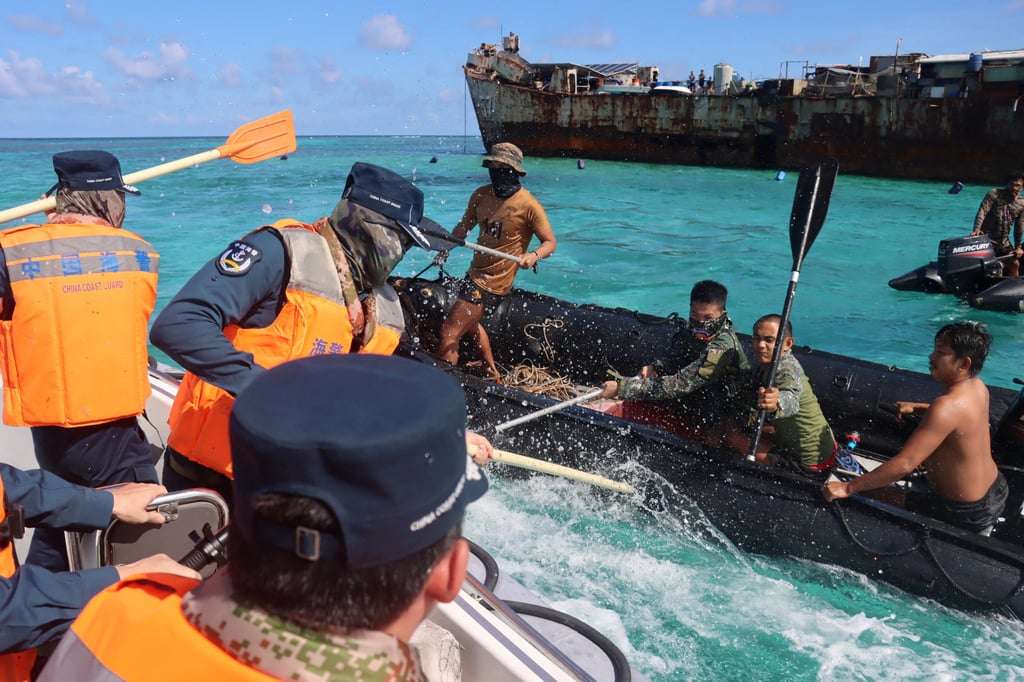
While expressing confidence that Singapore could steer the negotiations to completion next year, she declined to give a firm timeline for finalising the pact or say whether the provisional draft would reduce tensions in contested waters.
Long-standing differences between Asean and China include the COC’s geographic scope, whether it would be legally binding and provisions concerning third-party countries.
Experts speaking at the Monday forum were not surprised that more than two decades of negotiations had failed to produce a finalised COC document.
Ray Powell, director of SeaLight at Stanford University’s Gordian Knot Centre for National Security Innovation and a retired US Air Force colonel, referred to comments previously made by veteran Singaporean diplomat Bilahari Kausikan, who once compared Asean to “a cow” that could “never be a horse”.
At a conference in Singapore in 2015, Bilahari suggested that both animals were useful, but their level of usefulness was different.
Powell asked his fellow panellists: “What is the South China Sea security problem and what is Asean’s role in it? I’d ask you to consider, are we asking a cow to run in a horse race?”
Renato de Castro, a distinguished professor at De La Salle University’s International Studies Department, agreed with the metaphor, saying: “Asean will never be a horse. It’s good for producing dairy products as a cow, but don’t expect it to run like a horse.”
Asean’s role was “not to resolve any dispute” but to manage it, de Castro said.
Dr Zheng Zhihua, an associate professor and head of the East Asia Marine Policy Project at the Centre for Japanese Studies at Shanghai Jiao Tong University, said the COC alone cannot settle the maritime dispute once and for all.
He suggested the row could be better managed by reaching “some kind of mutual understanding” among the claimant states.
“I think China still remains open whether the COC is binding or not binding,” he said.
A briefing released by the Philippine foreign office on Sunday said the COC’s provisionally agreed text was a mechanism for managing differences rather than settling disputes, based on voluntary cooperation in accordance with international law, including the UN Convention on the Law of the Sea (Unclos), while respecting the sovereignty and jurisdiction of coastal states.
However, Asean and China have not issued a joint statement confirming Manila’s statement on the provisionally agreed COC text.
Dewi Fortuna Anwar, chairwoman of Indonesia’s Habibie Centre, highlighted Asean’s limitations at the forum. “Asean is not a multilateral security organisation. Asean does not do hard power,” she said.
But Anwar also suggested that instead of military muscle, China needed to exercise soft power to maintain regional goodwill and “create a condition that we can love it”. She warned that relying on hard power could prove counterproductive.
Her remarks highlighted the difficult balance facing Asean members that maintain close economic and diplomatic relations with Beijing while harbouring concerns about its claims and actions over the South China Sea.
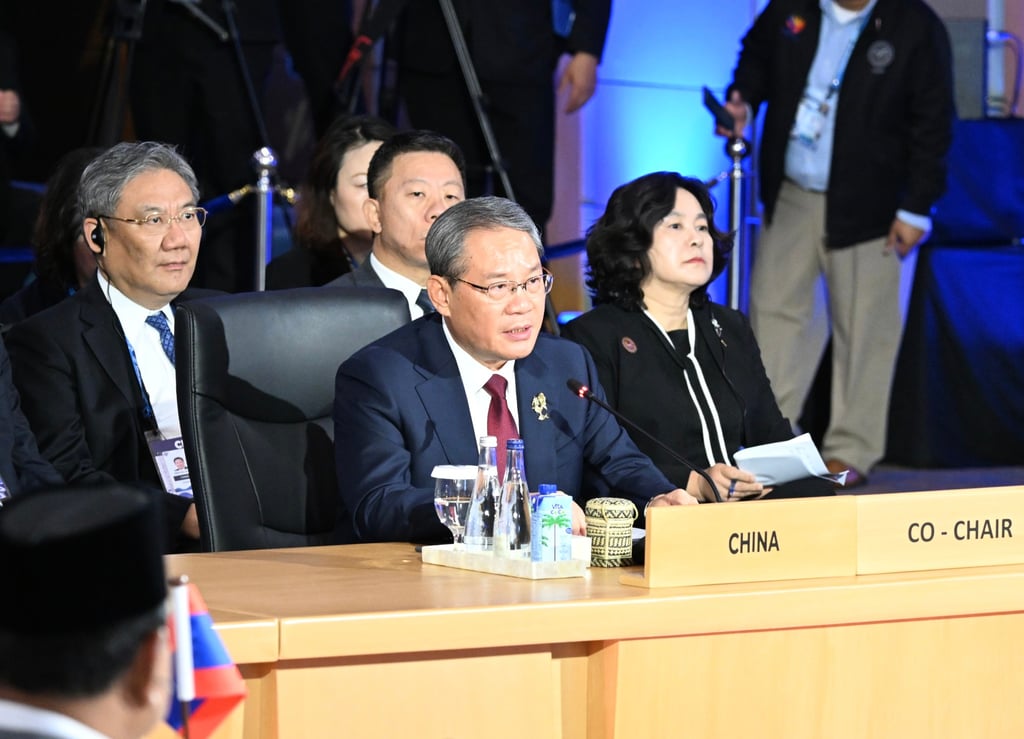
Anwar said that while Indonesia would not publicly support the actions of the Philippines in countering China over the disputed waterway, it did not recognise Beijing’s nine-dash line, which encompasses nearly all of the South China Sea.
“But we continue to be able to compartmentalise [our relations with China],” she said, explaining that disagreements should not prevent cooperation in other areas.
She argued that Asean members should show solidarity with the Philippines, even if they were reluctant to endorse Manila’s approach in confronting Beijing.
For instance, Asean could refer to the 2016 arbitral ruling in favour of the Philippines, which found no legal basis for China’s claims to historic rights over resources within its nine-dash line under Unclos.
Beijing has rejected the ruling and did not take part in the legal proceedings, maintaining that the tribunal had no jurisdiction over the dispute and that questions of territorial sovereignty and maritime delimitation should be settled through talks between the countries concerned.
In a separate interview on the sidelines of the Manila Dialogue, Hu Bo, director of China’s South China Sea Strategic Situation Probing Initiative, told This Week in Asia that “the situation is generally controllable even without the code of conduct”.
KioskNews shows a cleaned-up reading view extracted from the publisher’s page — the original always lives on their site, not ours.