Hong Kong tech index to harness fast-growth companies in bid for better performance
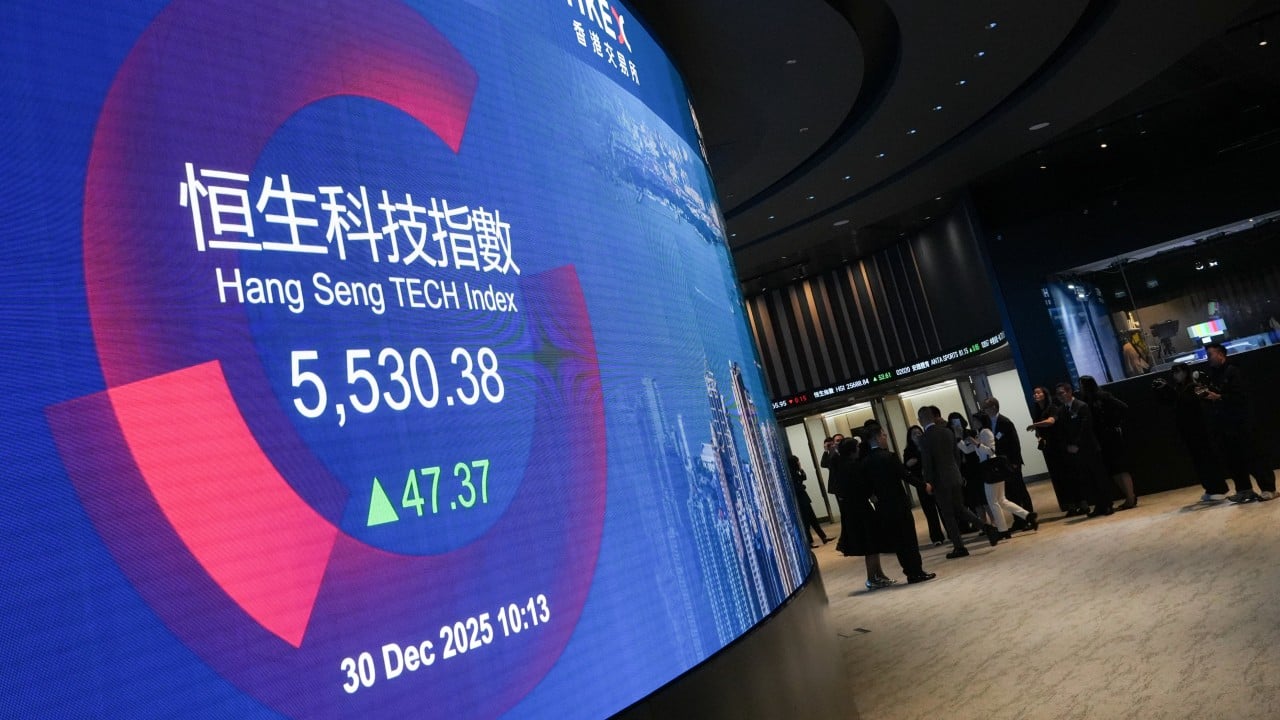
Hong Kong’s stock index compiler will add 10 fast-growing companies with at least HK$500 million (US$64 million) in annual sales into the city’s technology-focused benchmark in a bid to revitalise an index that has missed out on artificial intelligence-driven gains.
The threshold is among a set of new measures Hang Seng Indexes Company will use to reform the Hang Seng Tech Index, which is referred to as Hong Kong’s answer to the Nasdaq but has lost its shine relative to global peers, falling 23 per cent so far this year.
The gauge’s most heavily weighted constituents – Chinese tech giants including Tencent Holdings and Meituan – have failed to spark investor excitement amid the frenzy for AI developers and related stocks, such as memory chipmakers. By comparison, the Nasdaq 100 and the chip-heavy Korea Composite Stock Price Index have hit records multiple times this year.
“We want [the tech index] to be forward-looking by picking some emerging companies by sales growth,” said Anita Mo, CEO at the firm, which has compiled the city’s major market indices including the flagship Hang Seng Index since 1969.
In December, Hang Seng Indexes will expand the tech gauge by 20 constituents to 50 members. Half of the new additions will be the fastest-growing firms with sales of HK$500 million or more in two consecutive financial years, irrespective of market capitalisation. The other 10 additions, like the 30 current members, will be chosen by market cap, subject to a minimum average daily turnover of HK$100 million over the preceding three months.
For comparison, major indexes across the world focus on liquidity and market valuation.
“By introducing the growth stream, we hope that if [the smaller firms] could be included earlier, the index could enjoy their success,” said Daniel Wong, head of product management at the compiler, in a media briefing on Wednesday.
The two thresholds aim to counter the market’s concern that the liquidity of smaller companies could hinder effective fund tracking, Wong added.
02:14
Why did shares of Chinese chipmaker CXMT surge over 460 per cent in a day?
After the tech gauge’s May quarterly review, Hang Seng Indexes in June replaced Kingdee International Software and Kingsoft with MiniMax and Z.ai – which is also known as Zhipu and trades as Knowledge Atlas Technology – in an effort to capture market enthusiasm for emerging Chinese AI models.
However, share prices for the two new members peaked in March and June, respectively, meaning the gauge missed out on most of their gains.
The company said it would retain its quarterly review mechanism, while the maximum weight of any single constituent would be reduced to 8 per cent from 10 per cent.
In addition, it said it would implement most of the measures proposed in a consultation in August, including removing industry requirements and expanding sub-themes to 24 from 16.
The new list of index constituents will be announced on November 20 and will take effect on December 7.
“We hope to grow together with the Hong Kong market through the indexes, strengthening our role as ‘superconnector’,” Mo said.
KioskNews shows a cleaned-up reading view extracted from the publisher’s page — the original always lives on their site, not ours.