Odisha women turn banana waste into 21,000 festival boats and extra income
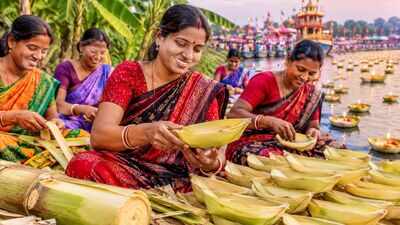
Women with eco-friendly boats for Boita Bandana (AI-image)
Women are an incredible creation of God, and these women in Odisha are proving just how resourceful and resilient they can be. A traditional festival celebrating the state's maritime history is creating an unexpected livelihood opportunity for rural women and banana farmers in Odisha.
Ahead of this year's Boita Bandana celebrations, 40–50 women belonging to four to five Self-Help Groups (SHGs) have created 21,000 miniature boats using discarded banana stems. Incredible, right?The initiative, facilitated by the Odisha Rural Development and Marketing Society (ORMAS), is turning agricultural waste into a useful festival product while creating an additional source of income for farming families.
While the women are being paid to make these boats, farmers are earning money from banana stems.According to information released about the initiative on November 23, 2026, approximately Rs 90,000 has been earmarked as remuneration for the women involved in the boat-making activity.From banana farms to festival boats
The raw material for the project comes from banana farms in Angul district. Through Cropify Farmers Producer Company Ltd.,
around 350–400 kandis of bananas have been marketed, generating an estimated revenue of up to Rs 1.40 lakh.Once the bananas are harvested, their stems are often discarded. But not this time, all thanks to these women. Approximately 750 harvested banana trees have been collected and put to productive use now and farmers have earned an additional Rs 7,500 by supplying these. The material is transported from Angul to Cuttack, where women from the participating SHGs use it to prepare miniature boats for the festival.The programme is being facilitated by ORMAS under Odisha's Department of Panchayati Raj and Drinking Water, with the broader objective of connecting rural producers with market opportunities.Understanding Boita Bandana in Odisha
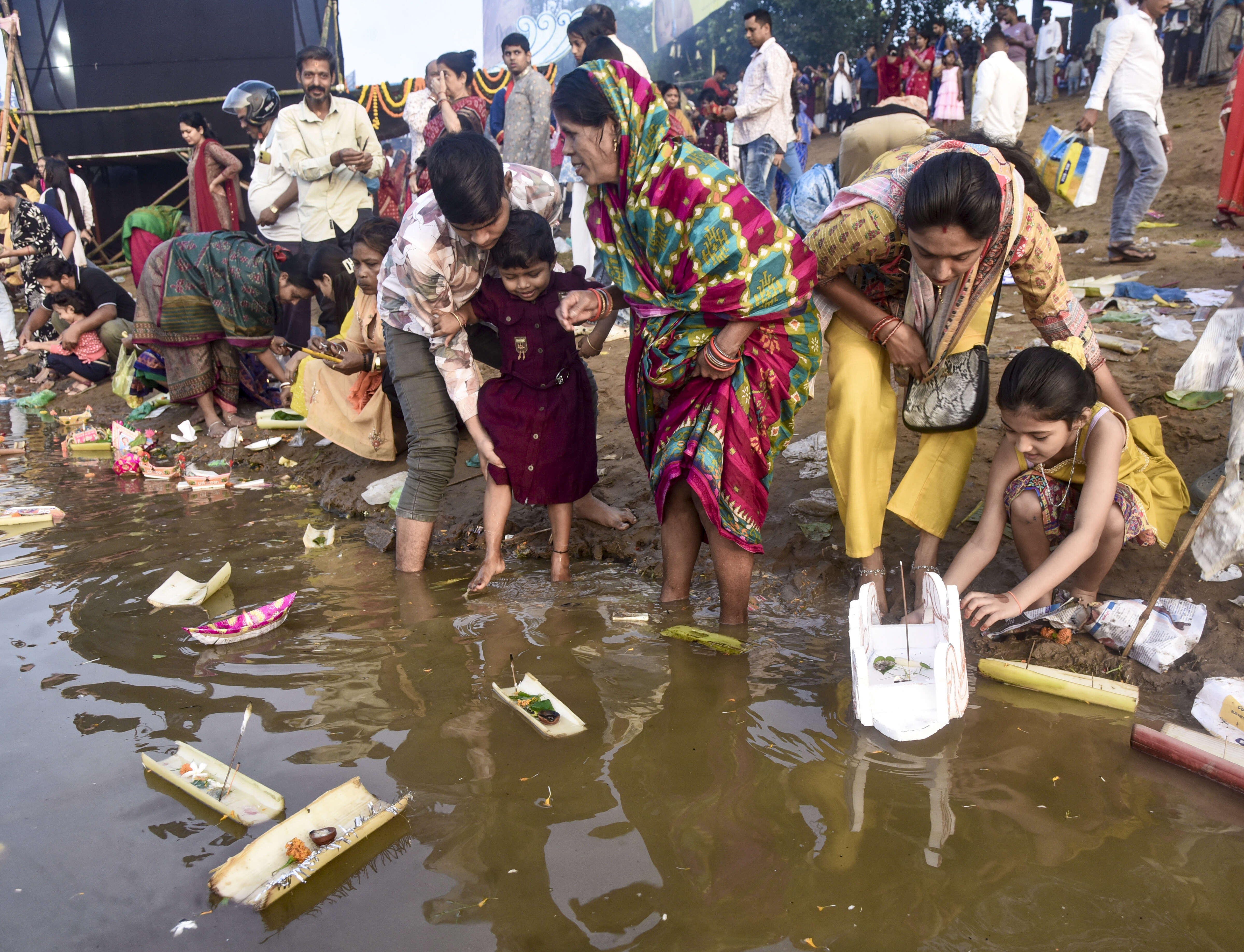
Bhubaneswar: Devotees sail miniature boats to offer prayers during the 'Boita Bandana' celebration on the 'Kartik Purnima' festival in the Daya river, on the outskirts of Bhubaneswar, Odisha. (PTI Photo)(PTI11_24_2026_000081B)
The 2026 edition of Bali Jatra is scheduled from November 24 to December 1, according to Odisha Tourism.The initiative draws its relevance from Boita Bandana, a centuries-old tradition observed on Kartika Purnima.
The ritual commemorates Odisha's maritime history and the voyages of the Sadhabas, the seafaring merchants of ancient Kalinga who travelled to distant regions for trade.According to the Government of Odisha's Tourism Department, ancient Kalinga maintained trading connections with Southeast Asian destinations, including Bali, Java, Sumatra and Sri Lanka. Merchants sailed in large traditional vessels known as Boita.
The annual ritual symbolically remembers these voyages by floating miniature boats in rivers and other water bodies.The miniature boats are traditionally made using materials such as banana stems, paper and other natural materials. People decorate them with flowers and small lamps, sometimes placing symbolic offerings inside before setting them afloat.The ritual is accompanied by the traditional Odia chant, 'Aa Ka Ma Bai, Pana Gua Thoi', which is associated with the maritime traditions and seasonal voyages of ancient Kalinga's merchants.Over the years, the celebration has also evolved into Bali Jatra, one of Odisha's most prominent cultural and commercial fairs. Held along the banks of the Mahanadi in Cuttack, the fair brings together artisans, rural entrepreneurs, traders, food vendors and visitors.How a traditional festival is creating new rural livelihoods
For the participating women, the project represents an opportunity to earn through collective work.
The estimated Rs 90,000 remuneration earmarked for the four to five SHGs provides an additional income avenue linked to a seasonal cultural event.For banana farmers, the additional Rs 7,500 earned from supplying stems from 750 harvested trees may appear modest, but it represents an important change in how agricultural resources are valued. The initiative creates an additional revenue stream after the primary crop has already been harvested.ORMAS CEO Dr Monica Priyadarshini said the initiative had connected farmers and women's SHGs with new market opportunities by putting local agricultural resources to productive use. Rural Development and Panchayati Raj Minister Rabi Narayan Naik also highlighted the potential of festivals to strengthen the rural economy and support women's economic empowerment.
The project also comes at a time when the Odisha government is emphasising the use of traditional banana-stem boats instead of plastic alternatives during the Kartika Purnima celebrations.
In a November 23, 2026 announcement, Chief Minister Mohan Charan Majhi urged people to float traditional banana-leaf boats rather than plastic ones to help keep water bodies free of pollution.The 21,000 miniature boats therefore represent more than preparations for a festival. They connect an old maritime tradition with contemporary concerns around rural employment, women's participation in local enterprises and the productive use of agricultural residue.
KioskNews shows a cleaned-up reading view extracted from the publisher’s page — the original always lives on their site, not ours.