Legislature’s legal advice arm urges clarity on public interest rules as gov’t moves to tighten land records access

The Hong Kong legislature’s legal services arm has asked the government to clarify how it would consider applications to access the city’s land records on the basis of public interest after passing new rules to tighten media access.

The Legislative Council’s (LegCo) Assistant Legal Adviser Vanessa Cheng posed the questions in correspondence addressed to the city’s Development Bureau last week, tabled for discussion at the legislature on Tuesday.
Lawmaker Kenneth Fok, who represents the publication sector, also said in a letter to the legislature’s subcommittee that it would be more appropriate for the media to enjoy less restricted access to the Land Registry.
Under the new subsidiary legislation, searches can only be conducted for nine purposes deemed legitimate for accessing records, including academic and market research. News reporting is not among the nine specified purposes, although “public interest” is listed as a valid ground.
Applications will be vetted by the Land Registrar on a case-by-case basis, taking into account “all relevant factors” including the possibility of misuse or abuse.
In the Friday letter, legal adviser Cheng asked the bureau to clarify whether the Land Registry would provide a list of examples of what constitutes a “public interest” application under the new regulation.
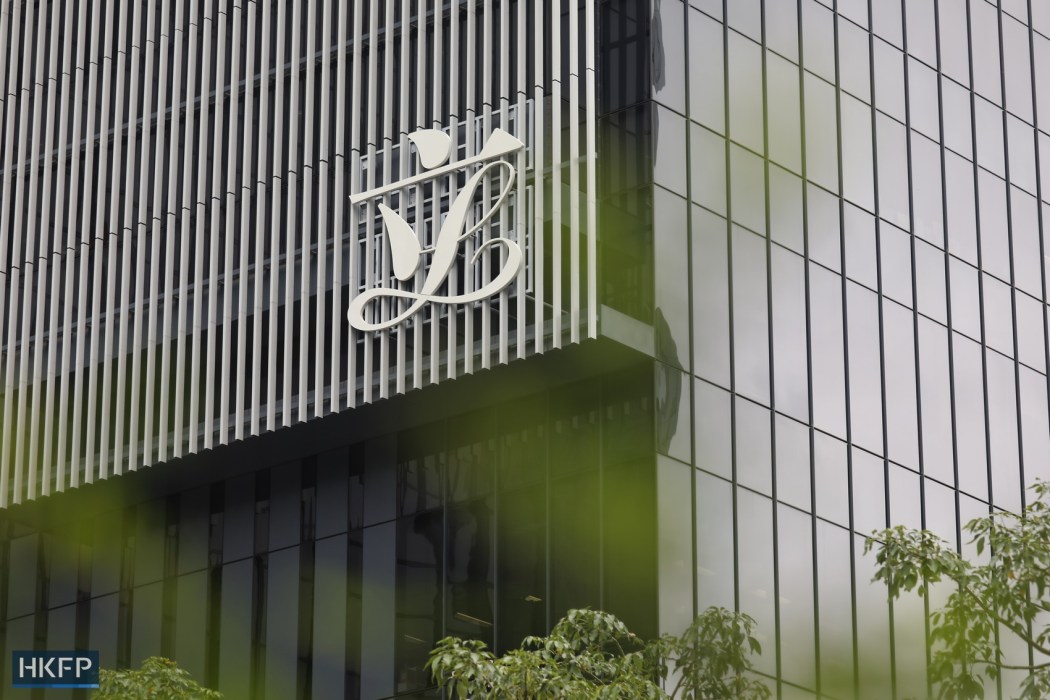
The adviser also asked whether factors for considering public interest applications would be incorporated into the new law – and if not, whether “detailed criteria” would be published in guidelines for assessing such applications, with those criteria subject to public consultation.
Clarification was also sought as to whether the Land Registry would be required to give written reasons for refusing a public interest application, whether applicants would be given an opportunity to make further representations before a refusal, and whether a review or appeal mechanism would be established.
Lawmaker urges leniency
In his letter, lawmaker Fok noted that some media outlets had expressed concern regarding the new provisions, including how “public interest” is to be interpreted.
“I agree that the media should follow clear rules when conducting searches, but the authorities must reasonably balance privacy with the public’s right to know, adhering to the principle of ‘erring on the side of leniency rather than strictness’ for legitimate journalism,” he said.
Fok said he withdrew from the subcommittee set up to scrutinise the new rules after realising its meeting on Tuesday clashed with his plans to attend a five-day meeting of the National People’s Congress (NPC) Standing Committee in Beijing.
“I hope the authorities will address the concerns of various sectors at the subcommittee meeting and clarify the relevant provisions as well as the future procedures for handling title search applications,” he said.
In a document submitted to the legislature last month, the bureau said that the new rules “aim to strike a balance between the need to protect personal data privacy and the importance of preserving the role and purpose of the [land records]… to ensure its transparency and efficiency.”
Addressing the move, the Hong Kong Journalists Association (HKJA) called on the authorities to shelve the amendments, saying that the city “has long upheld free-market principles and should take pride in its market transparency rather than move in the opposite direction.”
The press union argued that there was no evidence that previous arrangements had threatened privacy and that the new rules would weaken the ability of the public and the media to monitor the property market.
Safeguard press freedom; keep HKFP free for all readers by supporting our team
Support HKFP | Policies & Ethics | Error/typo? | Contact | Newsletter | Transparency & Annual Report | Apps
Make a one-off donation.


James Lee is a reporter at Hong Kong Free Press with an interest in culture and social issues. He graduated with a bachelor’s degree in English and a minor in Journalism from the Chinese University of Hong Kong, where he witnessed the institution’s transformation over the course of the 2019 extradition bill protests and after the passing of the Beijing-imposed security law.
Since joining HKFP in 2023, he has covered local politics, the city’s housing crisis, as well as landmark court cases including the 47 democrats national security trial. He was previously a reporter at The Standard where he interviewed pro-establishment heavyweights and extensively covered the Covid-19 pandemic and Hong Kong’s political overhauls under the national security law.
KioskNews shows a cleaned-up reading view extracted from the publisher’s page — the original always lives on their site, not ours.