Giant, feathered dinosaur with massive claws and tons of teeth found in China
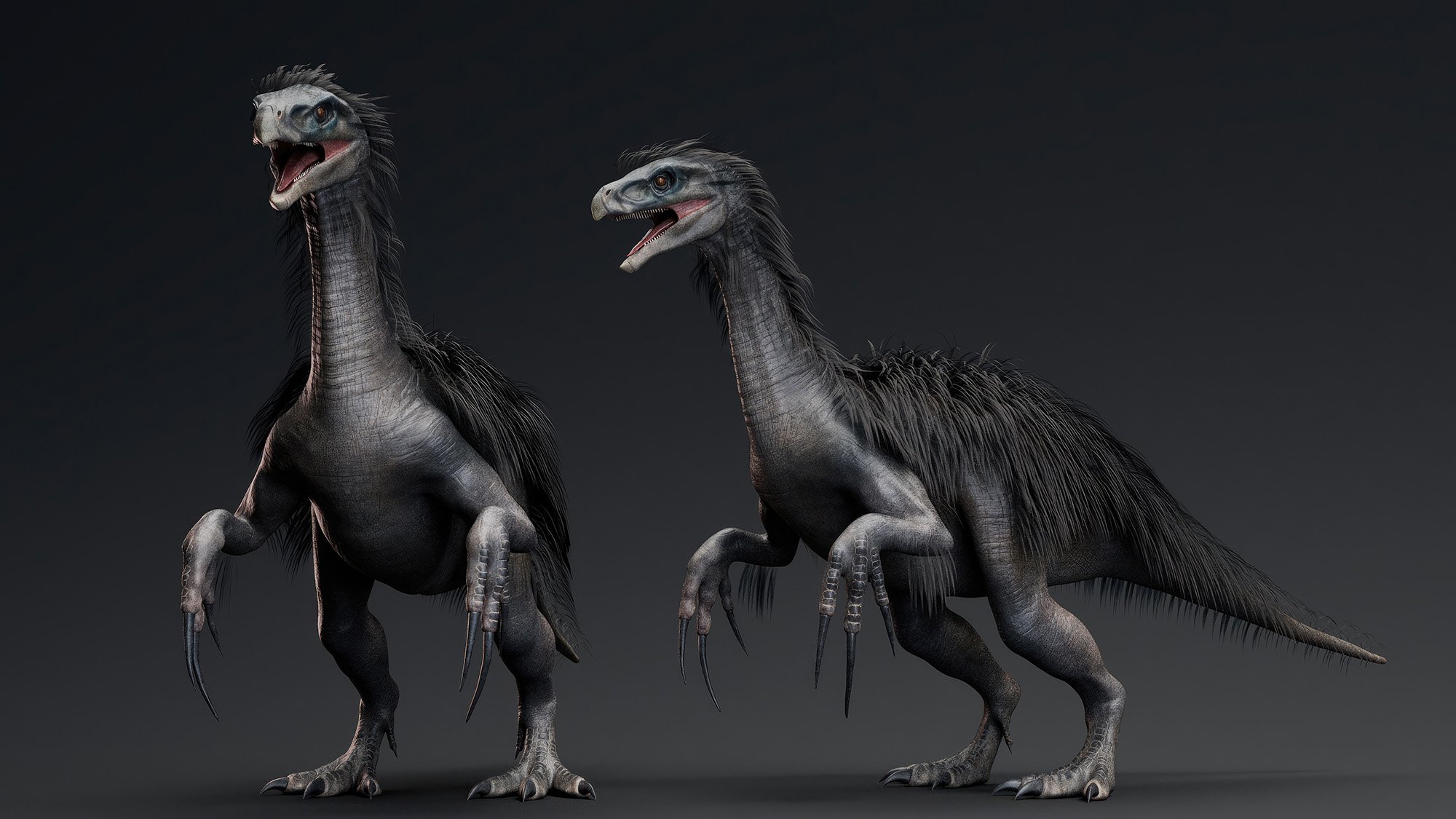
Most dinosaurs are pretty weird-looking. But you know a dinosaur must be extra weird looking when paleontologists call it “anatomically bizarre.” That’s the story behind Therizinosauria, a rare group of theropod dinosaurs—flesh-eating species, like Tyrannosaurus rex, along with a few herbivores. And even though therizinosaurs had massive claws, possibly the longest claws ever clocking in at over three feet long(!), these feathered dinos were actually primarily plant eaters.
Within the Therizinosauria clade, there are a handful of specific kinds of therizinosaurs, and they’re all pretty unusal. But, in a new study published recently in The Journal of Systematic Paleontology, paleontologists may have just found the weirdest and biggest therizinosaurus ever. Feast your eyes on Kayrasaurus changliensis.
No dinosaur had bigger claws than therizinosaurs
All therizinosaurs had the same basic look to them. They had long necks, little heads, walked on two legs, and had massive claws on relatively tiny arms. They were covered in feathers and had a bit of pot belly: something kind of like a cross between an ostrich and grizzly bear, but with bigger claws.
Living roughly 100 million to 65 million years ago in the Late Cretaceous period, therizinosaurs would’ve been some of the last dinosaurs on Earth before being wiped out with the rest of the dinosaurs around 65 million years ago.
Kayrasaurus changliensis is the biggest therizinosaurus ever
Paleontologists uncovered the nearly complete specimen in the Lower Cretaceous Yixian Formation, a renowned dino hotspot in a remote corner of northeastern China, between Beijing and North Korea.
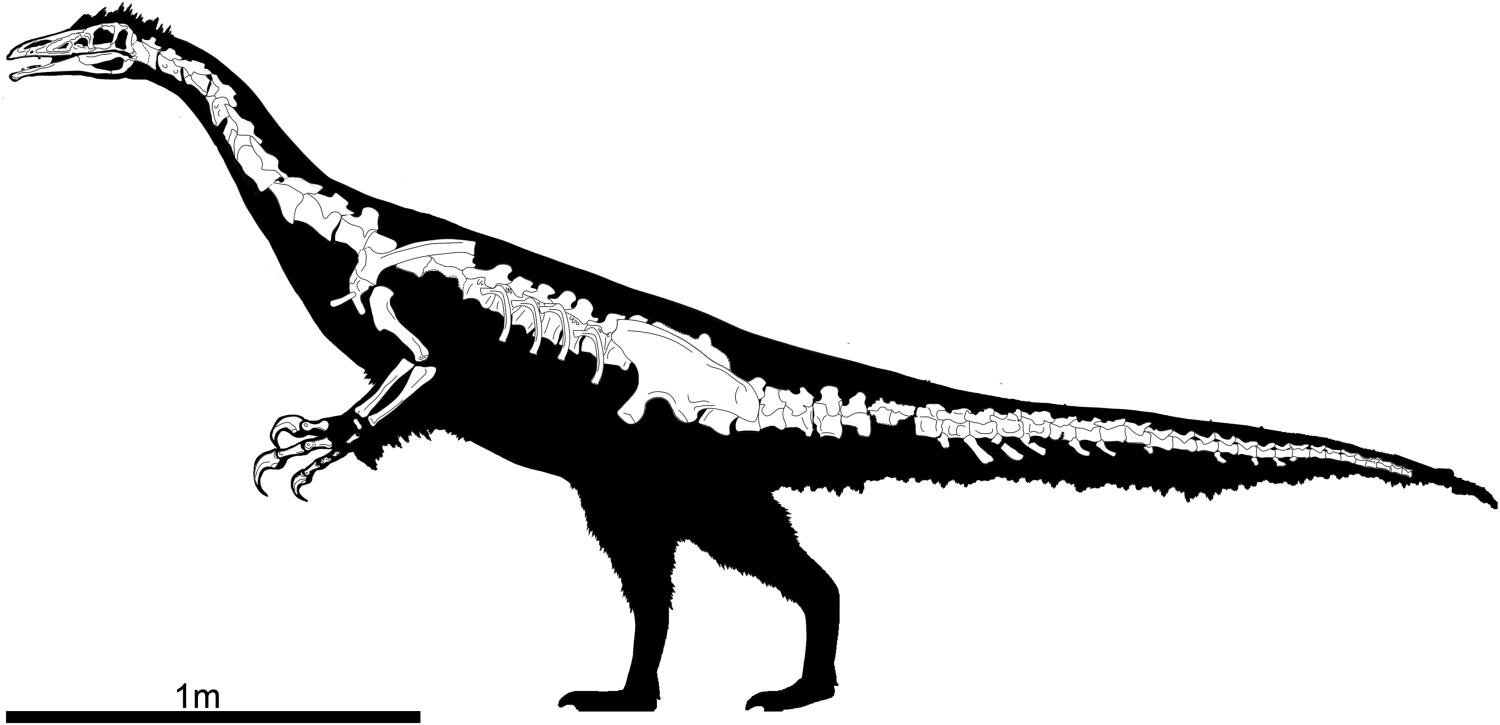
From that specimen, it appears that K. changliensis is even bigger than its closest cousins. It likely weighed between 250 and over 600 pounds, a similar weight to an adult male grizzly bear. K. changliensis also measured almost 12 feet long, about the length of a small moving truck. Considering that the specimen that was found was young, still growing, and already big, it’s safe to assume an adult K. changliensis likely would’ve been even bigger.
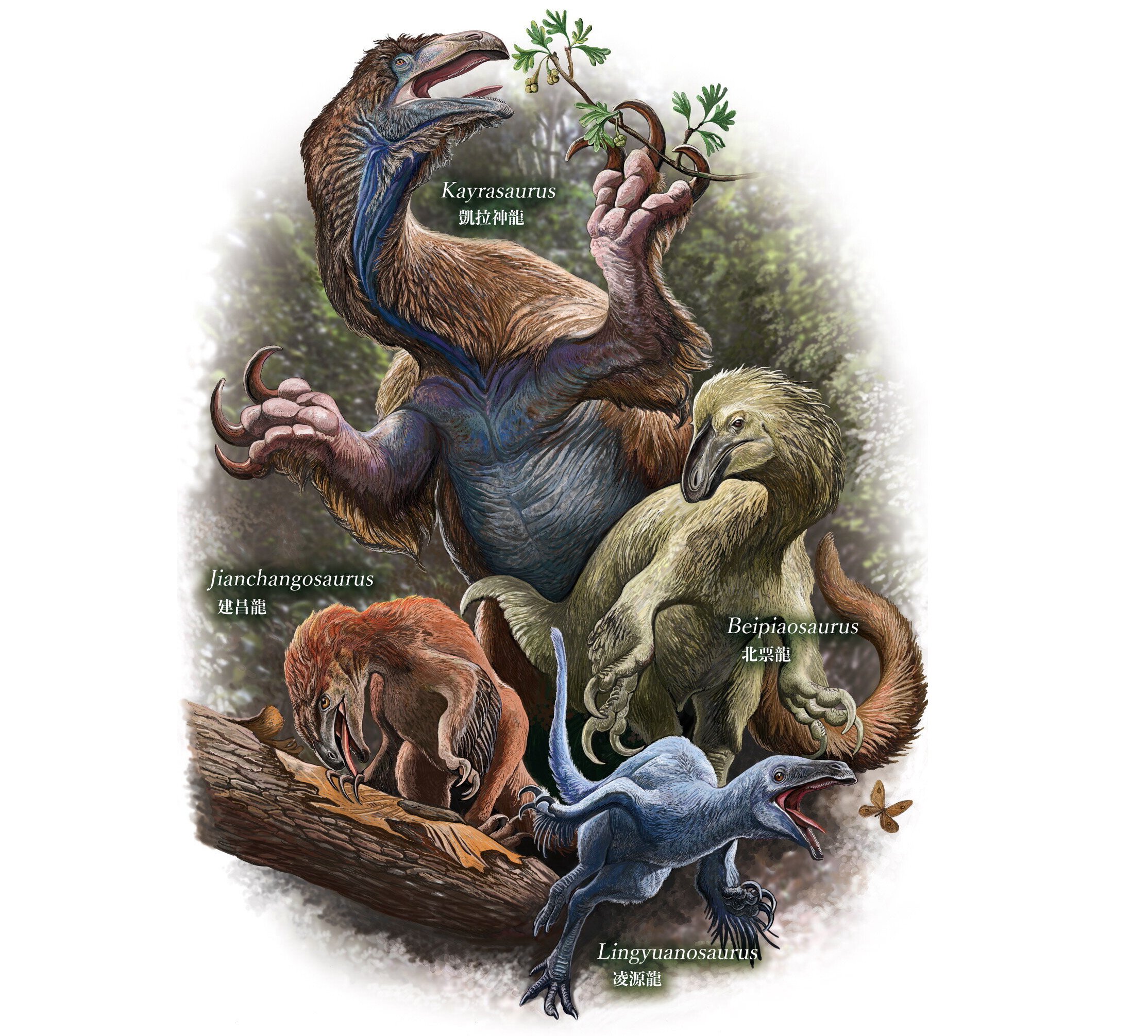
Overall, K. changliensis was 1.6 times larger than the second-largest therizinosaur, Beipiaosaurus inexpectus, ever found in China. But its size isn’t the only thing that’s unique about K. changliensis, according to study co-authors Chun-Chi Liao, William J. Freimuth, Lindsay E. Zanno and Xing Xu.
What makes K. changliensis a very weird therizinosaurus
In addition to its size, K. changliensis also had a unique dental arrangement compared with other therizinosaurs. Its jaw was full of small, tightly packed teeth, with a pretty severe underbite. The lower jaw sported 45 teeth, while its upper jaw only had 32. No other large therizinosaurs had more than 40 teeth on either jaw, so K. changliensis was sporting some serious chompers.
But that’s not the only thing that differentiates K. changliensis’s jaw. The lower jaw also had a triangular side opening, while the upper jaw had a large opening close to its snout. Paleontologists aren’t sure how the openings helped the dino.
K. changliensis lived differently than other therizinosaurs
It’s safe to say that K. changliensis, with its heavy, big body, was a very sturdy creature, but that also made it less agile than other therizinosaurs. While other, smaller therizinosaurs were built for running, K. changliensis was built for biting. Got to put all of those teeth to good use, right?
But don’t worry, despite what a pretty terrifying scene in Jurassic World Dominion would have you believe, there’s no reason to think that K. changliensis was chomping down on anything but plants. As the authors of the new study write, K. changliensis’s jaw and teeth are “more reminiscent of herbivorous dinosaur clades.” So Claire (Bryce Dallas Howard) was probably over reacting in the film—probably.

Jurassic World Dominion (2022) – The Blind Dinosaur Scene | Movieclips
KioskNews shows a cleaned-up reading view extracted from the publisher’s page — the original always lives on their site, not ours.