Carrie remake depicts same modern horrors of teenage life that brought its director to Vancouver
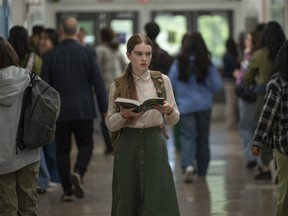
Director Mike Flanagan has generally stayed staunchly faithful to the works of author Stephen King in his film/TV adaptations of his work, which include The Life of Chuck, Gerald’s Game and Doctor Sleep. But in his eight-episode adaptation of King’s first bestselling novel Carrie (streaming on Prime), Flanagan, 48, has taken sweeping liberties, with King’s blessings. (The prolific horror author is an executive producer.)
Brian De Palma already made the definitive adaptation of King’s book back in 1976, but that didn’t stop two remakes, a sequel and even an ill-fated 1988 Broadway musical.
Sign In or Create an Account
This new version, scripted and mostly directed by Flanagan (four of the eight episodes), is set in a contemporary environment, with all new threats confronting the fledgling telekinetic heroine Carrie White (Summer H. Howell). Having spent most of her life hidden in the home she shares with her fiercely protective mother Margaret (Samantha Sloyan), Carrie is forced to attend high school after her father’s accidental death, and finds herself navigating very recognizable traumas, including an active shooter drill and a bullying event amped up via social media.
Reflecting on the very real issues facing teenagers is one of the things that made Flanagan want to update King’s vision.
It was also one of the things that compelled the Salem, Mass.-born Flanagan to decide to take up residence in Vancouver.
“I’m a permanent resident of B.C.,” Flanagan says during a video interview from Toronto, where he premiered the first two episodes of Carrie at the Toronto International Film Festival. “I got my permanent resident card last year. It took me years to get it. So shooting in Vancouver for me is now shooting at home, which I’m so excited about.”
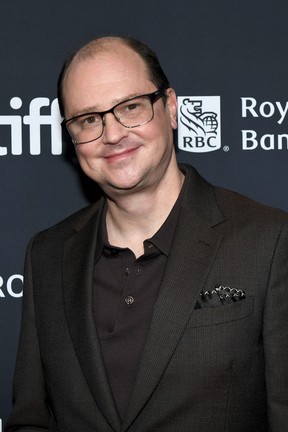
Flanagan recalls that when he was contemplating taking on Carrie, “my oldest son was getting ready to start high school in the United States. And when I was bringing my kids to school in the U.S., I was frequently dropping them off in a place with barbed wire, watching them go through metal detectors and being notified that they would be doing active shooter drills, which for them and their generation in the U.S. is very normal.
“And I know for the rest of the world, it’s very strange,” Flanagan says. “One of the big reliefs I had when my family was working in Vancouver and my kids were going to school there was to drop them off in an environment where I felt safe leaving them, knowing that they weren’t going to be going through that.”
The experience drove some of the changes Flanagan made to King’s story. The realm of the public school, he says, “is far more dangerous, not just physically with school violence, but dangerous for them emotionally with social media, with the different tools of cruelty that these kids are facing younger and younger. That horrified me. And that to me was the reason to tell this story now,” he says. “It facilitated the big changes we needed to make to Carrie to kind of bring her into this age and talk about what that’s like.
“It’s the definition of horror, I think, to imagine that kind of violence occurring in what is supposed to be a safe place where kids are learning,” Flanagan says. “You can talk about monsters and ghosts and vampires all you want. Real horror is that.”
Flanagan very much feels in his element in Vancouver, perhaps as much as Stephen King feels in Maine, the setting for the bulk of his fiction.
Recently, Flanagan joined other horror filmmakers, including Osgoode Perkins and Zach Lipofsky, in efforts to revive Vancouver’s shuttered Park Theatre on Cambie Street.
“I’ve shot five series in Vancouver now,” Flanagan says, referring to Carrie and shows including Midnight Mass, The Fall of the House of Usher, and The Haunting of Bly Manor.
“What I love about Vancouver, other than the physical beauty of the city and of British Columbia in general, it’s just so striking and gorgeous and esthetically beautiful,” he says. “And it also gives you everything you expect out of a Stephen King New England story. It gives you your mist and your rain and your grey clouds and your pine trees. It gives you that vibe, but it also gives you the beautiful bright green and blue water and the clear skies and the whales going by in the distance. It gives you all of it.
“The thing I love the most about shooting in Vancouver, though, at this point is the Vancouver crew. There’s wonderful filmmakers in Vancouver that I think have made that local industry thrive so much,” he says. “And now I’ve gotten to work with a number of them again and again. So I adore shooting in Vancouver.”
randall.king.arts@gmail.com
Join the Conversation
This website uses cookies to personalize your content (including ads), and allows us to analyze our traffic. Read more about cookies here. By continuing to use our site, you agree to our Terms of Use and Privacy Policy.
KioskNews shows a cleaned-up reading view extracted from the publisher’s page — the original always lives on their site, not ours.